The Hatch-Waxman Act didn’t just change how generic drugs get approved-it reshaped American healthcare. Before 1984, if you wanted to make a copy of a brand-name drug, you had to start from scratch. That meant running your own clinical trials, even though the original drug had already been proven safe and effective. It was expensive, slow, and kept generics off the market for years. The Hatch-Waxman Act changed all of that. It created a smarter, faster, and fairer system that lets generic manufacturers prove their drugs work without repeating every test. The result? Today, 9 out of 10 prescriptions in the U.S. are filled with generics-and they save Americans over $158 billion every year.
What the Hatch-Waxman Act Actually Does
The full name is the Drug Price Competition and Patent Term Restoration Act of 1984. It was named after Senator Orrin Hatch and Representative Henry Waxman, the two lawmakers who pushed it through Congress. At its core, the law balances two goals: protecting innovation and encouraging competition. Brand-name drug companies get extra patent time to make up for delays caused by FDA reviews. At the same time, generic companies get a clear path to market without having to redo expensive clinical trials.The key tool it created is the Abbreviated New Drug Application, or ANDA. This isn’t just a paperwork shortcut. It’s a legal framework that lets generic makers prove their drug is the same as the brand-name version-called the Reference Listed Drug (RLD)-in every way that matters: same active ingredient, same strength, same form (pill, injection, etc.), and same way it’s taken. The only thing they need to prove is bioequivalence: that the body absorbs the drug at the same rate and to the same extent. The FDA requires this to be within 80% to 125% of the brand drug’s levels. That’s not a guess. It’s based on real pharmacokinetic data from hundreds of studies.
The Orange Book: The Rulebook for Generic Entry
One of the most important parts of Hatch-Waxman is the Orange Book-officially called Approved Drug Products with Therapeutic Equivalence Evaluations. It’s not a physical book anymore. It’s a public database maintained by the FDA that lists every approved drug and every patent tied to it. If a brand-name drug has a patent, it must be listed here. Generic companies use this to know exactly when they can legally enter the market.Before Hatch-Waxman, generic makers had no idea which patents were blocking them. Now, they can see every patent, expiration date, and even whether a patent covers the drug’s use, formulation, or manufacturing method. As of 2024, the Orange Book lists over 18,000 approved drug products. On average, a new drug starts with 1.5 patents listed, but by the time generics arrive, that number often grows to 3.5 or more. This is where things get complicated.
Paragraph IV Certifications and the 180-Day Exclusivity Prize
Here’s where the system gets strategic. When a generic company files an ANDA, they must make a certification about the patents listed for the brand drug. There are four types:- Paragraph I: No patents listed.
- Paragraph II: Patents have expired.
- Paragraph III: We’ll wait until the patent expires.
- Paragraph IV: This patent is invalid, or we won’t infringe it.
Paragraph IV is the big one. It’s a legal challenge. The generic company is saying, “We’re going to make this drug now, even if the patent hasn’t expired.” When they file a Paragraph IV certification, they must notify the brand-name company within 20 days. That triggers a 45-day window for the brand company to sue for patent infringement. If they do, the FDA can’t approve the generic for 30 months-or until the court rules, whichever comes first. This is called the “30-month stay.”
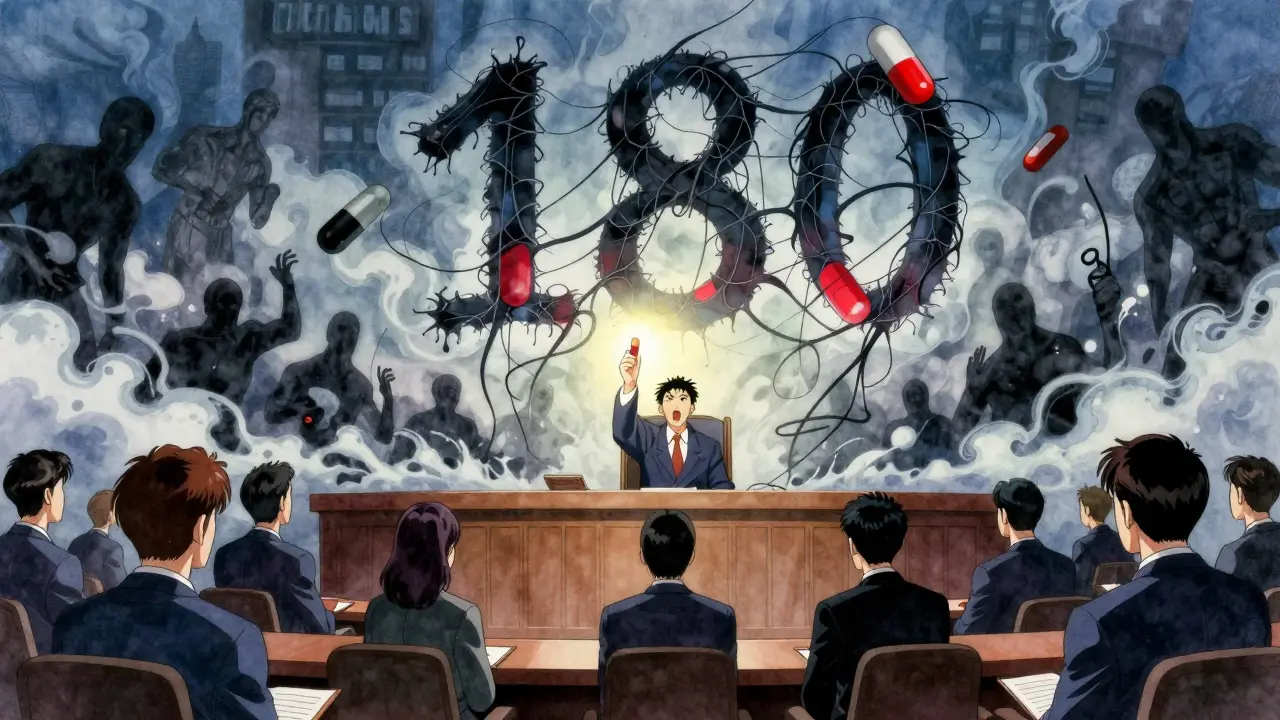
But here’s the reward: the first generic company to file a Paragraph IV certification gets 180 days of exclusive market access. During that time, no other generic can enter-even if they filed right after. This incentive has driven thousands of patent challenges. In fact, 90% of Paragraph IV filings lead to lawsuits. The race to be first was so intense in the 1990s that companies would camp outside FDA offices to submit their applications on time. In 2003, the FDA changed the rule: if multiple companies file on the same day, they share the 180-day exclusivity.
How Much Money Does This Save?
The numbers don’t lie. In 1984, only 19% of prescriptions were filled with generic drugs. Today, that number is over 90%. But here’s the real story: while generics make up 90% of prescriptions, they account for only 23% of total drug spending. That’s because they cost far less. When a generic hits the market, prices typically drop 80% to 90% within a year. In 2023 alone, generic drugs saved the U.S. healthcare system $158 billion. Over the past decade, that adds up to $1.7 trillion in savings.For patients on Medicare Part D, the impact is personal. In 2023, 78% of prescriptions were generics-and the average beneficiary saved $3,200 per year. Without Hatch-Waxman, millions of people wouldn’t be able to afford their medications. Insulin, blood pressure pills, antidepressants, antibiotics-all of them became accessible because of this law.
Where the System Stumbles
It’s not perfect. One major criticism is “patent thickets.” Brand companies sometimes file dozens of secondary patents-on packaging, dosing schedules, or manufacturing methods-to delay generic entry. This is called “evergreening.” Some of these patents are weak, but they still trigger the 30-month stay. That means even if a patent is questionable, generics can be blocked for years.Another problem is “pay-for-delay.” In some cases, brand companies pay generic manufacturers to delay their entry. Instead of competing, they strike a deal: “We’ll pay you not to sell.” These settlements have been challenged in court, and the FTC has fought them for years. In 2013, the Supreme Court ruled they could be illegal under antitrust law-but they still happen.
There’s also the issue of drug shortages. In 2023, 283 generic drugs were in short supply. Many of these are older, low-margin medications where manufacturing is outsourced overseas. Quality control lapses at foreign plants have led to recalls. The FDA has stepped up inspections, but the system still struggles to keep up.
What Happens with Complex Drugs?
Hatch-Waxman was designed for small-molecule drugs-pills and injections with simple chemical structures. But newer drugs, like biologics (injectable proteins, antibodies, gene therapies), are too complex to copy exactly. That’s why Congress passed the Biologics Price Competition and Innovation Act (BPCIA) in 2010. It created a separate pathway for “biosimilars,” which are highly similar, but not identical, to the original biologic. The rules are different, and the approval process is longer. Biosimilars still face patent battles, but they don’t get the 180-day exclusivity. So far, biosimilar adoption has been slow, partly because of legal uncertainty and manufacturer reluctance.
How the System Is Evolving
The FDA has been updating its approach. In 2023, the Generic Drug User Fee Amendments (GDUFA) III went into effect. It’s a funding deal between the FDA and generic manufacturers that cuts review times. In 2012, the average ANDA took 36 months to review. By 2023, that dropped to 18 months. The FDA also issued 15 new guidance documents last year alone, helping companies understand exactly what’s needed for approval.Another change came with the CREATES Act of 2019. It lets the FDA step in if a brand company refuses to sell samples of their drug to generic makers. Without those samples, generics can’t run the bioequivalence tests they need. The CREATES Act gives the FDA power to force sales-and it’s being used more often.
Still, Congress is debating more reforms. Should the 180-day exclusivity be limited? Should patent challenges be faster? Should “evergreening” be banned outright? These questions are still open. But one thing is clear: the Hatch-Waxman Act remains the backbone of generic drug access in the U.S.
Who Uses This System?
The big players are companies like Teva, Viatris (formerly Mylan), Sandoz, and Sun Pharma. They have entire departments dedicated to navigating the Orange Book, tracking patent expirations, and filing Paragraph IV certifications. Their teams include lawyers, pharmacists, regulatory experts, and data analysts. It’s not just about making pills-it’s about legal strategy, timing, and risk.For smaller generic companies, the process is harder. The average cost to file an ANDA is $5 million to $10 million, and it takes 3 to 4 years to get approval. That’s why many small firms partner with bigger ones or focus on niche drugs with less competition.
The system works best for drugs with simple chemistry and high demand. Think metformin, lisinopril, atorvastatin. These are the drugs that saved billions. But for complex formulations, extended-release versions, or combination pills, the path is still messy. The FDA is working on new guidelines for these, but progress is slow.
Why This Matters Beyond the U.S.
The Hatch-Waxman Act didn’t just change American medicine-it influenced the world. Countries like Canada, Australia, and many in Europe now use similar systems, though none have the 180-day exclusivity incentive. India’s generic industry, which supplies 40% of the world’s generic drugs, operates under rules inspired by Hatch-Waxman. Even the World Health Organization has cited it as a model for improving access to medicines globally.For patients in low-income countries, the ripple effect is real. When a U.S. generic enters the market, it often forces global price drops. A drug that costs $100 in the U.S. might drop to $5 in India because manufacturers can now compete. That’s the power of this law.
What is an ANDA?
An ANDA stands for Abbreviated New Drug Application. It’s the form generic drug manufacturers use to get FDA approval without repeating full clinical trials. They only need to prove their product is bioequivalent to the brand-name drug-same active ingredient, strength, dosage form, and absorption rate.
What does bioequivalence mean?
Bioequivalence means the generic drug delivers the same amount of active ingredient into the bloodstream at the same rate as the brand-name drug. The FDA requires that the average levels of absorption (measured by Cmax and AUC) fall within 80% to 125% of the brand drug’s levels. This ensures the generic works the same way in the body.
Why is the Orange Book important?
The Orange Book lists all approved drugs and their associated patents. Generic companies use it to know exactly which patents they need to challenge before they can legally enter the market. If a patent isn’t listed, it can’t be used to block generic approval.
What is a Paragraph IV certification?
A Paragraph IV certification is a legal challenge filed by a generic company that claims a brand-name drug’s patent is invalid or won’t be infringed. This triggers a 30-month delay in FDA approval and opens the door to patent lawsuits. The first company to file a Paragraph IV certification gets 180 days of market exclusivity.
Can the Hatch-Waxman Act be used for biologics?
No. Biologics-like insulin, monoclonal antibodies, and gene therapies-are too complex to copy exactly. They’re regulated under a separate law called the Biologics Price Competition and Innovation Act (BPCIA), which created a different approval pathway for biosimilars. Biosimilars don’t get the 180-day exclusivity that generics do under Hatch-Waxman.
How much do generic drugs save the U.S.?
Generic drugs saved the U.S. healthcare system $158 billion in 2023 alone. Over the past decade, total savings reached $1.7 trillion. On average, generics cost 80% to 90% less than brand-name drugs, and they make up over 90% of prescriptions.

Sarah Barrett
February 15, 2026 AT 07:40The Hatch-Waxman Act is one of those quiet giants of American policy-no parades, no memes, just millions of people breathing easier because their prescriptions cost less than a latte.
It’s not glamorous, but neither is clean water until you try to drink sewage.
The Orange Book alone deserves a monument. Imagine trying to navigate a minefield blindfolded, then someone hands you a map with GPS.
And that 180-day exclusivity? Brilliantly ruthless. It turns pharmaceutical law into a high-stakes chess match where the prize isn’t a crown-it’s a patient’s life.
I’ve watched insulin prices crash from $300 to $12 because this law let competition do what morality never could.
It’s poetry written in pharmacokinetic curves and bioequivalence thresholds.
Not every law changes the world. This one changed how we die, and how we live.
And yet, we still let patent thickets strangle it like ivy on a tombstone.
Someone needs to cut that vine before the next generation can’t afford to breathe.
Maybe it’s time we stop calling this ‘pharmaceutical policy’ and start calling it public health infrastructure.
Because it is.
And infrastructure doesn’t get to be optional.
It gets to be sacred.
And we’re failing it.
Let’s fix it before the next crisis hits.
Kapil Verma
February 16, 2026 AT 12:43India made generics possible long before America woke up.
Our manufacturers didn’t wait for patents to expire-they outsmarted them.
Hatch-Waxman? A copycat law built on Indian innovation.
Every time a U.S. patient gets metformin for $4, they’re indirectly thanking Pune and Hyderabad.
And yet, the West still acts like they invented the wheel.
Patent trolls in Delaware? We laughed when they tried to block our exports.
Our labs don’t need 30-month stays-they need U.S. markets to stop hoarding cheap medicine.
If you want to thank someone, thank the Indian pharmacist who worked 18-hour days to make this possible.
Not some senator in D.C. who got a campaign donation.
Real heroes don’t wear suits.
They wear lab coats and sleep on factory floors.
Michael Page
February 16, 2026 AT 23:38The entire framework rests on a single, fragile assumption: that bioequivalence is sufficient for therapeutic equivalence.
But pharmacokinetics is not pharmacodynamics.
And absorption curves do not account for individual metabolic variance, polymorphic enzyme expression, or the placebo effect’s role in adherence.
The FDA’s 80-125% window is statistically elegant, but clinically porous.
It assumes homogeneity where none exists.
Patients with liver disease, elderly polypharmacy cases, or pediatric populations are not represented in those trials.
And yet, we prescribe these interchangeably as if they’re identical.
It’s a brilliant economic solution to a biological problem that resists simplification.
Perhaps we’ve optimized for cost, not safety.
Perhaps we’ve traded precision for scale.
And we call this progress?
It’s a necessary compromise, yes.
But we should never mistake necessity for perfection.
Or worse-celebrate it as virtue.
Mandeep Singh
February 17, 2026 AT 02:00Let me tell you something no one in the U.S. will admit-Hatch-Waxman is the reason India is the pharmacy of the world.
They didn’t just copy pills-they copied the entire system and made it work better.
While Americans were stuck in 30-month legal battles, we were shipping 40% of the world’s generics.
And you know what? Our quality is better.
Why? Because we didn’t wait for permission.
We didn’t wait for patents to expire.
We just made them.
And now? The U.S. is begging for insulin from us.
They have no shame.
They have no idea how much they owe us.
And now they want to change the rules? No.
This law was meant to break monopolies.
But now they’re using it to protect them.
That’s not innovation.
That’s theft.
And we’re not letting them steal our legacy.
Not again.
Not ever.
Kaye Alcaraz
February 18, 2026 AT 18:14This is the quiet revolution no one talks about.
It’s not about politics.
It’s not about patents.
It’s about a diabetic in rural Ohio who can now afford insulin.
It’s about a veteran on fixed income who doesn’t have to choose between pills and groceries.
It’s about a single mom who can fill her child’s asthma inhaler without selling a kidney.
This law didn’t just lower prices.
It restored dignity.
It didn’t just change regulations.
It changed lives.
And every time we tweak it, we must ask-
Who benefits?
Who suffers?
And who’s left behind?
We don’t need more complexity.
We need more courage.
Protect the system.
Expand access.
And never forget-
Medicine is a right.
Not a privilege.
Not a product.
A right.
Erica Banatao Darilag
February 19, 2026 AT 20:21when i first read about the orange book i thought it was a joke like a real book with an orange cover lol
then i learned it was a database and my mind exploded
how is this not common knowledge?
like if you take any med you probably owe this law your life
and yet no one talks about it
it’s like the internet was invented by one guy in a basement and we all just use it
no one knows who he is
same here
hatch and waxman should be on the $100 bill
not some dead president who owned slaves
just sayin
Esha Pathak
February 21, 2026 AT 00:41There’s something almost spiritual about bioequivalence.
It’s not just chemistry-it’s a promise.
A promise that a pill made in a factory in Chennai will do the same thing as the one made in New Jersey.
That the body won’t care where it came from.
That suffering doesn’t have a zip code.
And yet, we turn this into a battlefield.
Patents as weapons.
Exclusivity as currency.
Lawyers as gatekeepers.
It’s heartbreaking.
Because the science is beautiful.
Simple.
True.
Why do we make it so complicated?
Why do we fear competition so much?
What are we afraid of?
That someone else might make it cheaper?
That someone else might do it better?
Or that we might have to admit…
That healing doesn’t need to cost a fortune?
Maybe that’s the real fear.
Not the patent.
But the peace.
Daniel Dover
February 21, 2026 AT 07:43Simple law. Brilliant result. Why complicate it further?