
More than 1 in 10 people say they’re allergic to penicillin. But here’s the surprising part: 9 out of 10 of them aren’t. That’s not a typo. Most people who think they have a penicillin allergy don’t actually have one - and believing they do could be putting their health at risk.
Penicillin is one of the most common antibiotics ever made. It’s been used since the 1940s to treat everything from strep throat to pneumonia. But because of a rash someone got as a kid, or a vague memory of feeling sick after taking it, many people carry a label they don’t need. That label doesn’t just sit there quietly. It changes how doctors treat them - often for the worse.
What Really Counts as a Penicillin Allergy?
Not all reactions are allergies. A stomachache after taking penicillin? That’s probably just a side effect. A headache? That’s not an allergy either. True penicillin allergies involve the immune system reacting to the drug. And there are two main types: immediate and delayed.
Immediate reactions happen within an hour. These are the dangerous ones. Think swelling of the lips, tongue, or throat. Trouble breathing. A sudden drop in blood pressure. These are signs of anaphylaxis - a life-threatening emergency. If you’ve ever had this, you need to take it seriously. Epinephrine is the only thing that can stop it. If you’ve had this kind of reaction, don’t take penicillin again without seeing an allergist.
Delayed reactions show up hours or days later. The most common is a rash - usually red, flat, and itchy. It often appears 3 to 5 days after starting the drug. These rashes are rarely true allergies. They don’t mean you’ll go into anaphylaxis later. But if the rash is blistering, peeling, or involves your mouth or eyes, that’s different. That could be Stevens-Johnson Syndrome or DRESS, both rare but severe. Those need immediate medical care.
Why Mislabeling Is Dangerous
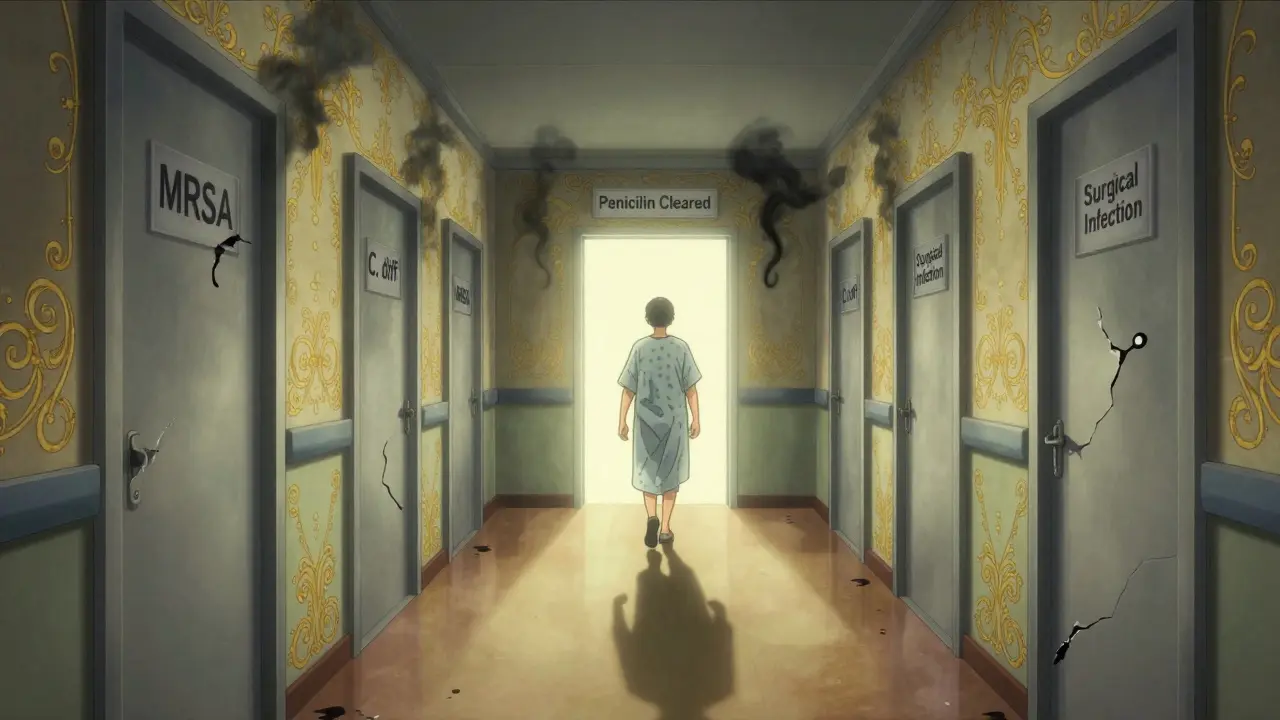
If you’re labeled allergic to penicillin, doctors avoid it. That sounds safe. But here’s what happens instead: they use stronger, broader-spectrum antibiotics. Drugs like vancomycin or clindamycin. These aren’t just more expensive. They’re less effective for many infections. And they wreck your gut microbiome.
People with a penicillin allergy label are 50% more likely to get a MRSA infection. They’re 35% more likely to get C. difficile - a nasty gut infection that causes severe diarrhea and can be deadly. Why? Because those alternative antibiotics kill off good bacteria and let bad ones take over.
Hospital stays get longer. Costs go up. And in surgeries like joint replacements, patients with unverified penicillin allergies are more likely to get surgical site infections. Studies show that for every 112 to 124 people who get tested and cleared, one serious infection is prevented. That’s not a small number. That’s a public health win.
Testing Is Safe - and Simple
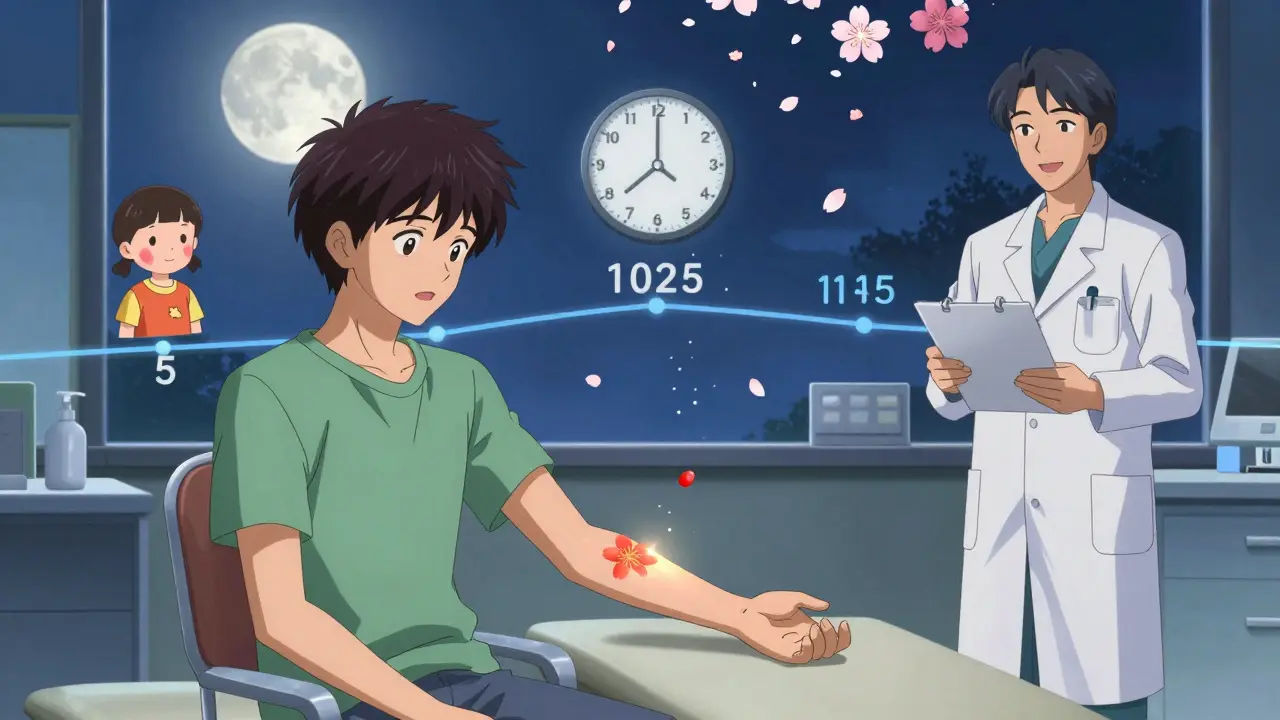
If you think you’re allergic, the good news is: you can find out for sure. Penicillin allergy testing isn’t complicated. It’s done in a doctor’s office or allergy clinic. Two steps:
- **Skin test** - A tiny drop of penicillin is placed on your skin, then lightly pricked. If you’re allergic, a red, itchy bump appears within 15-20 minutes. They also test with minor components of penicillin, because some reactions come from those.
- **Oral challenge** - If the skin test is negative, you take a small dose of amoxicillin (usually 250 mg) and are watched for an hour. No reaction? You’re cleared.
That’s it. The chance of a life-threatening reaction during testing? Less than 1 in 1,000. And it’s done with emergency meds on standby. No need to panic. The test is safe, fast, and accurate.
And here’s the best part: if you haven’t taken penicillin in 10 years, your allergy likely faded. About 80% of people who had an IgE-mediated reaction lose their sensitivity over time. Kids who got a rash at age 5? Chances are, they’re fine now.
Who Should Get Tested?
You don’t need to test everyone. But if any of these sound like you, consider it:
- You got a rash as a child - but never had trouble breathing or swelling.
- You were told you’re allergic, but no doctor ever tested you.
- You’ve avoided penicillin for 10+ years.
- You’re scheduled for surgery and need antibiotics to prevent infection.
- You’ve had a bad infection that didn’t respond to other antibiotics.
Low-risk patients - those with only a past rash, no breathing issues, or a reaction more than 5 years ago - can often skip the skin test and go straight to an oral challenge. Moderate-risk patients - those with recent hives, swelling, or anaphylaxis - need full testing. High-risk patients - those with severe skin reactions or organ damage - should avoid penicillin entirely and see an allergist.
What to Do If You’re Allergic
If you’ve had a true anaphylactic reaction, don’t take penicillin again. But that doesn’t mean you can’t take other antibiotics. Most people with a penicillin allergy can safely take third- and fourth-generation cephalosporins like ceftriaxone or cefdinir. Carbapenems like meropenem are also safe - unless you had a severe skin reaction.
Always tell every doctor, dentist, and pharmacist about your allergy. Write it down on your medical record. Wear a medical alert bracelet. That way, in an emergency, they’ll know what to avoid.
If you’ve been cleared through testing, make sure your records are updated. Ask your doctor to remove the allergy label. Many hospitals now have automated systems to flag patients for testing. But if you’re not in a hospital, you’ll need to take the first step.
What’s Changing in 2026?
Hospitals are getting smarter. By 2025, half of U.S. hospitals will have formal programs to identify and test patients with penicillin allergy labels. Some clinics now offer walk-in testing. Pharmacists are trained to flag potential mislabels. Electronic records are starting to auto-suggest testing for patients who haven’t taken penicillin in 10 years.
The goal? To stop treating labels like facts. To stop letting outdated information put people at risk. To give patients back the antibiotics they need - safely.
It’s not about fear. It’s about facts. And the facts say: most people who think they’re allergic to penicillin aren’t. And if you’re one of them, you deserve to know.
Can I outgrow a penicillin allergy?
Yes. About 80% of people who had a true IgE-mediated penicillin allergy lose their sensitivity after 10 years without exposure. That means if you were told you were allergic as a child, you might be fine now. Testing can confirm it.
Is a rash always a sign of penicillin allergy?
No. Many rashes that appear after taking penicillin are not allergic. Viral infections, like mononucleosis or the flu, can cause rashes when combined with antibiotics. A rash that shows up days later, without swelling or breathing trouble, is often harmless. But if it’s blistering, spreading fast, or affects your mouth or eyes, seek help immediately.
Can I take cephalosporins if I’m allergic to penicillin?
Most people can. First-generation cephalosporins like cefazolin have a small cross-reactivity risk (about 2-5%), but second- and third-generation ones like ceftriaxone or cefdinir are safe for nearly all penicillin-allergic patients - even those with a history of anaphylaxis - unless they had a severe skin reaction. Always check with your doctor first.
What if I need antibiotics but can’t take penicillin?
There are many alternatives. For common infections like pneumonia or sinusitis, doxycycline, azithromycin, or levofloxacin are often used. For surgical prophylaxis, clindamycin or vancomycin are common. But these aren’t always better - they can be less effective and cause more side effects. That’s why testing for penicillin allergy matters: it opens up better, safer options.
How much does penicillin allergy testing cost?
In many cases, it’s covered by insurance. The cost of skin testing and an oral challenge is usually under $200 out-of-pocket. Compare that to the cost of prolonged hospital stays, alternative antibiotics, or treating a C. difficile infection - which can run over $10,000. Testing pays for itself.
Can I get tested if I’m not in a hospital?
Yes. Many allergists and primary care clinics now offer penicillin allergy testing. You don’t need to be sick or hospitalized. If you have a history of penicillin allergy and want to know if it’s real, ask your doctor for a referral to an allergist. It’s a simple outpatient procedure.





Khaya Street
February 25, 2026 AT 03:23Interesting read, but let’s be real - most people don’t even know what an IgE-mediated reaction is. If your doc just says ‘penicillin allergy’ on your chart without testing, that’s a systemic failure. I’ve seen patients denied life-saving antibiotics because of a childhood rash from 20 years ago. We need better education, not just more testing.
Christina VanOsdol
February 26, 2026 AT 05:07OMG I had a rash at 7 and was told I’m allergic FOREVER 😭 I just got tested last month and turns out I’m totally fine?? Like… I could’ve had amoxicillin for my sinus infection last year?? 🤯 I’m crying happy tears AND mad at my pediatrician 😅💉 #PenicillinFreedom
Brooke Exley
February 27, 2026 AT 02:29This is the kind of info that changes lives. Seriously. I work in primary care and I’ve seen how often we default to ‘avoid penicillin’ without digging deeper. One patient? Avoided it for 15 years, got recurrent UTIs, ended up with a resistant infection - all because we never questioned the label. Testing isn’t just smart - it’s compassionate. Let’s normalize this. Your body deserves better than outdated assumptions.
Alfred Noble
February 28, 2026 AT 22:10Yea i read this and was like wait… i got a rash as a kid too. i thought i was allergic but never got tested. just assumed. i’m gonna ask my doc about it. also side note: why do we still use paper charts? this should be auto-flagged in emr. typo: emr not emr lol
Matthew Brooker
March 2, 2026 AT 13:59Imagine if we treated all medical labels this way. ‘I’m allergic to gluten’ because I felt bloated once. ‘I can’t take ibuprofen’ because I got a headache once. We’re so quick to label ourselves and then let those labels define our health. This post reminds us to question, to test, to update. It’s not just about penicillin - it’s about trusting science over stories.
Emily Wolff
March 3, 2026 AT 06:03Of course 90% aren’t allergic. People mistake side effects for allergies. It’s basic biology. The real issue? Lazy doctors and overmedicated patients. Stop blaming the drug. Start blaming the ignorance.
Joseph Cantu
March 4, 2026 AT 00:35They say 90% aren’t allergic… but what if that’s the lie? What if the system wants us to believe that so they can keep pushing cheaper, broader-spectrum drugs? Who profits from C. diff outbreaks? Who profits from longer hospital stays? Who profits when you’re stuck on vancomycin? Think deeper. The pharma-industrial complex doesn’t want you to know penicillin still works. They want you dependent. This ‘testing’? It’s a trap. They’ll charge you $200 to ‘prove’ what they already decided.
Jacob Carthy
March 4, 2026 AT 15:38Look I don't care if you're allergic or not. Penicillin saved my dad's life in '78. If you're gonna avoid it because of some rash you got as a kid then good luck when you get pneumonia. We got better antibiotics now but they ain't free. Pay more. Stay sick longer. That's your choice. But don't act like you're being careful. You're just being dumb.
William James
March 5, 2026 AT 00:22There’s something beautiful here - the idea that our bodies can heal themselves even from false alarms. That a reaction we carried for decades might just… fade. Like a scar that loses its color. We label things so quickly - allergies, diagnoses, identities - and forget that biology doesn’t stay still. Maybe the real medicine isn’t the drug. Maybe it’s the courage to revisit what we thought we knew. And ask: is this still true? Or just… old?