Have you ever picked up a new prescription and felt completely lost staring at the bottle? You see "Take one tablet twice daily," but then there’s a small sticker that says "Take with food" or "Do not crush." What does that actually mean for your day? Does "with food" mean a full dinner or just a cracker? If you’ve ever wondered why these extra lines exist or how to read them correctly, you are not alone. These special instructions are critical for keeping you safe, yet they are often misunderstood.
These directives go beyond basic dosage. They tell you exactly how to handle the drug to make it work best and avoid side effects. From storage rules like "refrigerate" to timing cues like "every 12 hours," every word matters. Misreading them can lead to wasted medicine or worse-health complications that send people to the emergency room. Let’s break down what these labels really say and how to use them safely.
Why Special Instructions Exist
Special instructions on prescription medication labels are not random suggestions. They are specific medical orders designed to maximize how well the drug works in your body while minimizing risks. This system evolved from regulations starting with the Federal Food, Drug, and Cosmetic Act of 1938, but it became much stricter after a major report in 2006 by the Institute of Medicine highlighted that patients often didn’t understand their meds.
The primary goal is reducing medication errors. According to a 2021 report by the Agency for Healthcare Research and Quality, these errors cost the U.S. healthcare system about $42 billion every year. A significant chunk of those costs comes from simple misunderstandings. For example, taking a drug that needs an empty stomach right after breakfast might stop it from working entirely. The U.S. Food and Drug Administration (FDA) now requires clear, readable instructions to prevent this. Their 2023 guidelines even specify font sizes and contrast ratios so you can actually read the text without squinting.
Common Special Instructions Decoded
You will likely encounter several types of special instructions. Here is what the most common ones actually require you to do:
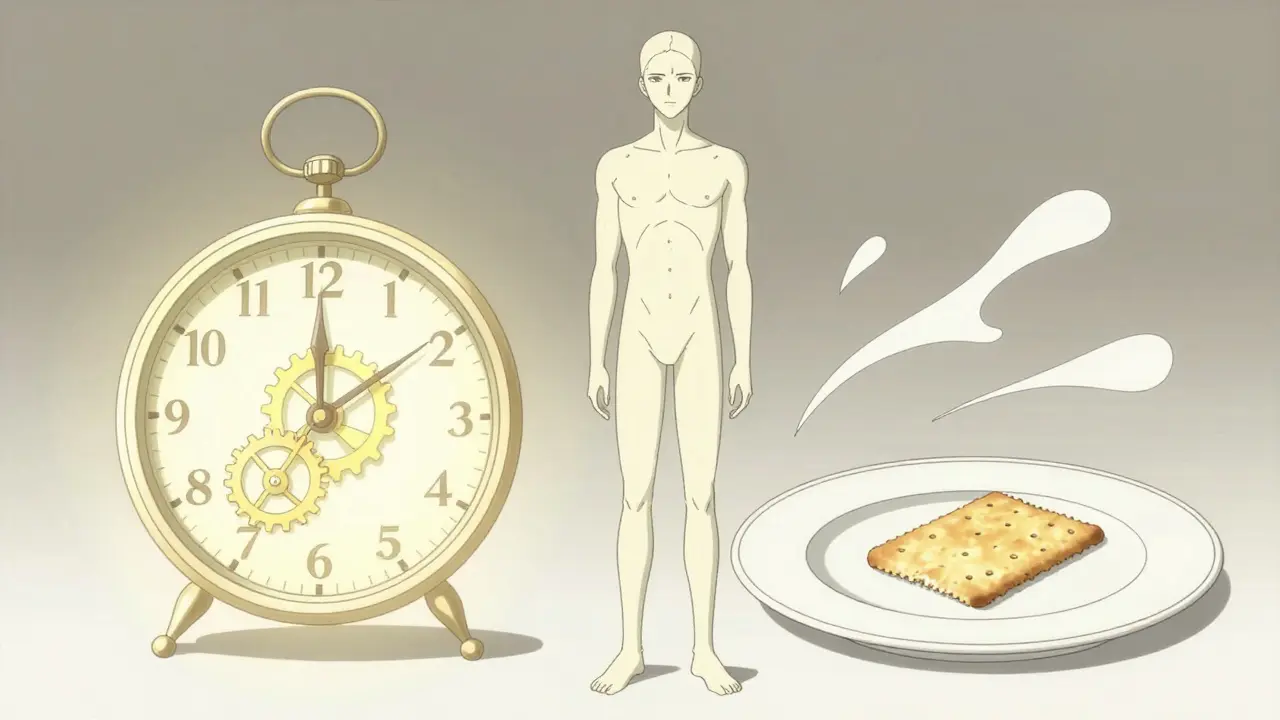
- Take with food: This protects your stomach lining or helps absorption. But what counts as food? Studies show confusion here. Some think a sip of water with a pill counts. It doesn’t. Usually, this means a snack or meal within 30 minutes.
- Take on an empty stomach: This usually means one hour before eating or two hours after. Food can block certain drugs from entering your bloodstream.
- Do not crush or chew: Many pills are "extended-release." Crushing them dumps the entire dose into your system at once, which can be dangerous. Always swallow these whole unless your pharmacist says otherwise.
- Shake well before use: Liquid medications can settle. Shaking ensures you get the correct dose of active ingredient in every spoonful.
- Avoid sunlight: Some drugs make your skin sensitive to UV rays. You need sunscreen and protective clothing when outside.
- Refrigerate: Certain liquids or biologics spoil at room temperature. Check if your fridge is cold enough (usually between 36°F and 46°F).
According to data from CareSfield, prescription labels have an average of 3.7 special instructions, compared to just 1.2 on over-the-counter drugs. That complexity is why reading carefully is so important.
Where to Find These Instructions
Pharmacies don’t always put everything in one place. A 2020 publication by the Cleveland Clinic found that special instructions appear in three main spots:
- Primary Label (32%): Printed directly on the main sticker on the bottle front.
- Supplemental Sticker (47%): A smaller white or colored sticker added below the main label. This is the most common spot for extra warnings.
- Separate Inserts (21%): Papers tucked inside the bag or box. These often include detailed Medication Guides required by the FDA for high-risk drugs.
If you only look at the front of the bottle, you might miss half the information. Always check for stickers on the back or bottom, and never throw away the paper inserts until you finish the medication.
The Health Literacy Challenge
Even clear instructions can fail if the language isn’t understood. Health literacy-the ability to process basic health information-is a huge factor. About 36% of U.S. adults have below-basic health literacy. A study published in PMC by Dr. Terry C. Davis found that nearly half of primary care patients misunderstand their prescription labels.
Consider the instruction "Take every 12 hours." Many patients interpret this as "morning and night" based on when they wake up and sleep. If you wake up at 7 AM and sleep at 11 PM, that’s only 16 hours apart. Taking doses too close together can cause toxicity; taking them too far apart lets the drug level drop too low. The Harvard Health study noted that 53% of patients misinterpret timing instructions like this.
Language barriers add another layer of difficulty. A 2022 UCSF study showed that Spanish-speaking patients were 3.2 times more likely to misinterpret "take with food" than English speakers. If English is not your first language, ask your pharmacist for translated materials or use a trusted family member to help verify the instructions.
| Instruction | Common Misinterpretation | Correct Action |
|---|---|---|
| Take with food | With a glass of water or tiny snack | Within 30 mins of a substantial meal/snack |
| Every 12 hours | Morning and bedtime (variable gap) | Exactly 12 hours apart (e.g., 8 AM & 8 PM) |
| Empty stomach | No solid food all day | 1 hour before or 2 hours after eating |
| Discard after 14 days | Keep until bottle is empty | Throw out remaining liquid after date |

How to Read Your Label Safely
To avoid errors, adopt a systematic approach. The Dana-Farber Cancer Institute recommends a three-step verification process:
- Locate All Instructions: Check the front label, any supplemental stickers, and the paper insert. Don’t assume the front has everything.
- Clarify Ambiguities: If "full meal" or "small snack" isn’t defined, ask your pharmacist. Is a banana enough? Is coffee considered food?
- Create Reminders: Use phone alarms or pill organizers. Timing errors are common because life gets busy. Set alerts for "8 AM" and "8 PM" rather than vague "morning/night" reminders.
For those with vision issues, request large-print labels. Most pharmacies offer this for free. Additionally, consider using medication reminder apps, which studies show improve adherence by helping patients track complex schedules.
Future of Medication Labeling
Technology is changing how we receive these instructions. The FDA launched a pilot program in June 2023 testing augmented reality (AR) labels. By scanning the bottle with a smartphone, patients could watch video demonstrations of how to take the drug. While not yet widespread, this addresses the literacy gap by showing, not just telling.
Also, the American Medical Association introduced a new billing code in 2023 for "medication instruction clarification." This allows doctors to spend five minutes explaining labels during a visit, ensuring you leave with a clear plan. If you feel confused, ask for this consultation-it’s covered and designed specifically for this purpose.
What does "take with food" mean on a prescription label?
It generally means you should take the medication within 30 minutes of eating a snack or meal. This helps protect your stomach from irritation or improves how your body absorbs the drug. A few bites of crackers or a small sandwich usually suffice, but check with your pharmacist if you have dietary restrictions.
Why do some bottles say "do not crush"?
Many pills are designed as extended-release or enteric-coated. Crushing them destroys the mechanism that controls how fast the drug enters your blood. This can cause a sudden, dangerous overdose or damage the pill's coating meant to protect it from stomach acid. Always swallow these whole unless instructed otherwise.
Where are special instructions located on a prescription bottle?
They appear in three places: directly on the main label (32%), on a supplemental sticker attached to the bottle (47%), or in separate printed papers inside the bag (21%). Always check all three locations to ensure you haven't missed critical safety info.
What does "discard unused portion after 14 days" mean?
This applies mainly to liquid antibiotics or compounded medications. Once mixed or opened, these drugs lose potency or become unsafe due to bacterial growth after a set time. Even if you have pills left, you must throw them away on that date to avoid taking ineffective or harmful medicine.
How can I better understand my medication labels if I have low health literacy?
Ask your pharmacist to explain terms in plain language. Request large-print labels if vision is an issue. Use pill organizers with time slots to manage dosing. You can also ask your doctor for a "medication instruction clarification" session, which is billable under current insurance codes, to ensure you fully grasp the directions.