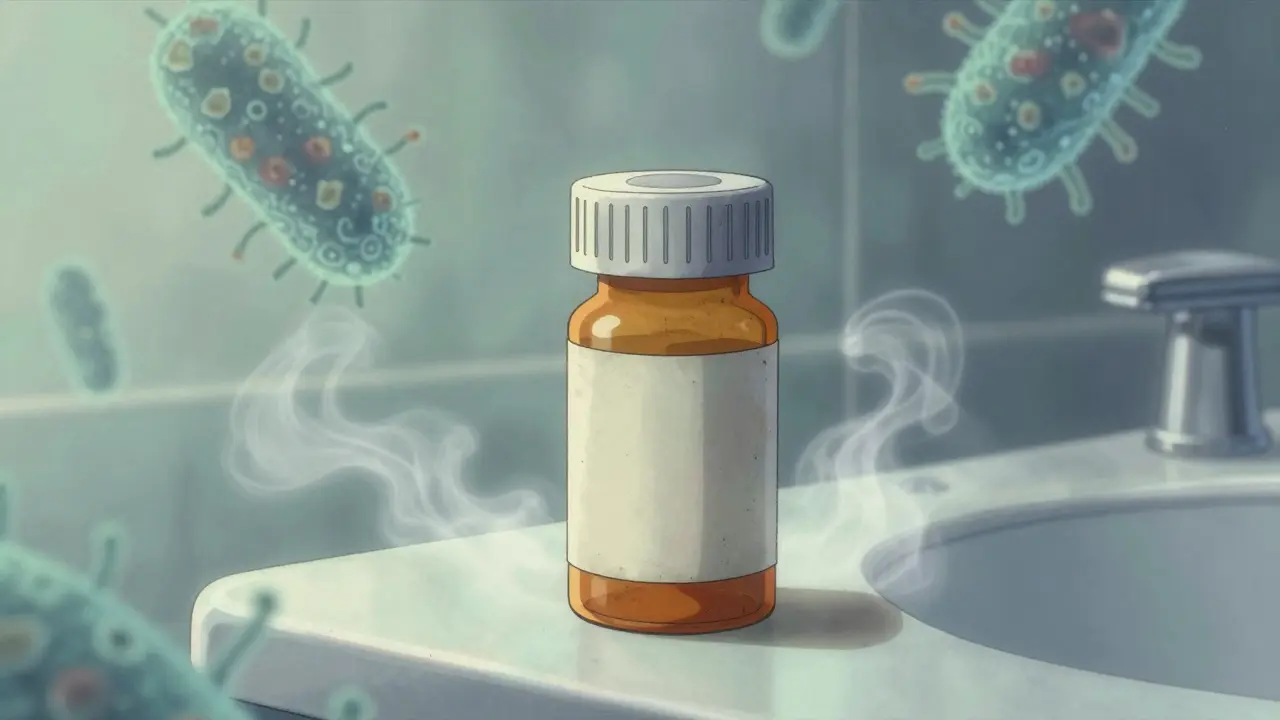
That bottle of amoxicillin sitting in your cabinet has been there for a while. The date on the label is months past, but the pills look fine. You’re feeling under the weather, maybe a mild throat infection, and you wonder: can I just take these? It’s a tempting thought, especially when pharmacy lines are long or costs are high. But taking expired antibiotics isn’t just about whether they still work-it’s about whether they might make things worse.
The short answer is no, you shouldn’t use them. While some solid tablets might retain most of their strength for a year or two after the printed date, the risk of treatment failure and contributing to drug-resistant bacteria is too high to ignore. Liquid antibiotics degrade much faster, often becoming useless within weeks. Let’s break down what actually happens to these drugs over time, why the rules differ for pills versus liquids, and what the latest science says about safety.
What Expiration Dates Actually Mean
We tend to think of expiration dates as a cliff edge-day one the medicine is perfect, day two it turns into poison. That’s not how pharmaceutical chemistry works. An expiration date is simply the last day the manufacturer guarantees that the drug maintains 100% of its labeled potency and safety, assuming it was stored correctly.
This standard comes from regulations established by the U.S. Food and Drug Administration (FDA) in 1979. Manufacturers run stability tests to see how long a drug holds up. They pick a conservative date to ensure legal protection and patient safety. It doesn’t mean the drug instantly becomes toxic or inert the next day. However, relying on that guarantee is crucial because we can’t easily test the potency of a single pill at home.
During the 1980s and 90s, the U.S. Department of Defense ran the Shelf Life Extension Program (SLEP). They tested thousands of lots of medications, including many antibiotics. The results were surprising: about 90% of these drugs kept more than 90% of their strength for up to 15 years past the label date if stored in ideal conditions. This data suggests that many solid antibiotics don’t vanish overnight. But "ideal conditions" rarely match the inside of a home bathroom cabinet.
Solid Pills vs. Liquid Suspensions: A Critical Difference
Not all antibiotics behave the same way. The form of the medication matters immensely. If you have a bottle of dry tablets or capsules, they are generally stable. Studies using high-performance liquid chromatography (HPLC) show that solid forms like amoxicillin tablets, cephalexin, and doxycycline hyclate can keep 85-92% of their potency even a year after expiration if kept cool and dry.
Liquids are a completely different story. Once you mix powder with water to create an oral suspension, the chemical structure becomes vulnerable. Amoxicillin/clavulanate suspension loses nearly half its potency within just seven days after the expiration date if left at room temperature. Even refrigerated injectable forms like ceftriaxone degrade significantly within two weeks post-expiration.
| Formulation Type | Example Drug | Potency Retention (1 Year Post-Expiry) | Risk Level |
|---|---|---|---|
| Solid Tablet/Capsule | Amoxicillin | 85-92% | Moderate (Resistance Risk) |
| Solid Tablet/Capsule | Doxycycline | High Stability | Moderate (Resistance Risk) |
| Liquid Suspension | Amoxicillin/Clavulanate | <50% (within weeks) | High (Treatment Failure) |
| Injectable Solution | Ceftriaxone | ~68% (within 14 days) | High (Safety/Potency) |
If you are dealing with a child’s antibiotic suspension, throw it out immediately if it’s past the date. The degradation is rapid and unpredictable. For adults with solid pills, the chemical might still be there, but the biological effect is where the real danger lies.
The Hidden Danger: Antimicrobial Resistance
This is the most important point to understand. Taking an expired antibiotic isn’t just ineffective; it can actively harm public health. When an antibiotic loses potency, it delivers a sub-therapeutic dose. Instead of killing the bacteria causing your infection, it merely weakens them.
Bacteria are resilient. When exposed to low levels of antibiotics, the weakest ones die, but the stronger ones survive. These survivors then multiply, creating a population of bacteria that is resistant to that specific drug. This is how superbugs are born. The Infectious Diseases Society of America (IDSA) warns that this creates "perfect conditions for selection of resistant mutants."
A 2023 analysis looked at pediatric cases and found terrifying numbers. Expired amoxicillin showed a 98.7% resistance rate against common pathogens like Escherichia coli, compared to only 14.3% for fresh medication. The minimum inhibitory concentration (MIC)-the amount of drug needed to stop bacterial growth-skyrocketed. In simple terms, the bacteria became nearly immune to the drug because the dose was too low to kill them effectively.
You might feel better temporarily as your body fights off the weakened attack, but the infection can return stronger, harder to treat, and potentially dangerous. This isn’t just about your personal health; it’s about making future infections untreatable for everyone.

Why You Can’t Trust Your Eyes or Nose
Many people believe they can tell if a medicine has gone bad by looking at it. If it’s discolored, crumbling, or smells weird, it’s bad. If it looks normal, it’s good. This is a dangerous myth.
Research published in the Journal of Pharmaceutical Sciences in 2021 showed that 89.3% of degraded antibiotics showed no visible changes. They didn’t change color. They didn’t develop an odor. They didn’t taste different. Yet, they had lost between 40% and 75% of their potency. You cannot visually distinguish a potent pill from a useless one.
Surveys confirm this gap in knowledge. A study of over 2,000 patients found that 78.3% couldn’t tell the difference between potent and degraded antibiotics. More alarmingly, 62.7% believed that cloudiness or color change was a reliable indicator, which is false for most solid dosage forms. Relying on sensory checks gives you a false sense of security.
Storage Conditions Matter More Than You Think
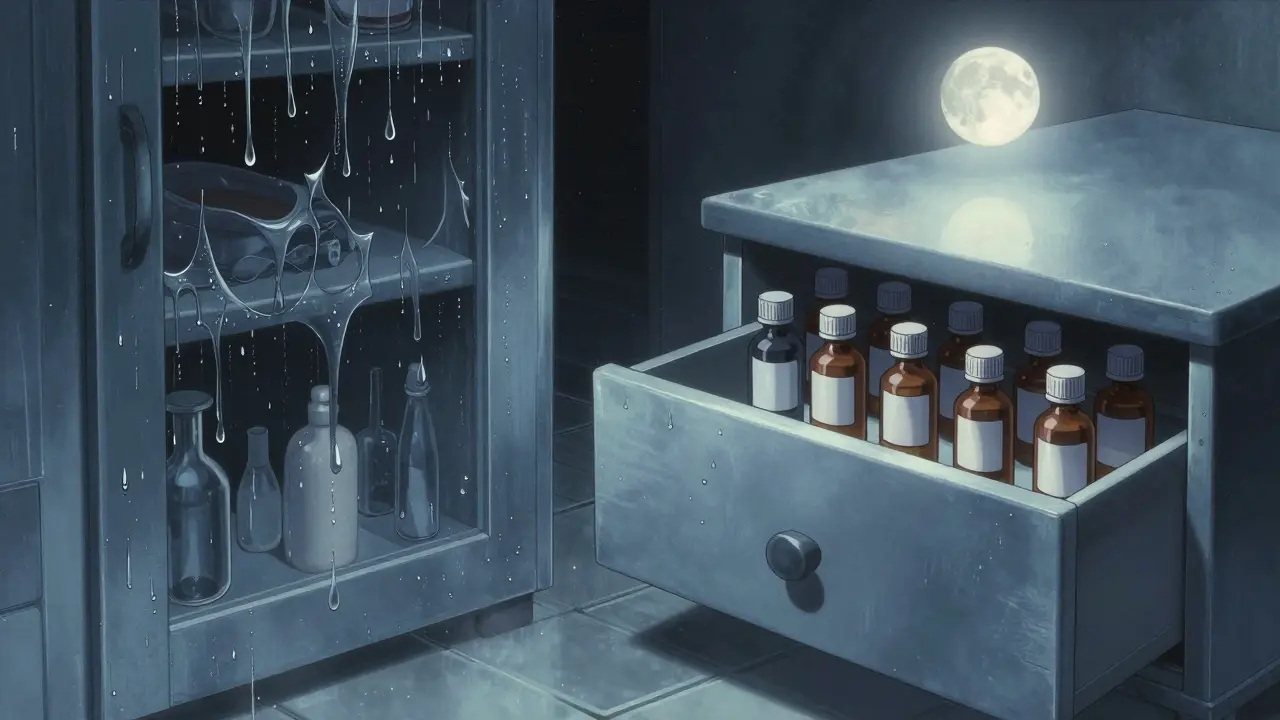
Where you keep your medicine plays a huge role in how fast it degrades. Most people store meds in the bathroom. This is the worst place for them. Bathrooms are hot and humid due to showers and baths.
Data from the American Society of Health-System Pharmacists shows that antibiotics stored in original containers with desiccants at 15-25°C (59-77°F) and 35-45% humidity maintain potency 37% longer than those in bathroom cabinets. The average bathroom sits at around 28.7°C (83.7°F) with over 70% humidity. Heat and moisture accelerate hydrolysis, especially in beta-lactam antibiotics like penicillins and cephalosporins. Degradation rates jump from 0.5% per month before expiration to 12.7% per month after, under these poor conditions.
To maximize shelf life, store medicines in a cool, dry place away from direct sunlight. A bedroom drawer or a closet shelf is far better than a bathroom counter. Keep them in their original packaging to protect against light and moisture.
Regulatory Stances and Expert Opinions
The official line from major health bodies is clear: do not use expired medications. The FDA states that potency and safety can no longer be assured. The European Medicines Agency (EMA) allows for a slight extension (6-12 months) for solid forms in emergencies but explicitly excludes liquids and drugs used for life-threatening infections.
However, experts acknowledge nuances during shortages. Dr. Lee Cantrell from the California Poison Control System notes that properly stored solid antibiotics might retain efficacy for 12-24 months post-expiration based on SLEP data, but this requires a careful risk-benefit assessment by a professional. Meanwhile, the World Health Organization (WHO) identifies inappropriate use of expired antibiotics as a significant contributor to global resistance, estimating it accounts for 4.3% of resistance cases worldwide.
In low- and middle-income countries, the problem is acute. A WHO study found that nearly 90% of community pharmacies dispense antibiotics close to expiration, and 43.7% knowingly dispense expired products during shortages. This leads to higher treatment failure rates. In developed nations, the choice is yours, but the guidance remains strict to prevent resistance.
What To Do With Expired Medications
Don’t flush them down the toilet unless the label specifically says so. Flushing contributes to water contamination. Don’t throw them loosely in the trash where pets or children might find them.
The best option is a drug take-back program. Many pharmacies and police stations host collection bins. If you can’t find one, mix the pills with an unappealing substance like used coffee grounds or cat litter, seal them in a container, and throw them in the trash. Remove or scratch out personal information from the prescription label before disposing of the bottle.
FAQ
Can I take expired antibiotics for a minor infection?
No. Even for minor infections, using expired antibiotics risks treatment failure and promotes antimicrobial resistance. Sub-therapeutic doses allow bacteria to survive and become stronger, making future infections harder to treat. Always consult a healthcare provider for current, effective treatment options.
How long do liquid antibiotics last after mixing?
Most reconstituted liquid antibiotics, such as amoxicillin suspensions, should be discarded 10 to 14 days after mixing, regardless of the expiration date on the original bottle. Check the specific instructions on your prescription label, as some may require disposal sooner. Never use liquid antibiotics past this window.
Do expired antibiotics become toxic?
Generally, no. Most antibiotics do not turn into poisonous substances as they age. The primary risk is loss of potency, meaning they won’t work effectively. The exception is tetracycline, which can degrade into compounds that may harm the kidneys, though this is rare. The bigger danger is untreated infection and resistance.
Why are bathroom cabinets bad for storing medicine?
Bathrooms experience frequent fluctuations in temperature and humidity due to showers and baths. High heat and moisture accelerate the chemical breakdown of medications, particularly antibiotics. Store medicines in a cool, dry place like a bedroom drawer or closet to maintain their stability and potency.
Is it safe to share leftover antibiotics with someone else?
Absolutely not. Antibiotics are prescribed for specific types of bacteria and individual patient needs. Sharing them can lead to incorrect dosing, allergic reactions, and increased antibiotic resistance. Always complete your full course as directed by your doctor and dispose of any leftovers safely.
What should I do if I can’t afford new antibiotics?
Contact your pharmacist or doctor immediately. They may offer generic alternatives, sample medications, or assistance programs. Using expired drugs is risky and often less effective than finding a low-cost, current alternative. Many communities have resources to help manage medication costs safely.