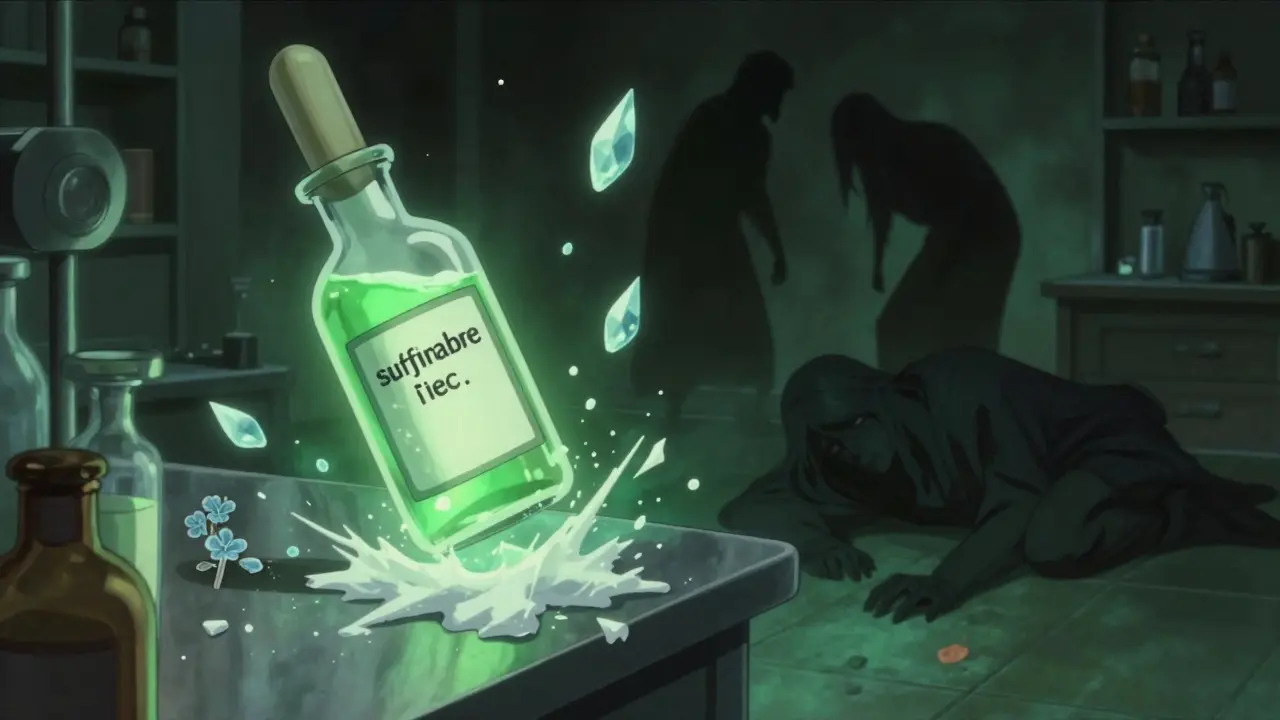
The Federal Food, Drug, and Cosmetic Act (FD&C Act) is the backbone of how generic drugs get approved in the U.S. Without it, you wouldn’t see 9 out of 10 prescriptions filled with a generic version today. But this law didn’t start out with generics in mind. It began in 1938, after more than 100 people died from a toxic cough syrup called elixir sulfanilamide. The drug had no safety testing. No warnings. Just a solvent-diethylene glycol-that turned deadly. That tragedy forced Congress to act. The result? A law that finally required drugmakers to prove their products were safe before selling them. But safety alone wasn’t enough to make generics possible. That came decades later.
Before Generics: A Broken System
In the 1960s, the FD&C Act got a major update with the Kefauver-Harris Amendments. These changes demanded that drugs not only be safe, but also effective. Suddenly, every new drug needed proof it worked. But here’s the catch: if a brand-name drug had already proven itself, why should a generic version have to do it all over again? Back then, they did. Generic manufacturers had to submit full new drug applications (NDAs), complete with clinical trials on thousands of patients. It cost millions. Took years. Most companies just gave up. By 1982, only 19% of prescriptions were for generics-even though they cost far less. The system wasn’t broken because of bad science. It was broken because the law didn’t recognize that copying a drug shouldn’t mean starting from scratch.
The Hatch-Waxman Breakthrough
In 1984, Congress changed everything. The Drug Price Competition and Patent Term Restoration Act-better known as the Hatch-Waxman Amendments-rewrote the rules. Named after Senator Orrin Hatch and Representative Henry Waxman, this law created the Abbreviated New Drug Application (ANDA) pathway under Section 505(j) of the FD&C Act. No more repeating clinical trials. Instead, generic companies had to prove one thing: their drug behaves the same way in the body as the brand-name version. That’s called bioequivalence. The FDA requires the generic’s active ingredient, strength, dosage form, and route of administration to match exactly. Then, through blood tests measuring how fast and how much of the drug enters the bloodstream, they check if the generic’s absorption falls within 80% to 125% of the original. If it does? It’s approved.
This wasn’t just a shortcut. It was a game-changer. For the first time, generic drugmakers could compete fairly. And to encourage them, Hatch-Waxman gave the first company to file an ANDA a 180-day exclusivity window. During that time, no other generic could enter the market. That single incentive turned generic drug development into a race. Companies started investing in patent challenges, digging through the brand-name manufacturer’s patents to find ones that didn’t hold up. When they succeeded, they got a head start on the market-and the profits that came with it.
The Orange Book and Patent Games
The FDA’s Approved Drug Products with Therapeutic Equivalence Evaluations-commonly called the Orange Book-is the bible for generic drug developers. It lists every approved drug, its active ingredients, and every patent tied to it. Generic companies use it to know exactly which patents they need to challenge. But here’s where things get messy. Brand-name companies learned to game the system. They started filing dozens of secondary patents-on packaging, dosing schedules, even inactive ingredients. These weren’t new inventions. They were tweaks. But under Hatch-Waxman, they still counted. That’s called “evergreening.” One study found that for complex drugs like inhalers and injectables, patent thickets have delayed generic entry by 42% compared to simple pills. In 2021, the Federal Trade Commission reported that these tactics cost consumers billions in extra spending. The law was meant to balance innovation and competition. But over time, the scale tipped.
How Generics Are Made-and Why They’re Safe
Let’s say you’re taking a generic version of Lipitor. You might think, “How do I know it’s the same?” The answer lies in the ANDA process. The generic company doesn’t just copy the pill. They reverse-engineer it. They test the chemical structure. They replicate the manufacturing process. Then they run tests on hundreds of healthy volunteers, measuring how much of the drug ends up in the blood over time. If the peak concentration (Cmax) and total exposure (AUC) fall within the FDA’s 80-125% range, it’s approved. That’s not guesswork. It’s science. And it’s backed by data from over 7,000 ANDAs approved since 2010. The FDA doesn’t just approve these drugs. They audit the factories. In 2022, they issued 47 warning letters to generic manufacturers for violations like poor quality control or falsified data. If a plant fails an inspection, the FDA can block shipments. That’s real oversight.
Costs, Savings, and the Bigger Picture
The numbers speak for themselves. In 1984, generics made up 3% of total drug spending. Today? Just 17%. But they fill 90% of prescriptions. That’s how powerful this system is. Over the last decade, generic drugs saved U.S. consumers $2.2 trillion. The Congressional Budget Office estimates they’ll save the federal government another $158 billion by 2032. And it’s not just about price. It’s about access. Without generics, millions of people with chronic conditions like high blood pressure, diabetes, or depression couldn’t afford their meds. The FD&C Act, through Hatch-Waxman, didn’t just lower prices. It made medicine accessible.
What’s Next? Complex Drugs and New Rules
But the system isn’t perfect. Today, the biggest challenges aren’t with pills. They’re with inhalers, injectables, nasal sprays, and topical creams. These are called complex products. Their chemistry is harder to replicate. Bioequivalence studies are trickier. And brand-name companies have used that complexity to delay generics even longer. In response, Congress passed the CREATES Act in 2019 to stop brand manufacturers from refusing to sell samples to generic companies-a tactic used to block testing. The FDA also launched the Generic Drug User Fee Amendments (GDUFA) in 2012. It gave the agency more funding to hire reviewers and improve inspection systems. Since then, approval times have dropped from over 30 months to under 10 months for priority applications. And by 2024, the FDA plans to release new guidance for complex generics like ophthalmic suspensions and nasal sprays. The goal? Make sure the same rules that worked for pills work for everything else.
Compliance Is Non-Negotiable
If you’re a company making generics, you’re not just following a law-you’re living under it. The FD&C Act bans adulterated and misbranded drugs. That means no contamination. No false claims. No cutting corners. Violations can lead to civil penalties of over $1 million per incident. In extreme cases, executives face criminal charges. The FDA doesn’t just inspect plants. They track every batch. They audit data logs. They monitor complaints. And if something goes wrong, they act fast. That’s why the vast majority of generics are safe. Not because they’re cheap. But because they’re held to the same standard as the brand.
Why This Matters to You
When you pick up a generic prescription, you’re not just saving money. You’re benefiting from a legal framework that’s been refined over 85 years. It started with a tragedy. It grew through compromise. And it continues to evolve because the stakes are too high to stay still. The FD&C Act didn’t create generics. But it gave them a fair shot. And that’s why today, you can get the same medicine your doctor prescribed-for a fraction of the cost. It’s not magic. It’s law. And it works.