
Key Takeaways for Families
- The 12-Week Window: Treatment started within three months of the first episode significantly improves long-term recovery.
- CSC is the Gold Standard: Coordinated Specialty Care (CSC) is a team-based approach that beats traditional care in every major metric.
- Family Role: Family psychoeducation isn't optional; it can reduce relapse rates by up to 25%.
- Functional Goals: The focus isn't just on removing symptoms, but on getting back to work or school.
What Exactly is First-Episode Psychosis?
When we talk about First-Episode Psychosis, we aren't talking about a single diagnosis like schizophrenia. Instead, FEP is a term for the very first time someone experiences a break from reality. This usually happens in late adolescence or early adulthood, typically between ages 15 and 35. It manifests as disruptions to thoughts and perceptions that make it hard to tell what is real and what is imagined.
You might notice hallucinations, like seeing things that aren't there, or delusions, which are strong beliefs in things that aren't true. Some people struggle with disorganized speech-jumping from topic to topic in a way that doesn't make sense-or exhibit abnormal behaviors, such as withdrawing completely from social life or neglecting personal hygiene. The danger here isn't just the symptoms; it's the delay in treatment. Research shows that waiting even three to six months to get help can lead to functional decline that is hard to reverse. This is why clinicians call this period a "window of opportunity." Your brain is still neuroplastic, meaning it can adapt and recover much better now than it will five years from now.
The Game Changer: Coordinated Specialty Care (CSC)
For a long time, the standard was to give a patient some medication and a referral to a therapist. We now know that isn't enough. Enter Coordinated Specialty Care (CSC). This is a multidisciplinary team approach designed specifically for FEP. Rather than visiting four different offices, the patient gets a wrapped-around service where everyone is on the same page.
The data from the RAISE project is staggering. People receiving CSC stayed in treatment longer and saw a 32% better improvement in their psychiatric scores compared to those in traditional care. More importantly, they were 40% more likely to be back in school or working. CSC doesn't just treat a disease; it treats a person's life. It focuses on the "whole person," recognizing that a pill can stop a hallucination, but it won't help a 19-year-old figure out how to return to college after a mental health crisis.
| Metric | Standard Care | CSC Approach |
|---|---|---|
| Treatment Retention | 40-50% | 65-75% |
| Symptom Reduction Speed | Baseline | 30-40% Faster |
| Employment/Education Rates | 20-30% | 50-60% |
| Relapse Reduction (Family Support) | Low/Variable | 25% Reduction |
The Five Pillars of Early Intervention
If you are entering a CSC program, you should expect five specific components. If a program is missing these, it might not be following the evidence-based model.
- Case Management: This is your air traffic controller. A care manager helps you navigate the system, often checking in 2-3 times a week during the most acute phases of the illness to ensure nothing falls through the cracks.
- Medication and Primary Care: This involves the use of Antipsychotics. Experts now recommend a "low and slow" approach. Using the lowest effective dose reduces side effects and improves the patient's willingness to stay on the meds. It's also vital to monitor metabolic health-weight and blood sugar-since some of these meds can increase the risk of metabolic syndrome.
- Recovery-Oriented Psychotherapy: This isn't just talking about your childhood. It uses Cognitive Behavioral Therapy (CBT) adapted for psychosis. It teaches the person how to manage their symptoms, build resilience, and challenge the delusions they might be experiencing.
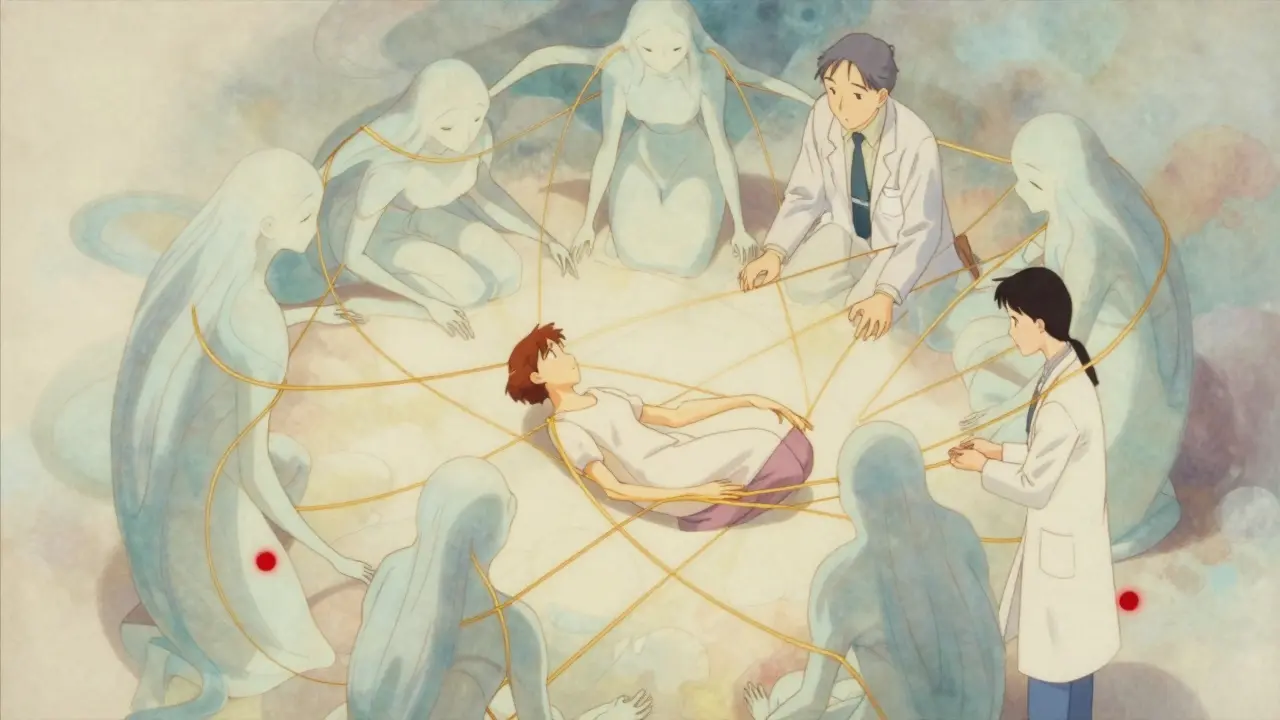
- Family Psychoeducation: This is where the family comes in. You aren't just the "support system"; you are part of the treatment. Structured sessions (usually 8-12 over six months) teach families how to communicate, reduce stress in the home, and spot early warning signs of a relapse.
- Supported Employment and Education: Many programs use the Individual Placement and Support (IPS) method. Instead of "training" a person for months before they look for a job, IPS helps them find a competitive job immediately and provides coaching on the job. It's the difference between practicing for a game and actually playing it.
Why Family Support is a Non-Negotiable
When a young person experiences psychosis, the whole family is thrown into a crisis. Parents often feel guilt, fear, or complete confusion. Many try to "rationalize" the symptoms away, telling the patient that what they are seeing isn't real. While logically true, this can actually alienate the patient and make them stop trusting their family.
Family psychoeducation changes the dynamic. It moves the family from a state of crisis to a state of collaboration. By learning the biological basis of FEP, families stop blaming themselves or the patient. When a home environment is low-stress and supportive, the risk of the patient relapsing drops significantly. It is one of the few interventions that has a direct, measurable impact on whether someone ends up back in the hospital.

Overcoming the Barriers to Care
Despite the evidence, getting into a CSC program is still too hard. In the U.S., for example, only about 35% of counties have certified programs. Many families find themselves in a "treatment gap" where they have a general psychiatrist but no integrated team. If you find that your local options are limited, look for programs that mention "Early Psychosis Intervention" or the "NAVIGATE" protocol.
Cost is another hurdle. CSC is more expensive upfront-roughly $8,000 to $12,000 per year compared to $5,000 for standard care. However, the long-term economic argument is a no-brainer. Untreated psychosis costs billions in lost productivity and emergency room visits. Investing in the first two to four years of treatment saves the system and the family a fortune in the long run.
What to Expect in the Coming Months
Recovery is not a straight line. You will have good weeks and setbacks. The goal of early intervention is not necessarily a "cure" in the traditional sense, but "functional recovery." This means the person can live a meaningful life, attend school, and have friends, even if they still need some medication or therapy.
For the first six months, expect weekly therapy and frequent check-ins. As things stabilize, the focus shifts toward the long-term. Some research suggests extending CSC from two years to four years helps maintain the gains made in employment and education. The key is to stay the course and maintain the multidisciplinary approach.
How do I know if my child is experiencing their first episode of psychosis?
Look for a combination of changes: social withdrawal, a sudden drop in school performance, talking about things that aren't real, or expressing beliefs that are clearly unfounded (like thinking the TV is sending them secret messages). If these occur alongside a change in sleep patterns or hygiene, seek a professional evaluation immediately.
Are antipsychotic medications safe for young people?
Yes, but they must be managed carefully. For First-Episode Psychosis, the gold standard is to use the lowest effective dose to minimize side effects. It is critical to have a doctor monitor weight and blood glucose levels regularly, as some second-generation antipsychotics can increase the risk of metabolic syndrome.
What is the "window of opportunity" in FEP?
The window of opportunity refers to the first 12 weeks to 12 months after symptom onset. During this time, the brain is more responsive to treatment, and intervening early can prevent the irreversible functional decline often seen in chronic, untreated schizophrenia.
Can someone with FEP actually go back to work or school?
Absolutely. Through the use of Supported Employment and Education (like the IPS model), 50-60% of people in CSC programs achieve competitive employment, compared to only 20-30% in traditional rehab programs.
What if I can't find a Coordinated Specialty Care program near me?
If a full CSC team isn't available, try to build a similar structure. Ensure your psychiatrist is aware of the low-dose guidelines for FEP, find a therapist who specializes in CBT for psychosis, and look for online family support groups or psychoeducation resources to fill the gap.



Goodwin Colangelo
April 5, 2026 AT 17:36Getting that early intervention is everything. I've seen so many people spiral just because they were sitting on a waiting list for six months. The 'low and slow' med approach is a huge deal too, because if you blast a 19-year-old with high doses immediately, they're just gonna quit the meds because they feel like zombies. It's all about that balance of stability and quality of life.
Brian Shiroma
April 6, 2026 AT 00:37Oh sure, because the US healthcare system is just famous for making these life-saving programs accessible and affordable for everyone. Truly a masterpiece of efficiency.
Divine Manna
April 6, 2026 AT 06:37While the data regarding Coordinated Specialty Care is statistically compelling, one must acknowledge that the reduction of a human consciousness to a set of psychiatric scores is a profound oversimplification of the psyche. The biological determinism implied by the 'window of opportunity' fails to account for the existential crisis inherent in a psychotic break. True recovery is not merely the restoration of 'functional' utility-such as employment or schooling-but the integration of the psychotic experience into a coherent narrative of the self. We treat the symptoms to save the worker, yet we ignore the soul in the process. It is a utilitarian victory, perhaps, but a philosophical defeat.
Ace Kalagui
April 6, 2026 AT 17:38I really feel like the point about family support is the most important part here because when you're going through something this heavy, having a home that feels like a safe harbor rather than a courtroom makes all the difference in the world. I've always believed that we are only as strong as the community surrounding us, and if we can just shift the culture to be more accepting and less judgmental during these crises, we can help so many more people find their way back to their true selves while they navigate the complexities of their recovery journey together as a unit.
Rachelle Z
April 7, 2026 AT 11:18Exactly!!! 🌈 It is literally so heartbreaking that so many people are just left to suffer without this kind of help!!! Like, why is it so hard to just give people the care they need??!! 🙄💅
Beth LeCours
April 8, 2026 AT 23:24Too long.
Branden Prunica
April 10, 2026 AT 19:25My god, the sheer terror of this is just unimaginable! One minute you're just living your life and the next the entire universe is lying to you! It's like a nightmare you can't wake up from! The thought of a parent seeing their child slide into that void is absolutely devastating! I can't even process the trauma of it! It's a complete emotional rollercoaster!
angel sharma
April 12, 2026 AT 00:10This is such a powerful reminder that no matter how dark the situation seems, there is always a path toward recovery if we stay proactive and push for the best care possible! We have to keep fighting for these resources to be available in every single city and town because every single person deserves a fighting chance to get their life back on track and achieve their dreams regardless of the challenges they face at the start of their adult life! Keep pushing forward and never lose hope because the right support system can change everything!