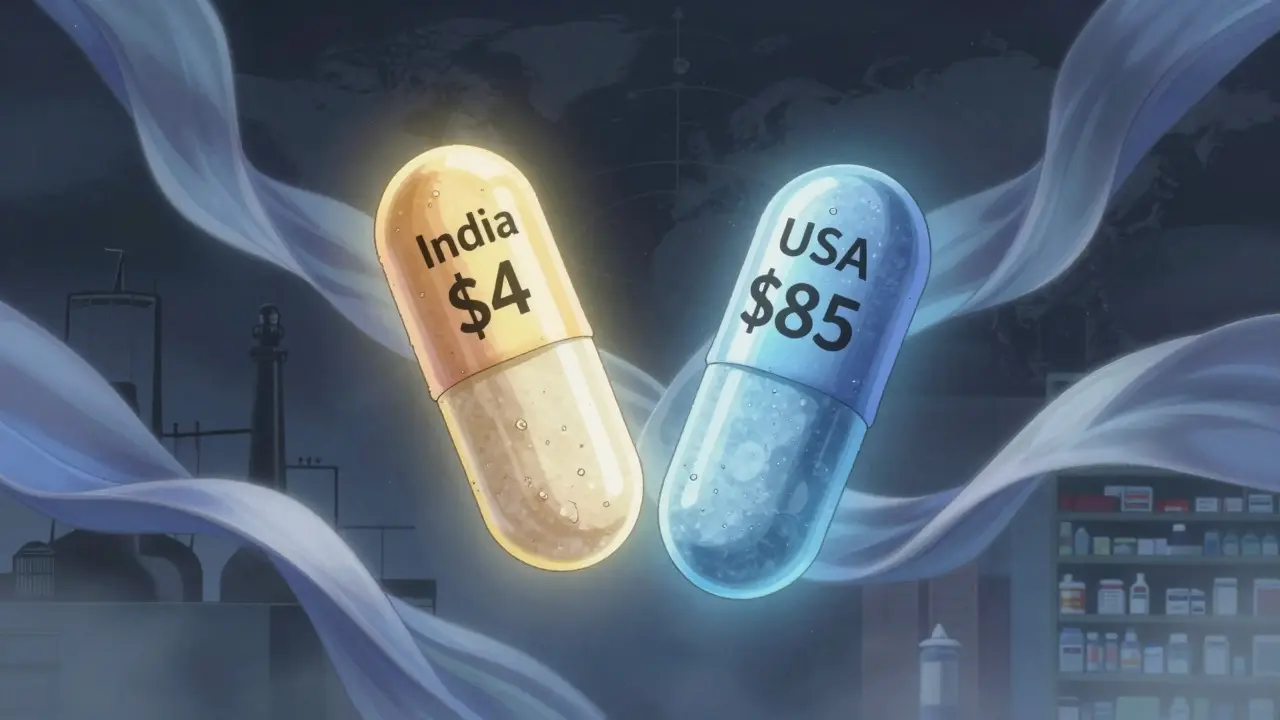
Two people take the same generic pill for high blood pressure. One pays $4 a month in India. The other pays $85 in the United States. Both pills have the same active ingredient, the same dosage, and were made in the same factory in Hyderabad. So why the difference? The answer isn’t about quality-it’s about systems. Around the world, access to generic drugs varies wildly. Some countries have generics in nearly every prescription. Others barely use them. And prices? They can be six times higher in one place than another for the exact same medicine.
Why Some Countries Use Generics Everywhere
In the United Kingdom, 83 out of every 100 prescriptions are filled with generic drugs. Germany isn’t far behind at 80%. The Netherlands, Sweden, and Canada all hover around 70%. These countries don’t just allow generics-they actively push them. Pharmacists are required to substitute brand-name drugs with generics unless the doctor says no. Insurance systems pay the same amount for a generic as they do for the brand, so there’s no financial incentive to choose the more expensive option. This isn’t accidental. It’s policy. In the UK, the National Health Service built its entire cost-control strategy around generics. They negotiate bulk prices with manufacturers and set strict rules for what gets reimbursed. The result? Patients get affordable medicine, and the system saves billions each year.Why Other Countries Still Prefer Brand Names
Switzerland is the opposite. Only 17% of prescriptions there are for generics. Why? It’s not because Swiss doctors don’t know generics work. It’s because patients and doctors trust the original brand. Many believe-rightly or wrongly-that the name-brand version is safer or more reliable. Reimbursement rules also favor brand-name drugs, paying more for them than for generics. So doctors have little reason to switch. Italy and Greece show similar patterns. In Italy, just 19% of prescriptions are generics. The system is fragmented. Hospitals, pharmacies, and regional health authorities all operate under different rules. There’s no national push for substitution. Patients often pay out of pocket, and if they’ve always taken the brand, they keep taking it.The U.S. Paradox: High Usage, High Prices
The United States fills over 90% of prescriptions with generics. That’s the highest rate in the world. But here’s the twist: Americans pay more for those generics than almost anyone else. A 2022 report from the U.S. Department of Health and Human Services found that drug prices in the U.S.-including generics-were 2.78 times higher than in other wealthy countries. How? Because competition doesn’t always mean lower prices. In many cases, only one or two companies make a generic drug. When one manufacturer stops producing it, the price can spike overnight. In 2023, the FDA recorded 147 drug shortages, and 68% of them came from quality issues at single-source factories, mostly in India and China. Even when multiple companies make the same generic, prices don’t always drop. A 2021 study showed that 66% of off-patent drugs in the U.S. had two or more generic manufacturers. In the UK, it was only 50%. Yet U.S. prices stayed high. Why? Because the market is broken. There’s no real negotiation power. Pharmacy benefit managers (PBMs) control access to insurance networks. Manufacturers pay them to get their drugs listed. And patients pay the difference.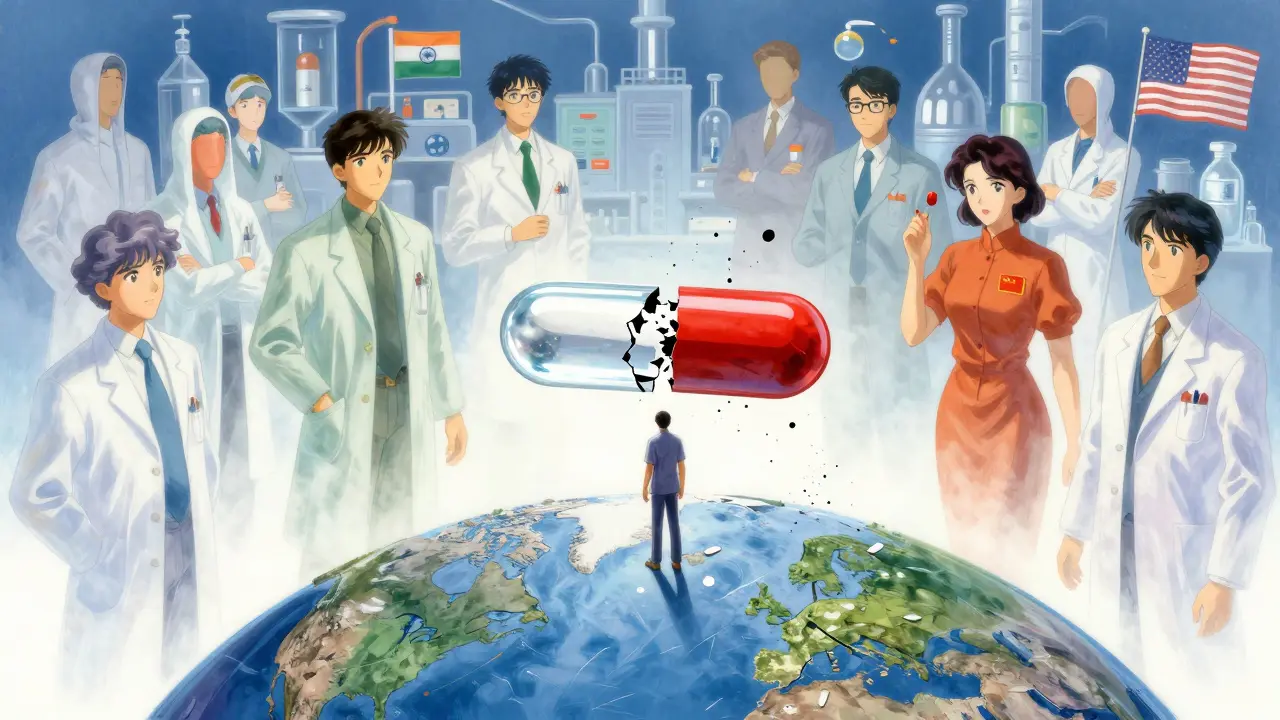
Who Makes the World’s Generics-and Why It Matters
India produces about 20% of all generic drugs worldwide. Nearly 40% of the generics used in the U.S. come from India. There are over 750 Indian manufacturing facilities approved by the FDA. That’s more than any other country. But not all Indian-made generics are the same. A 2023 study from Ohio State University found that Indian-made generics were linked to 54% more severe side effects-including hospitalizations and deaths-compared to identical drugs made in the U.S. The issue isn’t the active ingredient. It’s the fillers, the coating, how the pill breaks down in your body. These details matter, especially for drugs like levothyroxine or metformin, where tiny changes can cause big problems. China is catching up fast. Its FDA-approved facilities jumped from 12 in 2010 to 187 in 2023. But quality control remains inconsistent. The FDA has shut down multiple Chinese plants in the last five years for falsifying data and poor sanitation.Why You Might Get a Different Generic in Canada or Europe
If you travel and need to refill a prescription, you might get a completely different pill-even if it’s labeled the same. A doctor in Chicago reported that a patient who regularly took a generic metformin from a U.S. pharmacy had a severe reaction after switching to a Canadian version. The active ingredient was identical. But the inactive ingredients? Different. The pill dissolved faster in the stomach. The patient’s blood sugar crashed. This happens because countries don’t require identical formulations. The U.S. FDA demands bioequivalence within 80-125% of the brand drug’s absorption rate. The European Medicines Agency uses similar numbers, but their testing methods vary. One country might test absorption over 8 hours. Another over 12. The result? Two pills that work differently in your body.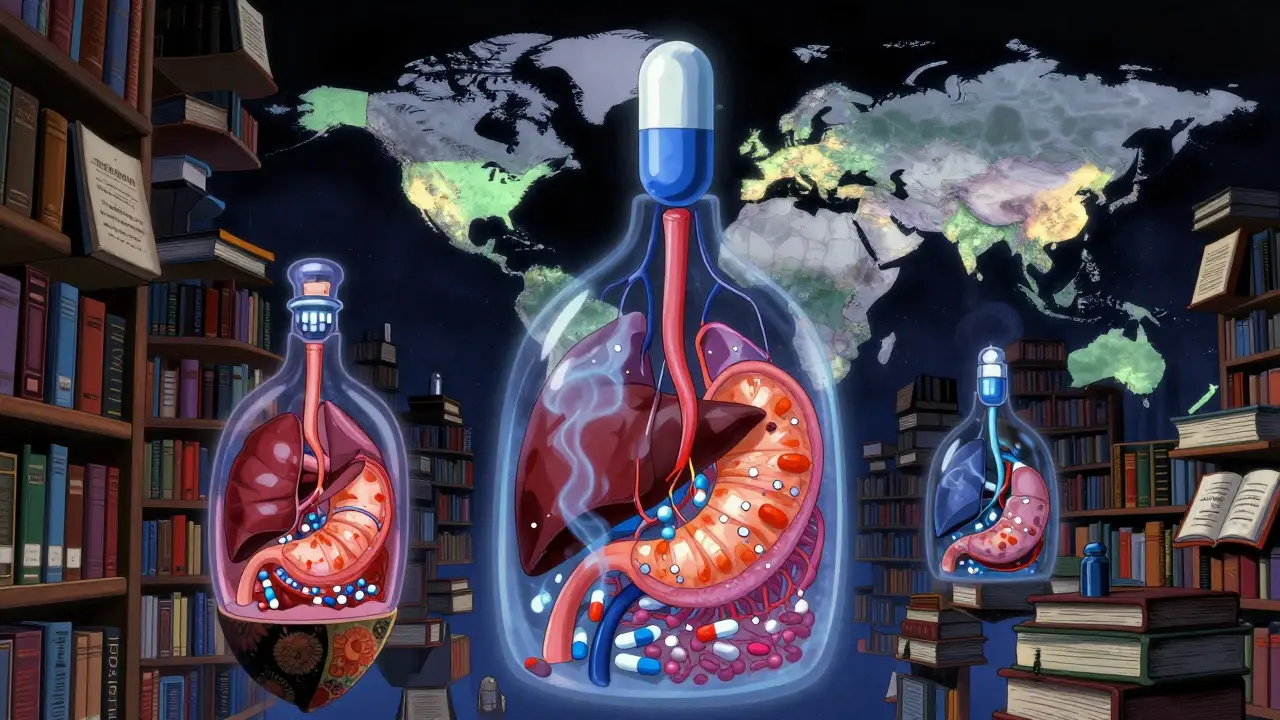
What’s Changing-and What’s Not
The world is slowly trying to fix this. The European Union wants 80% generic use by 2030. The U.S. Inflation Reduction Act now gives the FDA more money to inspect foreign factories and speed up generic approvals. The WHO launched a new global tool to measure generic quality across countries. But big barriers remain. Patent evergreening-when drug companies make tiny changes to extend their monopoly-still delays generic entry. In the U.S. alone, 1,247 new patents were filed on 12 top-selling drugs between 2015 and 2022 to block generics. And then there’s the supply chain. During the pandemic, India temporarily banned exports of 26 key active ingredients. Countries from Australia to Brazil ran out of antibiotics and blood pressure meds. No one had backup plans.What This Means for You
If you’re on a generic drug, here’s what you need to know:- Don’t assume your generic is the same everywhere. Switching brands-even within the same country-can change how your body reacts.
- If you travel, keep your original prescription and ask your pharmacist to match the exact formulation, not just the name.
- Online pharmacies from Canada or India may offer lower prices, but check if they’re certified. PharmacyChecker and LegitScript can help verify.
- If you notice new side effects after switching generics, talk to your doctor. It’s not ‘all in your head.’ It’s a real difference in how the pill works.
Generics were meant to save money and make medicine accessible. But without strong, consistent rules, they become a gamble. The pill in your bottle might be safe. Or it might not be. And you won’t know until you take it.
Why are generic drugs cheaper if they’re the same as brand-name drugs?
Generic drugs are cheaper because they don’t need to repeat expensive clinical trials. The original brand paid millions to prove the drug works and is safe. Generic makers only prove their version behaves the same in the body-called bioequivalence. That cuts development costs by up to 90%. They also don’t spend money on advertising or fancy packaging. But that doesn’t mean they’re identical in every way-fillers, coatings, and manufacturing quality can vary.
Can I trust generic drugs made in India or China?
Many are safe and effective. Over 750 Indian and 187 Chinese factories are approved by the U.S. FDA. But quality isn’t guaranteed. A 2023 study found Indian-made generics had 54% more severe side effects than U.S.-made ones, especially for older drugs where margins are thin. The FDA inspects foreign plants-but often gives advance notice, so companies can clean up before inspectors arrive. Unannounced inspections are rare. If you’re on a critical medication like thyroid or blood thinners, ask your pharmacist where your generic is made and whether there are alternatives.
Why does my generic pill look different every time I refill it?
Because different manufacturers make the same generic drug. Each one uses different fillers, colors, and shapes to distinguish their version. The active ingredient is the same, but how it’s made can affect how quickly it dissolves in your stomach. For most drugs, this doesn’t matter. But for drugs like levothyroxine, warfarin, or seizure meds, even small changes can cause problems. If you notice side effects after switching, tell your doctor. You may need to stick with one brand.
Is it safe to buy generics online from other countries?
It can be, but only if you use verified pharmacies. Sites like PharmacyChecker and LegitScript list approved international pharmacies. Many people save 60-80% buying from Canada or the UK. But avoid websites that don’t require a prescription or don’t list a physical address. Fake or unregulated generics are a real risk-some contain no active ingredient, or the wrong dose. In 2022, the FDA seized over 10 million fake pills from online sellers. If it sounds too good to be true, it probably is.
Why don’t all countries have the same generic drug options?
Each country has its own regulatory system. The U.S. FDA, Europe’s EMA, and Health Canada all have different rules for approving generics. Some countries require local clinical trials. Others accept foreign data. Manufacturing standards, pricing rules, and patent laws also vary. If a generic isn’t profitable in a small market, companies won’t bother registering it. That’s why some drugs are available in the U.S. but not in Germany-or vice versa.



Luke Davidson
January 25, 2026 AT 01:53Man I never realized how wild this stuff is until I had to switch my blood pressure med last year. One batch made me dizzy as hell, next one was fine. Turns out the filler changed and my body went nuts. No one told me this could happen. Now I always check the manufacturer code before I refill.
Josh McEvoy
January 25, 2026 AT 16:03so like… india makes most of our pills?? and we pay 20x more?? 😭 my pharmacist just shrugged when i asked why mine looked different this time. like bro i’m not a lab rat.
Heather McCubbin
January 25, 2026 AT 22:55They let Chinese factories make our heart meds and wonder why people are dying? This isn't capitalism this is just murder with a prescription pad. No one cares until it's your grandma on levothyroxine and her TSH goes nuclear because some guy in a warehouse skipped a quality check.
Shanta Blank
January 26, 2026 AT 19:13Let me get this straight - we’re outsourcing our life-saving drugs to countries with zero accountability and then acting shocked when people get sick? The FDA does advance notice inspections?? That’s like having a fire marshal show up when you’ve already put out the flames. This system is rigged. And the PBMs? They’re the real villains. They don’t care if you live or die - only if the rebate check clears.
Tiffany Wagner
January 28, 2026 AT 13:34I’ve been on metformin for 8 years. I switched generics last winter and had terrible stomach cramps. Took me months to figure out it wasn’t my diet. My doctor didn’t even know the fillers could cause that. I’m just glad I noticed before it got worse. Maybe we need a database where people can report bad batches?
Chloe Hadland
January 28, 2026 AT 22:53It’s wild how something so simple - a pill - can be this complicated. I used to think generics were just cheaper versions. Now I see they’re like different brands of coffee. Same bean, different roast, different taste. And nobody tells you which roast you’re getting until you drink it.
Amelia Williams
January 30, 2026 AT 18:14My mom takes warfarin. One time she switched generics and her INR spiked to 5. She almost bled out. Turns out the coating dissolved faster and her body absorbed it too quick. Now she only takes the one from the same manufacturer. We keep the bottle as a reference. This isn’t just about price - it’s about survival. We need standardized labeling across borders. No more guessing games with life-saving meds.
And why do we let PBMs control access? They’re middlemen who don’t make anything but pocket billions. If we cut them out, prices would drop overnight. It’s not rocket science - it’s greed.
India’s factories aren’t evil. They’re doing what they’re paid to do. The problem is the system that lets one company monopolize a drug, then drops production and lets prices skyrocket. That’s not free market - that’s extortion.
I used to think generics were all the same. Now I know better. I read the manufacturer name on every bottle. I check PharmacyChecker before I order online. I tell my doctor every time I get a different pill. It’s exhausting. But it’s my life.
And yes - I’ve seen the FDA inspections. They show up when they’re told to. The factories clean up like it’s a TV show. Real inspections? Rare. We need random, unannounced checks. No warnings. No prep. Just show up and see what’s really happening.
Viola Li
January 30, 2026 AT 22:32Of course the U.S. pays more. We’re the only country that lets drug companies run wild. In Canada they negotiate prices like adults. In Europe they have public health as a priority. Here? It’s all about profit. You think this is about medicine? No. It’s about shareholders. The FDA isn’t protecting you - it’s protecting Big Pharma’s bottom line.
Dolores Rider
February 1, 2026 AT 07:25They’re putting rat poison in our pills and calling it ‘bioequivalent.’ I know this for a fact. My cousin died after switching generics. The company covered it up. The FDA buried the report. They’re all in on it - doctors, pharmacists, the government. You think your insurance helps? Nah. They’re paid by the drug companies. You’re not a patient. You’re a revenue stream.
And don’t even get me started on the Chinese labs. They’re not even real labs. They’re basements with a printer that prints ‘FDA Approved.’ I’ve seen the videos. They’re stitching pills together with glue. I’m not paranoid. I’m informed.
venkatesh karumanchi
February 1, 2026 AT 12:14As someone who works in pharma in Hyderabad - I can say this: we make the pills with pride. We follow the specs. But sometimes the buyer asks for cheaper fillers. We don’t control the final price. We just make what’s ordered. The problem isn’t us. It’s the middlemen who buy cheap and sell high. We want to help. But we’re stuck in the middle.
Jenna Allison
February 2, 2026 AT 02:42For anyone on levothyroxine: stick with the same generic. The bioequivalence window is 80-125%, but even a 5% difference can throw off your thyroid levels. That’s not a glitch - it’s a clinical risk. I’ve seen patients crash because they switched brands. Ask your pharmacist for the NDC code. Track it. Don’t let them swap it without telling you. This isn’t just about cost - it’s about precision medicine.
Darren Links
February 3, 2026 AT 17:46Why are we letting foreigners make our medicine? We used to make everything here. Now we’re dependent on India and China? That’s national security risk #1. If they cut off supply, we’re screwed. We need to bring manufacturing back. Tax incentives. Subsidies. Whatever it takes. America first - even for pills.
Jamie Hooper
February 5, 2026 AT 16:45bloody hell mate, i got my generic from canada last month and it was like a different drug. my knees were killing me. turned out the coating was different. now i only buy from the same batch. no more ‘same thing different label’ nonsense. this system is a shambles.