Liver Disease Dose Adjuster
Your liver processes 70% of common medications. In liver disease, reduced clearance means drugs can accumulate, increasing side effects and overdose risk.
Results will appear here after calculation
When your liver isn't working right, the drugs you take don't behave the way they should. This isn't just a theoretical concern-it's a daily reality for millions of people with liver disease. A simple dose of painkiller, sedative, or antibiotic can become dangerous if your liver can't clear it properly. The problem isn't that these drugs are unsafe. It's that your body's ability to process them has changed-and most doctors and pharmacists still don't adjust doses the way they should.
Why Your Liver Matters More Than You Think
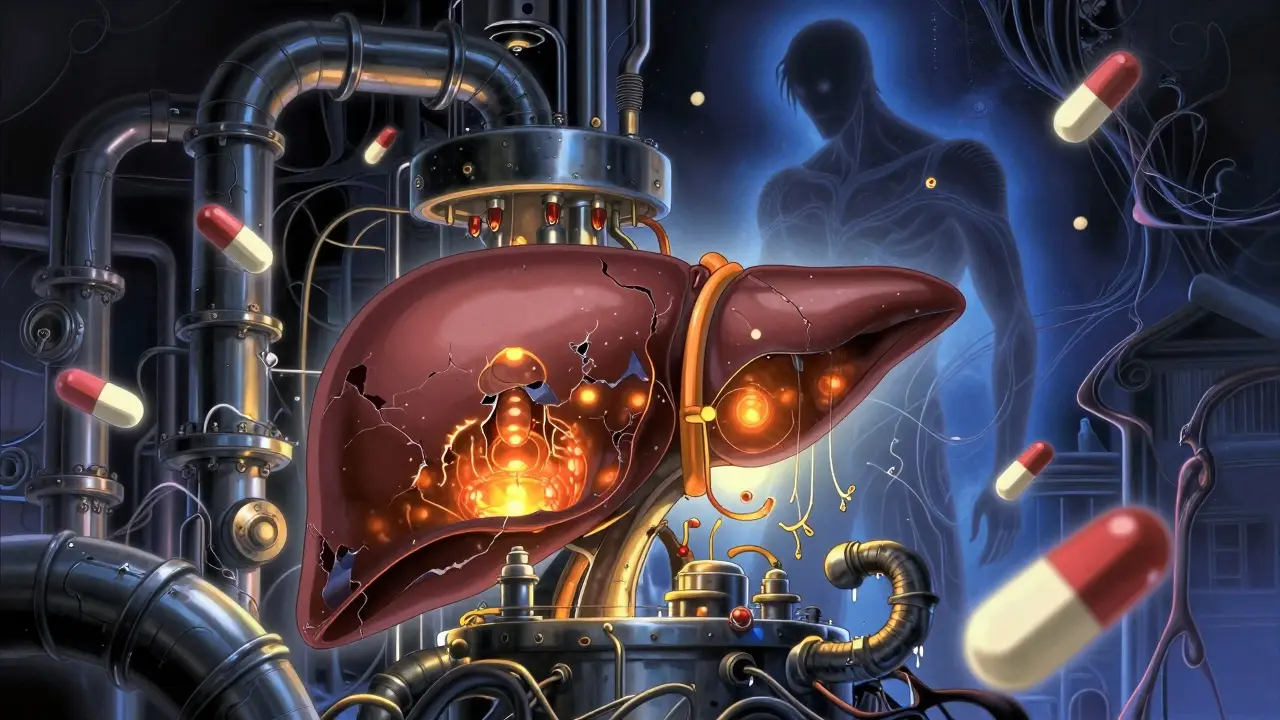
Your liver doesn't just filter toxins. It's the main factory that breaks down most medications. About 70% of the drugs people take daily-antibiotics, antidepressants, painkillers, even some heart meds-are processed by liver enzymes. When liver disease sets in, this factory doesn't just slow down. It starts shutting down key production lines. The damage isn't just about scarring. In cirrhosis, blood flow through the liver drops by 30-50%. Liver cells shrink and die. The pipes that carry drugs into and out of the liver get blocked or rerouted. And enzymes like CYP3A4 and CYP2E1, which handle most drug breakdown, lose up to 60% of their activity. This isn't guesswork. Studies from the British Journal of Clinical Pharmacology (2024) and the FDA confirm these numbers across hundreds of patients.Not All Drugs Are Affected the Same Way
Some drugs are like fast-moving trucks. Others are slow-moving cargo. The difference? How much the liver has to work to clear them.- High-extraction drugs (like fentanyl, morphine, propranolol) rely on blood flow. If your liver gets less blood, these drugs don't get cleared. That means more drug stays in your system.
- Low-extraction drugs (like diazepam, lorazepam, methadone) depend on enzyme activity. Even if blood flow is okay, if your liver enzymes are damaged, these drugs build up. And guess what? 70% of commonly prescribed drugs fall into this category.
What Happens When Drugs Don't Clear?
When drugs aren't broken down or excreted, they pile up. That leads to:- Stronger effects than expected
- Longer-lasting effects
- More side effects
- Higher risk of overdose

How Doctors Measure Liver Damage (And Why It Matters)
You can't rely on a single blood test. ALT? AST? Bilirubin? All can be misleading. One patient might have high bilirubin but still have decent liver function. Another might have normal labs but severe scarring. That's why experts use two tools:- Child-Pugh Score: Based on bilirubin, albumin, INR, ascites, and encephalopathy. Class A = mild, Class B = moderate, Class C = severe.
- MELD Score: Uses bilirubin, INR, and creatinine. For every 5-point increase above 10, drug clearance drops by about 15%.
When You Don’t Need to Change the Dose
Not every drug needs adjustment. The FDA gives two clear exceptions:- Drugs that leave the body entirely through the kidneys (like sugammadex or ciprofloxacin), with no liver metabolism.
- Drugs that are metabolized by the liver in very small amounts (less than 20%) and have a wide safety margin (like acetaminophen at low doses).
Real-World Mistakes and Their Costs
The TARGET-HepC study (NEJM, 2023) looked at direct-acting antivirals for hepatitis C. In patients with severe liver disease (Child-Pugh C), those who got standard doses had a 22.7% chance of treatment failure. Those who got adjusted doses? Only 5.3% failed. Antibiotics are another big problem. Ceftriaxone, commonly used for infections in cirrhotic patients, reaches 40-60% higher blood levels because the liver can't clear it. That increases the risk of seizures and other toxic effects. A 2024 survey of hepatologists found that 68% of them regularly struggle with antibiotic dosing in these patients. And it's not just hospitals. Community pharmacists report that 40% more patients with liver disease are being referred for dose reviews since 2020. Why? Because mistakes are happening-and people are getting hurt.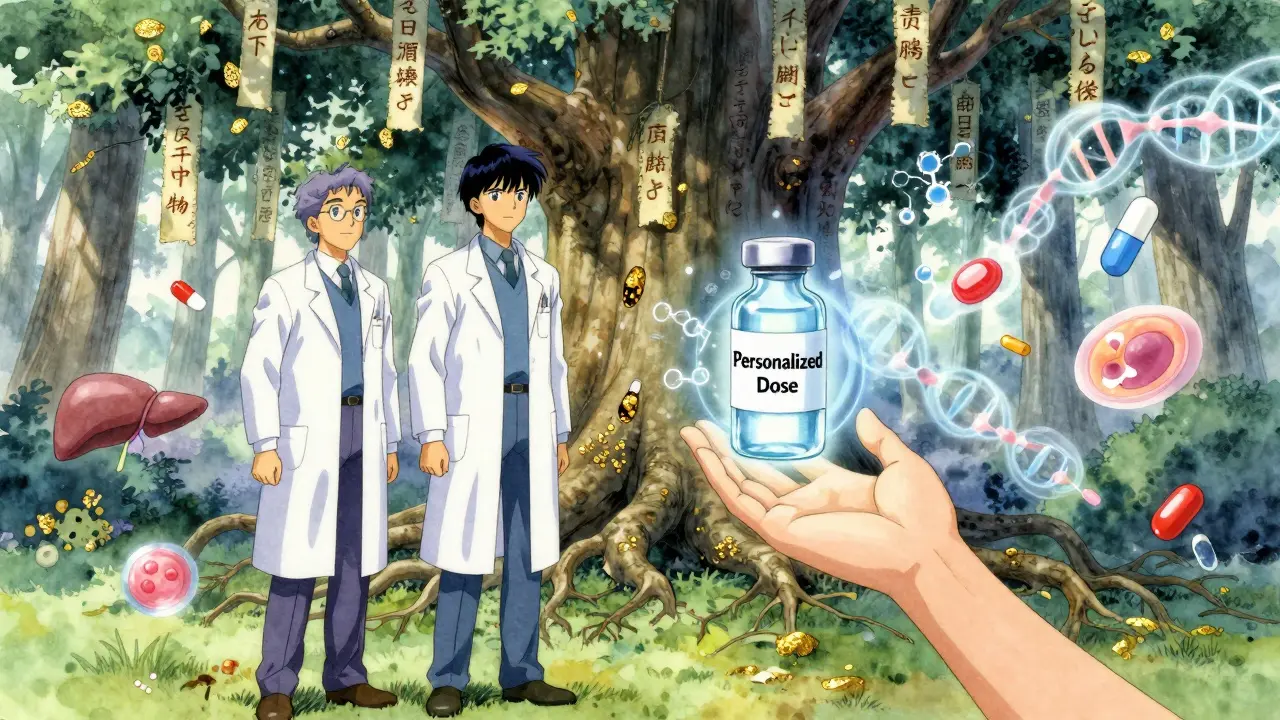
What Should You Do?
If you or someone you care for has liver disease:- Always tell your doctor or pharmacist about your liver condition-even if it's "mild."
- Ask: "Is this drug cleared by the liver? Do I need a lower dose?"
- Don't assume "it's safe because it's over-the-counter." Acetaminophen can still be risky if you drink alcohol or have advanced disease.
- Watch for signs of drug buildup: confusion, drowsiness, dizziness, nausea, unexplained bruising.
- Therapeutic drug monitoring (TDM) can help. Measuring blood levels of drugs like warfarin, phenytoin, or vancomycin can prevent toxicity.
The Future Is Personalized Dosing
The old way-"give everyone the same dose unless they're really sick"-is outdated. New tools are changing this.- Physiologically Based Pharmacokinetic (PBPK) modeling now predicts drug levels in liver disease with 85-90% accuracy. It factors in blood flow, enzyme levels, and shunting.
- The FDA is pushing for model-based dosing on new drug labels.
- Researchers are starting to combine liver function scores with genetic testing. For example, if you have a CYP2C9*3 gene variant (common in 8.3% of Caucasians), you process warfarin even slower.
Bottom Line
Liver disease doesn't just affect your liver. It changes how every drug works in your body. What was once a safe dose can become toxic. What was once effective can become useless. The key isn't avoiding medication-it's adjusting it. And that starts with knowing your liver's real capacity-not just your lab numbers.Can I still take painkillers if I have liver disease?
It depends. Acetaminophen (Tylenol) is generally safe at low doses (up to 2,000 mg/day) if you don't drink alcohol. But NSAIDs like ibuprofen or naproxen can worsen kidney function and increase bleeding risk in people with advanced liver disease. Opioids like oxycodone or hydrocodone can cause dangerous sedation. Always check with your doctor before taking any painkiller.
Do all liver diseases affect drug metabolism the same way?
No. Cirrhosis causes the biggest changes because of scarring, shunting, and reduced blood flow. Early fatty liver (MASLD) can still reduce CYP3A4 activity by 15-25%, even without scarring. Viral hepatitis may have less impact if liver function is still normal. The severity of liver damage-not the cause-is what matters most for drug clearance.
Why do some drugs need lower doses while others don't?
It depends on how the drug is cleared. Drugs that rely on liver enzymes (like diazepam, warfarin, statins) need dose reductions. Drugs cleared mostly by the kidneys (like penicillin, insulin, sugammadex) usually don't. But even kidney-cleared drugs can have altered effects because liver disease changes how your body responds to them.
Is it safe to take herbal supplements with liver disease?
Many are not. Supplements like kava, green tea extract, comfrey, and some weight-loss herbs have been linked to liver damage. Even milk thistle, often promoted for liver health, can interfere with drug metabolism. Always tell your doctor what supplements you're taking-many are metabolized by the same liver enzymes as prescription drugs.
Can liver function improve enough to stop dose adjustments?
Yes, in some cases. If liver disease is reversed-like with hepatitis C cure, alcohol cessation, or weight loss-drug metabolism can improve. But this takes time. Your doctor should re-evaluate your medications every 3-6 months if your liver function improves. Never assume your dose is still right just because you feel better.


Lebogang kekana
March 4, 2026 AT 08:00Man, this hit different. I’ve seen my uncle go from ‘just a little fatty liver’ to full-on cirrhosis in two years. He was on a standard dose of gabapentin for nerve pain-ended up in the ER with confusion and falling over. No one told him the dose needed to drop. Now he’s on half the dose and actually functional again. This isn’t theory-it’s survival.
Doctors act like liver disease is just ‘high ALT’ on a lab report. It’s not. It’s your body’s entire drug-processing system collapsing. If you’re on meds and have liver issues, don’t wait for them to adjust it. Ask. Demand. Bring this article. I did.
And yes, acetaminophen at 1000mg/day is fine if you’re sober. But if you’re not? Even 500mg can be a grenade.
Stop assuming. Start asking.
Jessica Chaloux
March 6, 2026 AT 00:59OMG I’m so glad someone finally said this 😭 I’ve been on warfarin for years and my liver’s been shaky since my hepatitis C diagnosis. My INR was at 7.8 last month-nearly bled out. My pharmacist had to call my doctor three times to get it lowered. They kept saying ‘it’s within range’ but NO IT WASN’T. I felt like I was going to pass out every time I stood up. This is REAL. Please, if you’re on blood thinners and have liver issues-get monitored. Like, NOW. 🙏
Justin Rodriguez
March 6, 2026 AT 06:43There’s a lot of nuance here that’s often missed. The Child-Pugh and MELD scores aren’t perfect, but they’re the best tools we have. What’s critical is that even patients with Child-Pugh A (mild) disease can have 20-30% reduced clearance of CYP3A4 substrates. Many providers still default to standard dosing. I’ve seen patients on simvastatin for years with no adjustment-then end up with rhabdomyolysis. It’s preventable. Always check the drug’s hepatic metabolism percentage and consider TDM when possible. And yes, even ‘kidney-cleared’ drugs like ciprofloxacin can have altered pharmacodynamics in advanced liver disease due to changes in protein binding and gut permeability. This isn’t just about metabolism-it’s about systemic physiology.
Raman Kapri
March 8, 2026 AT 00:22Let me get this straight-you’re telling me we should reduce doses based on some arbitrary scoring system instead of just using actual drug levels? This is why American medicine is broken. In India, we don’t play guessing games. We measure plasma concentrations. If the drug level is high, we lower the dose. If it’s low, we increase it. Why are we using Child-Pugh scores like they’re gospel? That’s 1980s thinking. We have LC-MS/MS machines that can quantify exact concentrations. Use them. Stop overcomplicating it with scores.
Tildi Fletes
March 8, 2026 AT 05:48While the article presents a compelling case for dose adjustment in hepatic impairment, it is imperative to acknowledge the limitations of the available evidence. Many of the cited studies are retrospective or based on small cohorts. The FDA’s recommendations, while grounded in pharmacokinetic principles, are often extrapolated from healthy volunteer data. Moreover, the variability in individual enzyme expression-due to genetic polymorphisms, comorbidities, and concomitant medications-renders population-based dosing guidelines inherently imprecise. A more rigorous, individualized approach, informed by pharmacogenomic profiling and therapeutic drug monitoring, is not merely preferable-it is ethically obligatory.
Siri Elena
March 9, 2026 AT 05:37Oh wow, a whole article about how doctors are clueless? Shocking. I’m sure the 70% of patients who don’t even know what their liver does are just dying to learn. 🙄 Let me guess-you’re also going to tell me that breathing is hard when your lungs are full of fluid? This is like publishing a 5000-word essay on ‘Why Water Is Wet When You’re Underwater.’
Also, ‘milk thistle interferes with metabolism’? Duh. It’s a supplement. It’s not regulated. Of course it does. Do we really need a peer-reviewed study to tell us that? Next up: ‘New Study: Sunscreen Prevents Sunburn.’
Alex Brad
March 9, 2026 AT 07:32Always disclose liver disease. Always ask about metabolism. Always check for TDM. Simple. No drama. No guesswork. If your doctor doesn’t know, find one who does.
RacRac Rachel
March 11, 2026 AT 07:17This is so important 💖 I’m so glad someone took the time to explain this clearly. My mom has NASH and was on a standard dose of sertraline for depression-she was zoning out, barely eating, couldn’t hold a conversation. We found out the dose needed to be cut in half. Within two weeks, she was herself again. It’s not about being ‘sick’-it’s about your body changing. And no one talks about this. Thank you for putting this out there. I’m sharing it with everyone I know. ❤️
Jane Ryan Ryder
March 13, 2026 AT 05:42Ugh. Another ‘liver disease’ post. Can we stop pretending this is a unique problem? Everyone’s body is different. You think your liver is special? Your liver is just a fat organ. Stop overcomplicating medicine. Just take less. That’s it. If you’re confused, don’t take it. Simple. America’s over-medicalizing everything.
Callum Duffy
March 14, 2026 AT 01:50While the clinical implications are well-documented, I would gently suggest that the emphasis on dose reduction may inadvertently contribute to therapeutic nihilism. In some cases, particularly in early-stage disease, maintaining therapeutic efficacy may be more important than avoiding marginal increases in drug exposure. A balanced approach-guided by pharmacokinetic modeling, patient-reported outcomes, and close monitoring-is preferable to blanket dose reductions. The goal is not merely safety, but functional preservation. This requires nuance, not algorithms.
Chris Beckman
March 14, 2026 AT 18:10Bro i had cirrhosis and took ibuprofen for a week and didn’t die so idk why u r scared. Also my uncle drank 20 beers a day for 30 years and still took tylenol and lived. This is fearmongering. Doctors just wanna make more money by prescribing more tests. Just take the pill. Stop overthinking.
Levi Viloria
March 14, 2026 AT 19:09As someone from a culture where herbal remedies are common, I’ve seen how this plays out. In my community, people take milk thistle, turmeric, and bitter melon daily thinking it ‘cleanses’ the liver. But they don’t realize these interfere with warfarin and statins. I’ve started sharing this article in my WhatsApp groups. Knowledge isn’t just power-it’s survival. Thank you for writing this. We need more of this in non-English spaces too.
Richard Elric5111
March 16, 2026 AT 17:34The metaphysical underpinnings of hepatic drug metabolism reveal a deeper ontological tension: the body as a mechanistic apparatus versus the body as an emergent, self-regulating organism. To reduce drug clearance to mere enzyme kinetics is to commit the fallacy of scientism-to equate measurable output with existential truth. The liver does not merely metabolize; it negotiates. It adapts. It resists. To prescribe a dose based on a Child-Pugh score is to impose a Cartesian grid upon a Taoist system. Perhaps the real question is not how much to reduce-but whether we should reduce at all, or instead, learn to listen to the body’s silent, biochemical poetry.
Betsy Silverman
March 17, 2026 AT 19:09This is the kind of post that makes me feel seen. My sister has hepatitis B and was on a standard dose of amiodarone. She developed pulmonary toxicity and almost didn’t make it. Turns out her liver couldn’t clear it, and the drug built up in her lungs. She’s fine now, but only because her cardiologist finally listened. This isn’t just about liver disease-it’s about how medicine ignores the whole person. Thank you for writing this. I’m printing it and giving it to my doctor.
Justin Rodriguez
March 18, 2026 AT 17:32Just to add to what @7947 said: amiodarone is a perfect example. It’s metabolized by CYP3A4 and CYP2C8, has a half-life of 40-60 days, and accumulates in tissues. In cirrhosis, its clearance drops by over 50%. Many patients develop toxicity after months of ‘normal’ dosing. This is why TDM is non-negotiable for drugs like this. The delay in onset makes it even more dangerous-patients think they’re fine because they don’t feel sick yet. By the time symptoms show, it’s often too late. Always monitor amiodarone levels in liver disease. No exceptions.