That burning sensation in your chest isn’t just annoying; it’s a signal that something is wrong with how your stomach handles acid. For millions of people, this isn’t an occasional problem after a heavy meal. It is Gastroesophageal Reflux Disease, commonly known as GERD. According to the American College of Gastroenterology, about 20% of the U.S. population deals with this chronic condition. If you are experiencing symptoms more than twice a week, or if you have noticed inflammation in your esophagus, you likely fall into this category.
Managing GERD isn’t about finding one magic pill. It is a step-by-step process that starts with how you live your daily life and escalates to medication or surgery only when necessary. The goal is simple: stop the acid from damaging your esophagus, heal any existing tissue damage, and prevent serious complications like Barrett's esophagus. Let’s break down exactly what works, based on the latest clinical guidelines from 2023 and 2024.
Stage I: Mastering Your Lifestyle and Diet
Before you reach for the medicine cabinet, you need to look at your habits. Lifestyle modifications are the foundation of GERD management. Think of this as tightening the seal on your lower esophageal sphincter (LES), the muscle that keeps stomach acid where it belongs.
The first rule is gravity. Elevating the head of your bed by six inches can significantly reduce nighttime reflux. You don’t need expensive equipment; sturdy blocks under the bedposts work perfectly. Avoid stacking pillows, which often just bends your neck and increases abdominal pressure.
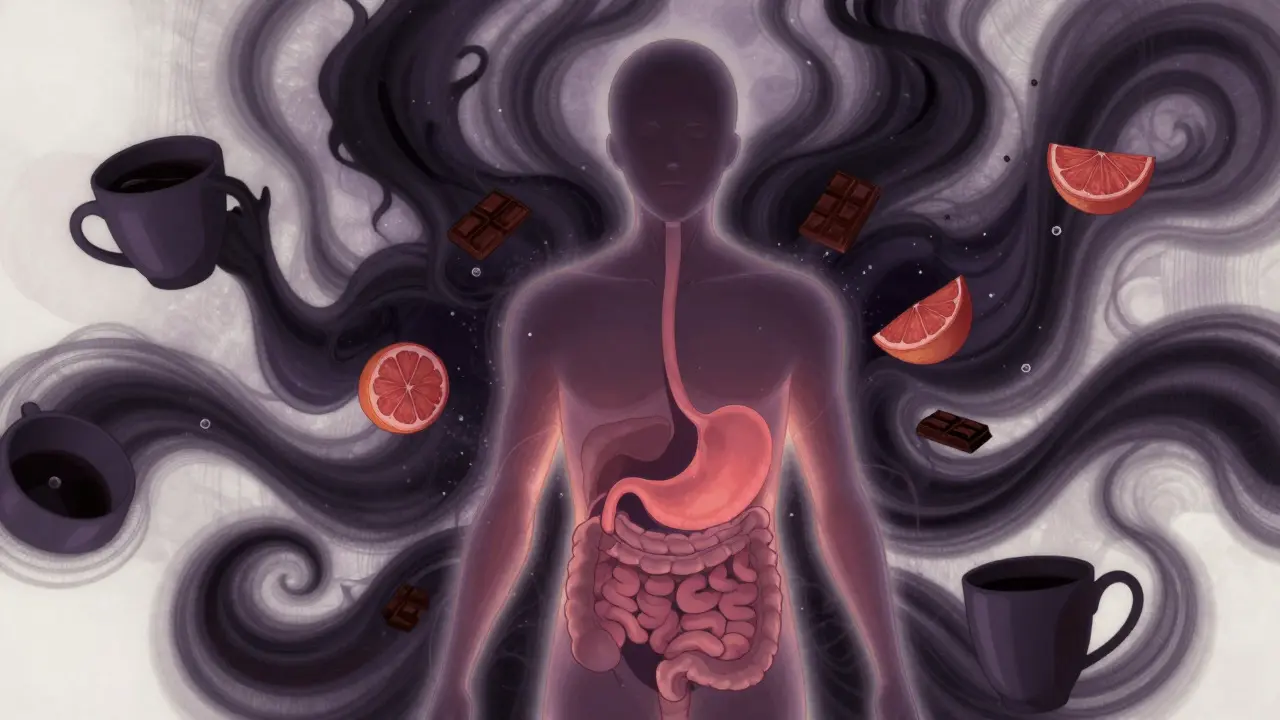
What you eat matters just as much as when you eat. High-fat meals are a major trigger because they relax the LES and delay gastric emptying. Studies from the Cleveland Clinic show that high-fat foods can increase reflux episodes by 40%. Aim to keep dietary fat below 30% of your total calories. Here are specific triggers to watch out for:
- Caffeine: Coffee, tea, and energy drinks increase gastric acid production by 23% within 30 minutes.
- Peppermint: Often marketed for digestion, peppermint actually relaxes the LES by 15-20%, making reflux worse.
- Chocolate: Contains methylxanthine, which relaxes the LES by 10-15%.
- Acidic Foods: Citrus fruits (pH 2.0-4.0) and tomato-based products (pH 4.0-4.6) directly irritate the esophageal lining.
- Carbonated Beverages: These cause gastric distension, increasing intra-abdominal pressure by 15-20 mmHg.
Timing is critical. Lying down within one hour of eating increases reflux episodes by 50%. Give yourself at least three hours between your last meal and bedtime. If you are overweight, losing weight is one of the most effective interventions. Research shows that a 10% reduction in body weight correlates with a 40% improvement in symptoms.
Stage II & III: Over-the-Counter and Prescription Medications
If lifestyle changes aren’t enough, medication becomes necessary. The approach here is stepped. You start mild and go stronger only if needed.
Antacids like calcium carbonate (Tums) provide immediate relief by neutralizing stomach acid. They raise the pH by 0.5-1.0 units for about 30-60 minutes. These are great for occasional breakthrough symptoms but don’t heal tissue damage.
For more frequent symptoms, H2 receptor antagonists (H2RAs) like famotidine (Pepcid) are the next step. Taken at 10-20mg twice daily, they reduce acid production by 60-70%. They kick in within an hour and last for 10-12 hours. However, many patients develop tolerance to H2RAs over time, meaning they stop working as well.
For moderate to severe GERD, or if you have erosive esophagitis, Proton Pump Inhibitors (PPIs) are the gold standard. Drugs like esomeprazole (Nexium), omeprazole (Prilosec), and pantoprazole (Protonix) reduce acid secretion by 90-98%. A 2022 meta-analysis found that PPIs heal erosive esophagitis in 80-90% of patients within eight weeks, compared to only 50-60% with H2RAs.
Crucial Tip: Timing matters immensely with PPIs. You must take them 30-60 minutes before your first meal of the day. This targets the proton pumps while they are active. A 2023 Mayo Clinic study found that 40% of patients had poor symptom control simply because they took their pills at the wrong time.
| Medication Class | Examples | Acid Reduction | Onset of Action | Best For |
|---|---|---|---|---|
| Antacids | Tums, Rolaids | Mild (Neutralizes existing acid) | Immediate | Occasional, mild symptoms |
| H2 Blockers | Famotidine (Pepcid) | Moderate (60-70%) | Within 60 mins | Mild to moderate symptoms, nighttime relief |
| PPIs | Omeprazole, Esomeprazole | High (90-98%) | 1-4 days for full effect | Moderate to severe GERD, healing esophagitis |
| P-CABs | Vonoprazan (Voquezna) | Very High (Sustained) | Rapid (Day 1) | Refractory cases, nocturnal breakthrough |
New Options: Potassium-Competitive Acid Blockers (P-CABs)
If PPIs aren’t cutting it, there is a new class of drugs called Potassium-Competitive Acid Blockers (P-CABs). Vonoprazan (Voquezna) was approved by the FDA in December 2023 and expanded for long-term use in May 2024. Unlike PPIs, which need activation by acid, P-CABs bind directly to the proton pump regardless of pH levels.
This makes them faster and more potent. Clinical data shows 95% of patients achieve a pH greater than 4 for 24 hours, compared to 65% with standard PPI therapy. This is particularly helpful for "nocturnal acid breakthrough," which affects 70% of PPI users who still wake up with heartburn.
Long-Term Risks and Monitoring
While PPIs are highly effective, they are not without risks when used long-term (more than a year). The FDA has issued warnings regarding several potential side effects:
- Infections: There is a 30% increased risk of Clostridium difficile infection and a 15-20% increased risk of community-acquired pneumonia.
- Kidney Health: Long-term use correlates with a 10-15% increased risk of chronic kidney disease.
- Nutrient Deficiencies: Reduced stomach acid can impair the absorption of magnesium, vitamin B12, and calcium. The FDA recommends monitoring serum magnesium every six months for patients on PPIs for over a year.
Because of these risks, doctors aim to use the lowest effective dose for the shortest duration possible. If you’ve been on a PPI for years, ask your doctor about stepping down to an H2 blocker or trying lifestyle interventions again.

Stage V: Surgical Interventions
About 10-15% of patients require surgery due to persistent symptoms despite optimal medical management, or if they develop complications like strictures or Barrett's esophagus. Barrett's esophagus carries a small but real annual risk (0.12-0.5%) of progressing to esophageal adenocarcinoma, so controlling reflux is critical.
The gold standard surgery is laparoscopic Nissen fundoplication. This procedure wraps the top of the stomach around the LES to strengthen the valve. It has a 90-95% success rate in eliminating reflux symptoms at five years. However, it comes with trade-offs: a 5-10% risk of postoperative difficulty swallowing (dysphagia) and a 15-20% risk of gas-bloat syndrome.
An alternative is the LINX Reflux Management System. This involves implanting a ring of magnetic titanium beads around the LES. The beads hold the valve closed but open when you swallow. Data from 2023 shows 85% of patients remain off daily PPIs at five years, with only 2-3% requiring reoperation. It is less invasive than fundoplication but is contraindicated for patients who may need MRI scans in the future.
A newer endoscopic option is Transoral Incisionless Fundoplication (TIF). It has a 70-75% success rate at three years but requires specialized training. As of early 2025, there were only 127 certified providers in the United States, making access limited.
Practical Steps for Better Control
To manage GERD effectively, you need a personalized plan. Start by keeping a detailed food diary for 14 days. Track what you eat, when you eat it, and when symptoms occur. Studies show 65% of patients identify 2-3 specific triggers through this method alone.
Consider diaphragmatic breathing. Taught by certified gastroenterology nurses, this technique involves deep belly breathing for 15 minutes after meals. It can reduce symptoms by 35% in mild cases by strengthening the diaphragm, which supports the LES. While only 30% of patients stick with it long-term, those who do report significant quality-of-life improvements.
Remember, GERD is a chronic condition, but it is manageable. By combining smart dietary choices, proper medication timing, and regular check-ups, you can stop the burn and protect your long-term health.
How long does it take for PPIs to work?
Proton Pump Inhibitors (PPIs) typically begin to reduce acid production within 1 to 4 hours of the first dose. However, they require consistent daily dosing for 2 to 5 days to achieve maximum acid suppression and full therapeutic effect. For healing erosive esophagitis, it usually takes 4 to 8 weeks.
Can I stop taking GERD medication suddenly?
It is generally recommended to taper off PPIs rather than stopping abruptly. Stopping suddenly can cause "acid rebound," where your stomach produces even more acid than before, leading to severe symptoms. Work with your doctor to gradually reduce the dose or switch to an H2 blocker before discontinuing therapy entirely.
Is vonoprazan better than omeprazole?
Vonoprazan (a P-CAB) offers more rapid and sustained acid suppression than traditional PPIs like omeprazole. It works immediately upon ingestion and maintains efficacy throughout the day, making it particularly effective for patients who experience nocturnal acid breakthrough or do not respond adequately to PPIs. However, it is newer and may be more expensive depending on insurance coverage.
What foods should I avoid with GERD?
Common triggers include high-fat foods, caffeine, peppermint, chocolate, spicy foods, citrus fruits, tomato-based products, and carbonated beverages. Everyone is different, so keeping a food diary is the best way to identify your personal triggers. Generally, reducing fat intake to below 30% of total calories helps significantly.
When is surgery considered for GERD?
Surgery is considered when lifestyle changes and maximal medical therapy fail to control symptoms, or if complications develop such as Barrett's esophagus, strictures, or severe erosive esophagitis. It is also an option for patients who prefer to avoid lifelong medication use. Laparoscopic Nissen fundoplication and LINX device implantation are the primary surgical options.