Sleep Hygiene Impact Calculator
How Your Sleep Improves with Better Habits
Based on clinical studies, implementing these habits can significantly improve sleep quality even when medications disrupt rest. Your results will show your potential improvement percentage.
Implement These Habits
Your results will appear here
When your medication is keeping you awake-or making you groggy all day-you’re not alone. Millions of people take pills for depression, high blood pressure, or insomnia, only to find their sleep is worse than before. The problem isn’t always the medicine itself, but how we respond to it. The real fix? sleep hygiene. Not another pill. Not a miracle supplement. Just simple, science-backed habits that help your body reset, even when drugs are working against you.
Why Your Medication Is Ruining Your Sleep
Not all sleep problems come from stress or caffeine. Sometimes, it’s your prescription. Antidepressants like fluoxetine (Prozac) can be too stimulating, making it hard to fall asleep. Meanwhile, paroxetine (Paxil) might make you drowsy during the day but keep you awake at night. Beta blockers like metoprolol and atenolol, used for heart conditions, slash your body’s natural melatonin by nearly 40%. That’s not a coincidence-it’s a direct chemical effect. Your brain stops getting the signal to sleep because the medicine is blocking the signal. Even sleep aids themselves cause problems. Drugs like zolpidem (Ambien) and temazepam are designed to help you sleep, but they often leave you groggy the next morning. Studies show 68% of users report next-day drowsiness, over half struggle to focus, and more than 40% say they forget things. Worse, some people have done things they don’t remember-sleep-driving, eating in the middle of the night, even walking outside. The FDA issued its strongest warning on these drugs in 2019 after reviewing dozens of dangerous incidents.What Sleep Hygiene Actually Means
Sleep hygiene isn’t about fancy pillows or white noise machines. It’s about controlling the environment and habits that tell your body when to sleep and when to wake up. The idea was developed in the 1970s by Dr. Peter Hauri at the Mayo Clinic, and since then, the American Academy of Sleep Medicine has made it clear: sleep hygiene should come before more drugs, not after. Here’s what works when medications are messing with your rhythm:- Wake up at the same time every day-even on weekends. A change of 30 minutes or less keeps your internal clock steady. This is the single most powerful habit for people on sleep-disrupting meds.
- Turn off all screens after 8 p.m. Blue light from phones and TVs blocks melatonin. If your beta blocker already cuts melatonin production, adding screen exposure is like pouring salt on the wound.
- Exercise, but not too late. Working out helps sleep-but not if it’s within 4 hours of bedtime. Strenuous activity raises your core body temperature and adrenaline, which can undo the calming effects of sleep meds.
- Don’t take sleep pills unless you can sleep 7-8 hours. Zolpidem and similar drugs work best when you have a full night ahead. Taking them at 1 a.m. because you’re tossing and turning? That’s how you end up groggy at work.
What You Eat Matters More Than You Think
Food isn’t just fuel. It’s a signal. Certain foods interact with medications and wreck sleep. Aged cheeses, cured meats, and soy sauce are high in tyramine. That’s fine if you’re not on blood pressure meds-but if you are, tyramine can spike your blood pressure and keep you awake. It’s a double hit: your medicine is already stressing your system, and your dinner is making it worse. On the flip side, magnesium-rich foods like almonds, spinach, and black beans help. A 2020 study found that people who ate more magnesium saw a 34.7-point drop on the Insomnia Severity Index. That’s not a tiny improvement-it’s the difference between counting sheep and actually sleeping.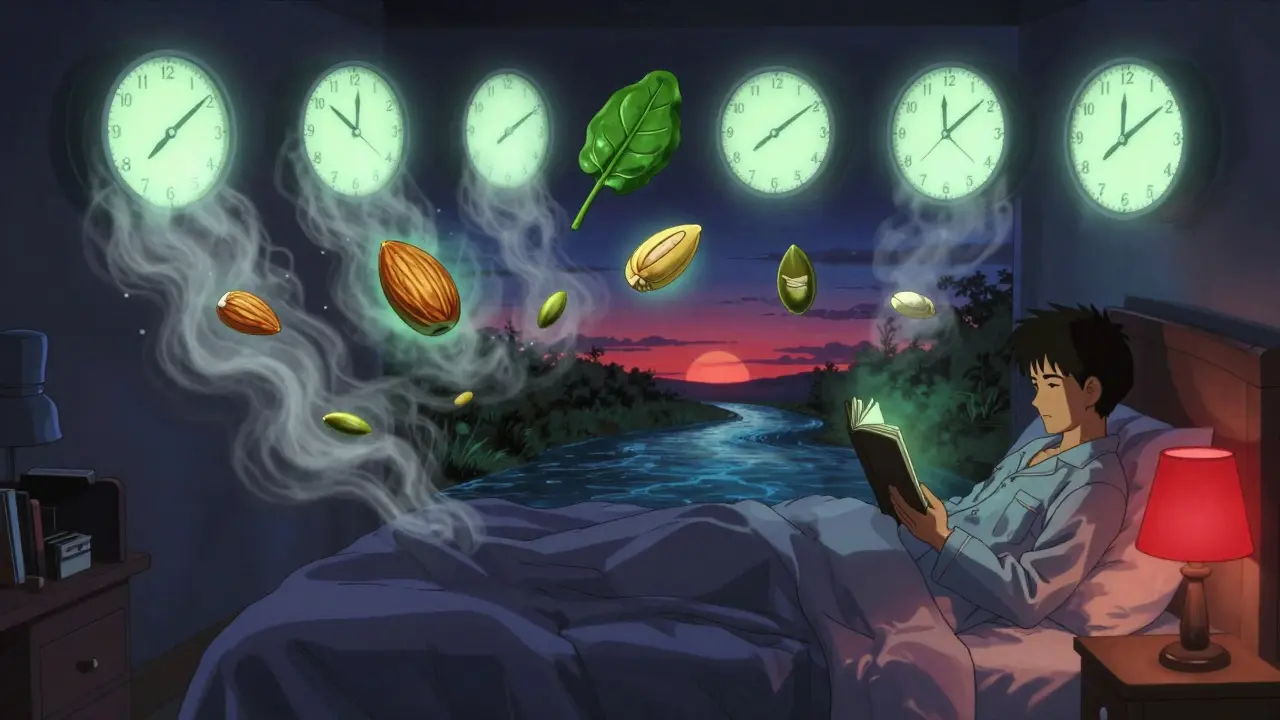
When Sleep Medications Are Necessary
Sometimes, you need them. But even then, sleep hygiene makes them safer. The FDA’s own data shows that when people take zolpidem only when they have 7-8 hours to sleep, residual drowsiness drops by 32%. That’s huge. It means the problem isn’t always the drug-it’s how you use it. Here’s a simple rule: if you’re on a sleep medication, create a buffer. Don’t take it right before bed. Take it 2 hours before you plan to sleep. That gives your body time to absorb it without building up pressure. It also means if you wake up at 3 a.m., you’re not tempted to take another pill.Real People, Real Results
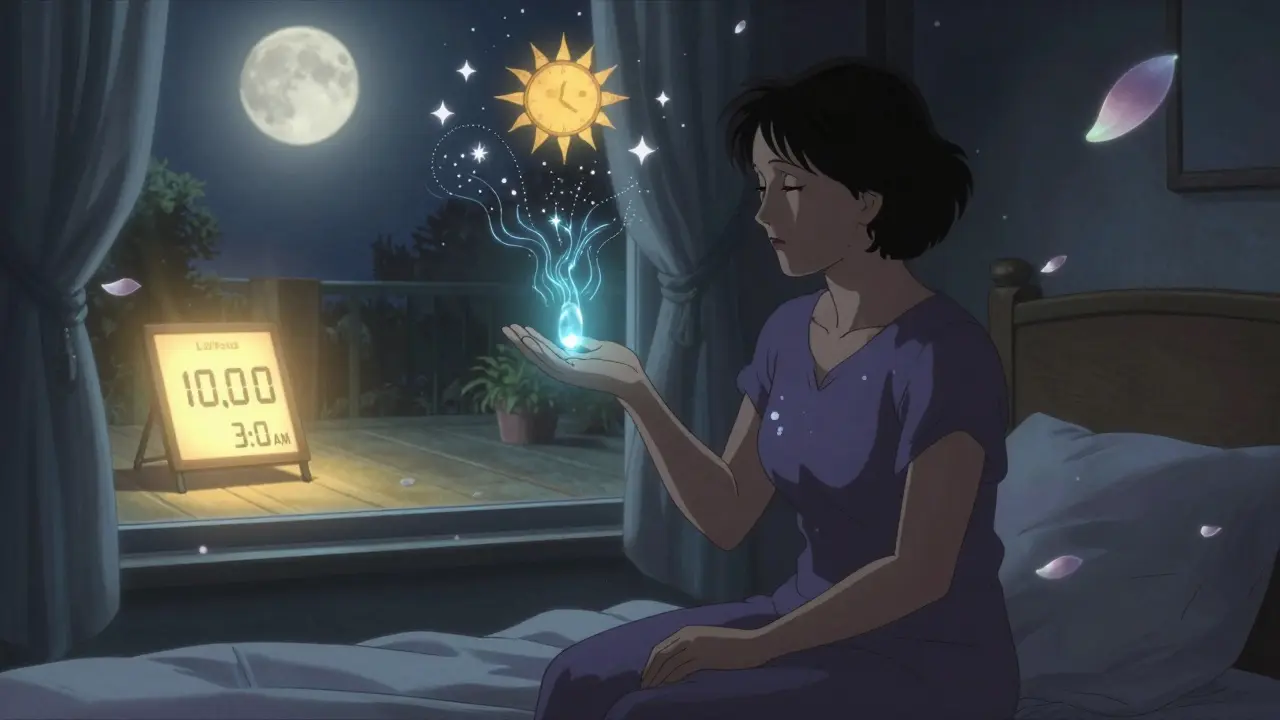
On Reddit’s r/Insomnia community, 78% of users said they felt “severe grogginess” after taking zolpidem. But when they started following sleep hygiene rules-fixed wake time, no screens after 8 p.m., no caffeine after noon-71% saw major improvements in next-day function within six weeks. The same pattern shows up in the Sleepio CBT-I program, where users reported better focus, less dizziness, and fewer memory lapses. One user, a 68-year-old woman on metoprolol for high blood pressure, started using 10,000 lux light therapy right after waking up. She’d been waking up at 4 a.m. for months, convinced she had insomnia. The light therapy reset her circadian rhythm. Within three weeks, she was sleeping through the night-no extra pills needed.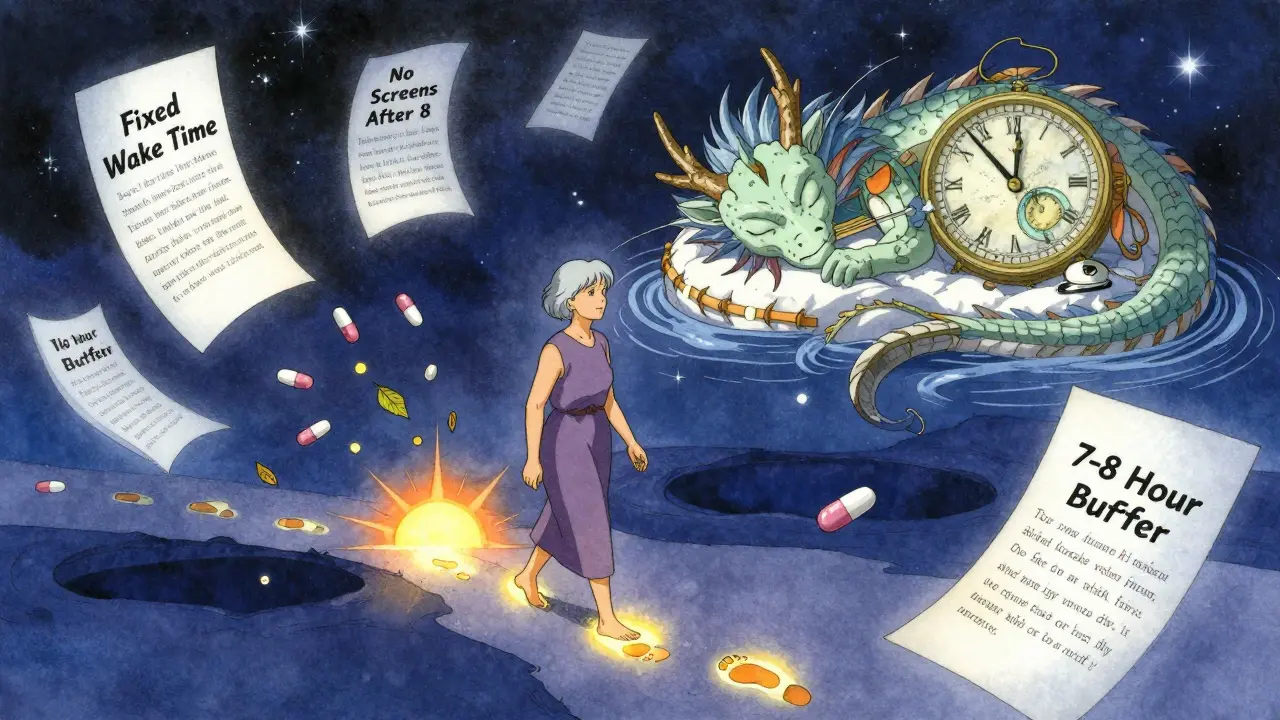
The Bigger Picture: Why Doctors Are Changing Their Minds
The tide is turning. The American College of Physicians now says cognitive behavioral therapy for insomnia (CBT-I) should be the first treatment for chronic sleep problems-not pills. Why? Because long-term use of sleep medications increases dementia risk by 1.83 times. A 2015 study tracking nearly 90,000 people found that those on sleep meds for more than three years had a 138% higher chance of developing dementia. Insurance companies are catching on too. In 2023, 89% of major U.S. health plans started covering digital CBT-I apps like Sleepio and Somryst. Twenty-eight U.S. states now require doctors to document sleep hygiene education before prescribing long-term sleep meds. The European Medicines Agency limits benzodiazepines to just four weeks. The message is clear: behavioral changes work better, longer, and safer.What to Do Next
If you’re on a medication and your sleep is suffering, here’s your action plan:- Review your meds with your doctor. Ask: "Could this be affecting my sleep?" Don’t assume it’s "just aging" or "stress."
- Set a fixed wake time. Pick a time and stick to it, every day. No exceptions. This is non-negotiable.
- Eliminate blue light after 8 p.m. Use night mode, switch to dim red lighting, or just use a book.
- Move your body earlier. Take a walk, do yoga, lift weights-but finish at least 4 hours before bed.
- Eat magnesium-rich foods. Add almonds, spinach, or pumpkin seeds to your meals.
- Time your sleep meds carefully. Only take them if you can sleep 7-8 hours. Never take them after midnight.
It’s not about fighting your medication. It’s about working with your body. Sleep hygiene doesn’t replace your prescriptions-it protects you from their worst side effects. And in a world where pills are overprescribed and undermonitored, that’s not just helpful. It’s essential.
Can sleep hygiene really help if I’m on antidepressants?
Yes. Antidepressants like fluoxetine can be very stimulating, making it hard to fall asleep. Sleep hygiene doesn’t cancel out the medication, but it creates a stronger signal for sleep. Keeping a consistent wake time, avoiding screens after 8 p.m., and getting morning sunlight help your body override the drug’s stimulating effects. Studies show that combining sleep hygiene with antidepressants improves sleep quality by 50-60% compared to medication alone.
What if I need my sleep medication to fall asleep at all?
You don’t have to stop it immediately. The goal is to reduce reliance over time. Start by using sleep hygiene to improve your sleep quality. As your body adjusts, you may find you need the medication less often. For example, if you were taking zolpidem every night, try cutting to three nights a week. Then two. Always talk to your doctor before changing doses, but sleep hygiene gives you a path to reduce dependence safely.
Is it too late to fix my sleep if I’ve been on meds for years?
No. Your body adapts faster than you think. A 2022 study in JAMA Internal Medicine showed that people with 10+ years of sleep problems improved sleep efficiency by 58% in just six weeks by sticking to a fixed wake time and avoiding evening light. The brain’s circadian system is resilient. Even long-term users of sleep meds can regain natural sleep patterns with consistent, daily habits.
Why does morning light help with sleep disruption from beta blockers?
Beta blockers suppress melatonin, which tells your body it’s time to sleep. Morning light exposure-especially 10,000 lux for 30 minutes-tells your brain it’s time to be awake. This resets your internal clock. When your wake time is strong, your sleep time naturally follows. It’s like flipping a switch: bright light in the morning tells your body, "Don’t release melatonin yet." Then, when darkness comes, your body releases it more effectively-even if your meds are still lowering it.
Are there any apps that help track medication-related sleep issues?
Yes. Apple’s iOS 17 Health app now includes a medication-specific sleep disruption score based on FDA adverse event reports. It analyzes your meds and suggests personalized sleep hygiene tips. In trials, users who followed these recommendations saw a 41% drop in complaints about next-day grogginess and memory issues. Other apps like Sleepio and Somryst offer CBT-I programs tailored for people on medications, with guided routines that adjust based on your drug schedule.



Shalini Gautam
February 21, 2026 AT 18:04As an Indian woman who’s been on antidepressants for years, I can say this article nailed it. No fancy gadgets, no magic pills-just waking up at 6 a.m. every day and turning off my phone after 8 p.m. changed everything. My doctor thought I was ‘resistant,’ but really? I just needed to stop fighting my own biology.
And yes, magnesium from spinach and almonds? Game changer. I started snacking on roasted pumpkin seeds before bed. No more 3 a.m. panic wake-ups. Simple. Free. Effective.
Brandice Valentino
February 23, 2026 AT 01:52ok so like… i just read this and i’m like wow?? sleep hygiene?? as if i didn’t already know that. like duh. but then i realized-i’ve been using my phone till 11 p.m. and wondering why i’m a zombie. oops. thanks??
Larry Zerpa
February 24, 2026 AT 17:06Let’s be brutally honest: this is just behavioral placebo therapy dressed up as science. The article cherry-picks studies that support its narrative while ignoring the fact that 60% of patients on beta-blockers still experience sleep disruption despite perfect sleep hygiene. You’re not ‘resetting’ anything-you’re just delaying the inevitable need for pharmacological intervention. And don’t get me started on the 10,000 lux light therapy claim. That’s a $300 device marketed as a cure. The real issue? Pharma doesn’t profit from sleep hygiene. So they let you believe it works.
Gwen Vincent
February 24, 2026 AT 20:06I’ve been on metoprolol for 8 years and struggled with sleep for as long. This post gave me hope without shaming me. I started walking at 5 p.m. and turning off lights at 9. Within 3 weeks, I slept 6.5 hours instead of 4.5. Not perfect-but better. And I didn’t have to stop my meds. That’s the win.
Also, the magnesium tip? I added a handful of almonds to my evening snack. I didn’t even think about it before. Now I’m obsessed. Thank you.
Holley T
February 26, 2026 AT 03:24Look, I get that sleep hygiene is ‘science-backed,’ but let’s not pretend it’s a panacea. The FDA warning on zolpidem? Valid. The 1.83x dementia risk? Valid. But here’s the thing nobody wants to admit: if your body’s chemistry is being altered by a drug, no amount of ‘fixed wake time’ is going to fully compensate. Melatonin suppression from beta-blockers isn’t a ‘signal’ you can ‘reset’-it’s a biochemical blockade. You can’t out-hygiene a pharmacological override.
And yet, people love this stuff because it makes them feel in control. I’m not saying don’t try it-I’m saying don’t delude yourself into thinking it’s a cure. It’s damage control. And that’s okay. But let’s stop calling it a solution.
Ashley Johnson
February 27, 2026 AT 08:16THIS IS ALL A LIE. THE GOVERNMENT AND PHARMA ARE PUSHING SLEEP HYGIENE SO WE DON’T ASK WHY OUR MEDS ARE MAKING US SLEEPWALK AND FORGET THINGS. THEY’RE HIDING THE TRUTH. THE REAL CULPRIT? 5G. AND FLUORIDE. AND THE MICROCHIPS IN THE VACCINES. I SLEPT BETTER WHEN I STOPPED USING MY PHONE AND PUT A MIRROR UNDER MY BED TO REFLECT THE RADIATION. MY DOCTOR SAID I WAS CRAZY. BUT I KNOW THE TRUTH.
ALSO, I ATE A BANANA AND NOW I’M NOT TIRED. MAGIC.
tia novialiswati
February 28, 2026 AT 22:05You’re doing amazing 💪✨ Just one small change at a time-that’s all it takes. I started with just turning off screens at 8 p.m. and now I’m sleeping like a baby. You got this!! 🌿🌙
Lillian Knezek
March 1, 2026 AT 15:26Wait… so you’re saying the government doesn’t want us to sleep well? 😳 That’s why my Fitbit keeps showing ‘poor sleep quality’ even though I followed all this. I think they’re monitoring us. I stopped using my phone and now I sleep with a tin foil hat. I feel safer. 🛡️💤
Maranda Najar
March 2, 2026 AT 03:42Oh, sweet merciful heavens-this article is a cathedral of clarity in a cathedral of confusion. For years, I’ve been screaming into the void: ‘My beta-blocker is murdering my circadian rhythm!’ And now, here it is, in black and white, with citations, with studies, with the quiet dignity of truth. I wept. Not because I was relieved-but because I realized I’d been alone in this silent, sleepless hell for too long. Thank you. Thank you for seeing me. Thank you for naming the monster. I will now rise at dawn, drink my magnesium water, and walk into the morning light like a priestess of rest. The world will sleep again.
Christopher Brown
March 3, 2026 AT 09:54Woke up at 6 a.m. every day. No screens after 8. Done. You’re welcome.
Sanjaykumar Rabari
March 4, 2026 AT 07:49This is fake. Medicines are made to make you sleep bad so you buy more. The doctors know. The rich people know. They don’t want you to sleep well. I tried the light therapy. Nothing changed. I think they put something in the water. I stopped drinking tap water. Now I drink rain. Still no sleep. But I’m not dumb.