Every year, millions of people take herbal supplements thinking they’re harmless because they’re "natural." But here’s the truth: herbal supplements can be just as powerful-and just as dangerous-as prescription drugs. They don’t come with warning labels like your blood pressure pill or antidepressant. And if you’re taking both, you might be risking serious side effects without even knowing it.
Why Herbal Supplements Aren’t Always Safe
Just because something comes from a plant doesn’t mean it’s safe to mix with your meds. The body doesn’t care if a compound is synthetic or plant-based. It reacts to the chemistry. And many herbal products contain active ingredients that directly interfere with how your body processes medications.
Take St. John’s wort, for example. It’s one of the most popular supplements for mood support. But it’s also one of the most dangerous when mixed with other drugs. It speeds up the liver’s ability to break down medications by turning on a key enzyme called CYP3A4. That means drugs like birth control pills, HIV medications, heart drugs, and even antidepressants get cleared from your system too fast. Studies show it can cut the level of cyclosporine (used after organ transplants) by more than half-enough to cause organ rejection. In one documented case, a woman on birth control got pregnant after taking St. John’s wort for three weeks. She didn’t tell her doctor she was using it.
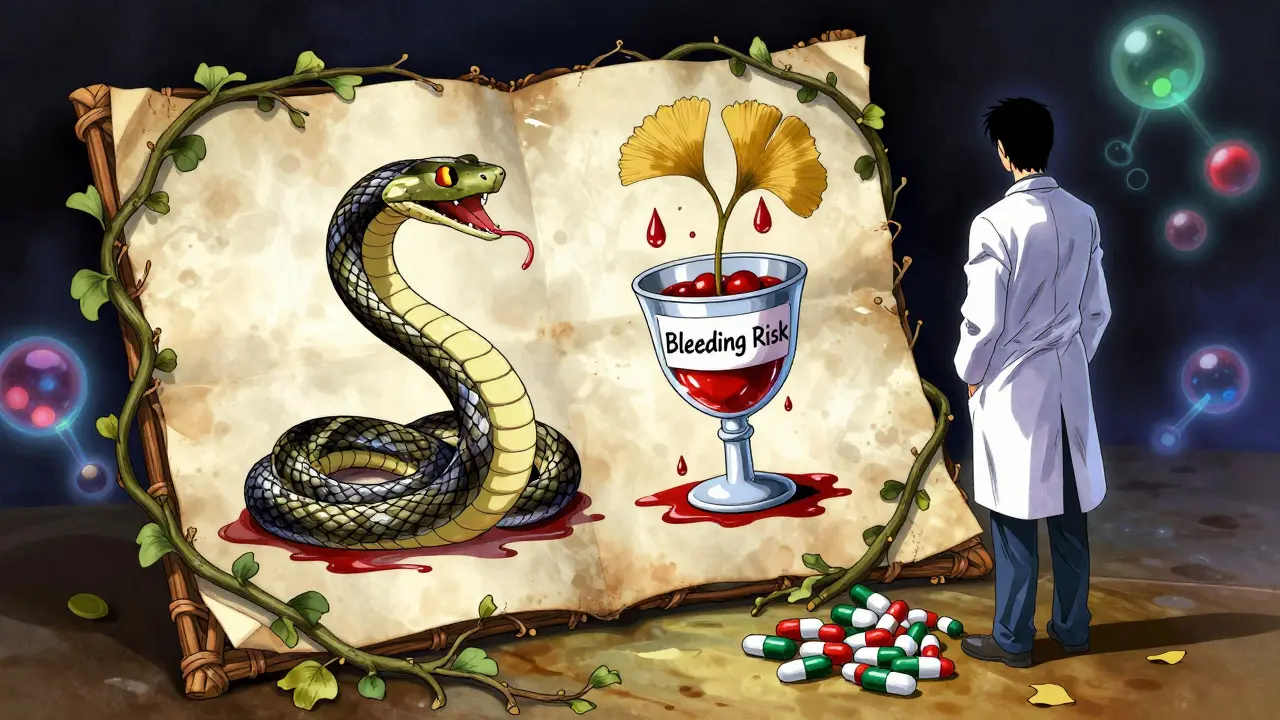
Another common culprit is ginkgo biloba. People use it for memory, but it thins the blood. When combined with warfarin or aspirin, it can cause bleeding you can’t stop. A 2009 review of five studies involving over 1,200 patients found a 30% higher risk of bleeding when ginkgo was taken with anticoagulants. One hematologist in New Zealand reported three emergency cases in a single year where patients bled internally after starting ginkgo-none had mentioned it to their doctor.
The Hidden Mechanisms: How Herbs Mess With Your Meds
Herbs don’t just cause random side effects. They work through specific biological pathways. Two major systems are involved:
- Cytochrome P450 enzymes (especially CYP3A4, CYP2C9, CYP2D6): These are the liver’s main drug-processing tools. Over 50% of all prescription drugs are broken down by CYP3A4 alone. If an herb blocks this enzyme, your drug builds up to toxic levels. If it boosts the enzyme, your drug gets flushed out before it can work.
- P-glycoprotein (P-gp): This is a transporter that moves drugs in and out of cells. It affects how much of a drug gets absorbed from your gut and how quickly it leaves your body. St. John’s wort activates P-gp, which is why it reduces levels of digoxin, cyclosporine, and many cancer drugs.
Here’s how some common herbs affect these systems:
| Herb | Primary Interaction Mechanism | Drugs Affected | Result |
|---|---|---|---|
| St. John’s wort | Induces CYP3A4 and P-gp | Birth control, cyclosporine, digoxin, HIV meds, SSRIs | Drug levels drop by 20-80%; treatment failure |
| Ginkgo biloba | Inhibits CYP2C19 and CYP2C9 | Warfarin, aspirin, clopidogrel | Bleeding risk increases by 30% |
| Garlic | Induces CYP3A4 | Saquinavir (HIV drug), statins | Drug levels drop by up to 51% |
| Goldenseal | Inhibits CYP3A4 and CYP2D6 | Dextromethorphan, metoprolol, codeine | Drug levels rise by 30-50%; overdose risk |
| Danshen (Salvia miltiorrhiza) | Inhibits platelet aggregation | Warfarin, aspirin, clopidogrel | Bleeding risk increases by 25-30% |
| Hawthorn | Enhances cardiac effects | Digoxin, beta-blockers, ACE inhibitors | Low blood pressure, irregular heartbeat, toxicity |
Even supplements you think are harmless can be risky. Ginseng, for example, has vitamin K-like effects that can reduce warfarin’s blood-thinning power. One patient’s INR dropped from 4.9 to 1.9 after taking 1,000 mg daily-putting him at high risk for stroke. Danshen, often sold as a heart health supplement, increases bleeding risk and can cause dangerous heart rhythms when taken with digoxin.
Who’s at Risk? The Real-World Danger
Most people don’t realize they’re at risk because they don’t tell their doctors. A 2016 study of 299 hospital patients in Israel found that 25% were using herbal supplements-but doctors didn’t know about it in 72% of cases. That’s not just negligence. It’s a systemic blind spot.
On Reddit, doctors share stories: a man on warfarin started taking ginkgo for "brain fog," then ended up in the ER with a brain bleed. A woman on thyroid medication took milk thistle for liver support and ended up with dangerously high TSH levels. These aren’t rare. A 2023 analysis of 4,500 patient reviews on Drugs.com showed that 15% of negative reviews for warfarin mentioned herbal supplements-ginkgo and garlic were the top two.
Even more concerning: 68% of supplement users in a 2022 Consumer Reports survey said they never discussed their herbal use with their doctor. And 77% believe "natural" means "safe." That’s a dangerous myth. The FDA doesn’t require supplement manufacturers to prove their products are safe before selling them. Under the 1994 Dietary Supplement Health and Education Act (DSHEA), companies only need to prove their product isn’t toxic after it’s already on the market.
What You Should Do
Here’s how to protect yourself:
- Make a complete list of everything you take: prescription drugs, over-the-counter meds, vitamins, teas, tinctures, and herbal capsules. Don’t forget what you take "occasionally."
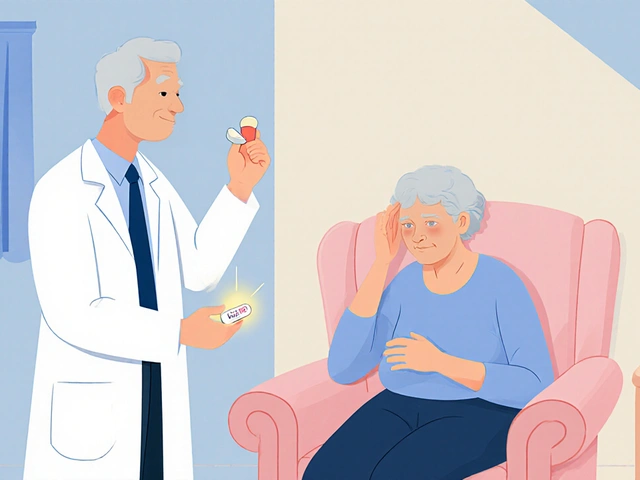
- Ask your doctor and pharmacist specifically: "Do any of these interact with my medications?" Don’t say "supplements." Say "herbs, teas, and natural products." Studies show this gets you 35% more accurate information.
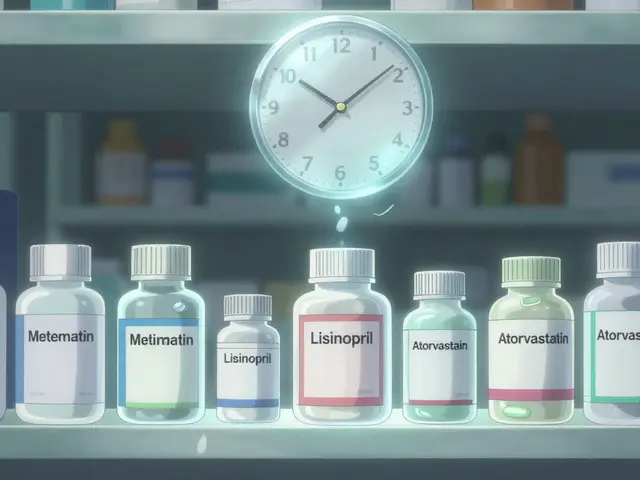
- Use visual aids-show your provider pictures of your bottles. A 2021 study found that showing actual product labels increased patient disclosure by 47% compared to just asking verbally.
- Know the red flags: If you suddenly feel dizzy, bruise easily, have unexplained bleeding, feel your heart racing, or notice your medication isn’t working like before, stop the supplement and call your doctor.
- Check for interaction warnings-some reputable brands list them. If they don’t, assume there’s a risk.
Some herbs are generally low-risk: American ginseng, milk thistle, saw palmetto, and valerian (unless you’re on sedatives). But even these can be risky if you’re on multiple medications or have liver or kidney disease.
The Bigger Picture: Why This Is Still a Crisis
The global herbal supplement market hit $105 billion in 2023. In the U.S. alone, over 23,000 herbal products are sold. But only 15% include any warning about drug interactions. The FDA issued just 12 warning letters in 2022 about interaction risks, even though it monitors over 80,000 products.
Meanwhile, researchers are finally catching up. In 2024, the University of California launched an AI tool called the Herb-Drug Interaction Prediction Engine that analyzes over 3,000 known interactions and predicts new ones with 87% accuracy. Taiwan’s national health database identified 17 new interactions in a 2024 study of 1 million people, including ginseng reducing the effectiveness of blood pressure meds.
But here’s the hard truth: only 3% of primary care providers routinely screen for herbal supplement interactions. That means most people are flying blind. The science is clear. The risks are real. The data is out there. What’s missing is the conversation.
Frequently Asked Questions
Can I take St. John’s wort if I’m on antidepressants?
No. St. John’s wort can cause serotonin syndrome-a potentially life-threatening condition-when taken with SSRIs or SNRIs. It can also make antidepressants stop working. Even if you’ve been on your medication for years, adding St. John’s wort can trigger sudden, dangerous changes in your brain chemistry. Always talk to your doctor before trying it.
Is ginkgo biloba safe if I’m not on blood thinners?
It’s still risky. Ginkgo affects platelet function, and even if you’re not on warfarin, it can increase bleeding during surgery or after an injury. Many people take it for memory, but there’s no strong evidence it works long-term. If you’re planning surgery, stop ginkgo at least two weeks before. Always tell your surgeon you’re using it.
Why don’t supplement labels warn about drug interactions?
Because they’re not required to. Under U.S. law (DSHEA), supplement makers don’t need FDA approval before selling products. They don’t have to prove safety, effectiveness, or interaction risks. Only prescription drugs go through this process. That’s why you’ll see detailed warnings on your blood pressure pill-but not on your garlic pill.
I’ve been taking turmeric for joint pain. Is that safe with my heart meds?
Turmeric (curcumin) can interfere with blood thinners like warfarin and increase bleeding risk. It may also affect how your liver processes certain statins and blood pressure drugs. While it’s less risky than ginkgo or St. John’s wort, it’s not harmless. If you’re on heart meds, talk to your pharmacist before continuing.
What should I do if I think I had a bad interaction?
Stop the supplement immediately. Contact your doctor or pharmacist. If you have symptoms like uncontrolled bleeding, chest pain, dizziness, confusion, or a sudden change in how your medication works, go to the ER. Report the incident to the FDA’s MedWatch program. Your report helps track these risks and protect others.
Next Steps
If you’re taking any prescription medication and use herbal supplements, don’t wait for a problem to happen. Schedule a quick review with your pharmacist. Bring all your bottles-even the ones you only take once in a while. Most pharmacists will do this for free. It takes 10 minutes. It could save your life.
And if you’re considering a new supplement, ask yourself: "What’s the evidence it works? And what’s the evidence it’s safe with my meds?" If you can’t answer the second question, don’t take it.

Srividhya Srinivasan
March 17, 2026 AT 16:14Oh, sweet mercy, this article is a godsend! I’ve been taking St. John’s wort for ‘anxiety’-because my cousin’s yoga teacher said it ‘balances the chakras’-and now I realize I’ve been playing Russian roulette with my SSRIs. I’m not even mad, I’m just… horrified. I’ve got a drawer full of herbal tinctures labeled ‘natural healing’-now I’m gonna burn them like witchcraft scrolls. No more ‘plant-powered wellness’-it’s all just chemical warfare disguised as chamomile tea.
Prathamesh Ghodke
March 18, 2026 AT 14:17Man, I wish I’d read this before my dad started ginkgo for ‘memory’ and then ended up in the ER with a subdural. He didn’t tell anyone. Not even Mom. Classic. This is why we need to stop treating herbs like candy. Your grandma’s ‘home remedy’ might be quietly murdering your liver. Talk to your pharmacist like they’re your secret weapon-they know way more than your doctor does about this stuff.
Stephen Habegger
March 19, 2026 AT 05:07This is such a needed conversation. I’ve seen too many patients assume ‘natural’ = ‘safe.’ It’s not. It’s just unregulated. A quick 10-minute chat with a pharmacist can prevent a hospital stay. Seriously-bring your bottles. Show them. It’s not awkward. It’s lifesaving.
Justin Archuletta
March 19, 2026 AT 23:53Yessss!! I told my doc I was taking turmeric for my knees… she just nodded. Then I showed her the bottle. She went, ‘Oh. That’s a CYP3A4 inhibitor. Stop.’ BOOM. 10 seconds. Saved my statin. Bring your labels. Don’t be shy. Your life isn’t a guesswork experiment.
Sanjana Rajan
March 21, 2026 AT 22:53Of course the FDA doesn’t regulate this. Big Pharma doesn’t want you to know you can heal yourself with garlic and a prayer. They make billions off your ignorance. You think this is about safety? No. It’s about control. They want you dependent. Wake up. The system is rigged. And yes, I’ve been taking ashwagandha for 7 years. I’m fine. Probably because I’m spiritually aligned.
Kyle Young
March 23, 2026 AT 02:18It’s fascinating how we’ve constructed this binary: ‘natural’ versus ‘pharmaceutical.’ But biology doesn’t care about origin-it responds to molecular structure. The real tragedy isn’t the lack of regulation-it’s the lack of public literacy. We’re taught to fear chemicals but revere ‘plants,’ as if evolution designed them to be harmless. That’s not science. That’s mythmaking. We need pharmacognosy in high school curricula.
Aileen Nasywa Shabira
March 24, 2026 AT 07:24Oh wow, another fear-mongering article from the medical-industrial complex. I’ve been taking goldenseal with my blood pressure meds for years. I’m 72, still hiking, no hospital visits. You’re all just scared of anything that doesn’t come with a patent. Meanwhile, your ‘prescription’ drugs are killing 100,000 people a year. But sure, let’s panic over a little garlic. Classic witch hunt.
Ayan Khan
March 25, 2026 AT 23:12In India, we’ve used turmeric, neem, and ashwagandha for centuries. But we also knew when to stop. We didn’t mix them blindly. There’s wisdom in tradition-but wisdom requires context. Modern life has detached us from that. We buy bottles like they’re candy. We need to return to the old way: ask elders, observe, listen to the body-not just the label.
Kal Lambert
March 25, 2026 AT 23:21Bring your bottles to the pharmacist. Seriously. They’ll thank you. It takes 5 minutes. No judgment. Just facts. You’d be shocked how many people don’t know about these interactions. You’re not weird for asking. You’re smart.
cara s
March 27, 2026 AT 13:49While I am profoundly appreciative of the comprehensive elucidation of pharmacokinetic interactions between phytochemical constituents and conventional pharmaceutical agents, I must express a certain existential disquietude regarding the epistemological foundations upon which modern pharmacovigilance is predicated. If the FDA permits the sale of substances without pre-market safety validation, then what, precisely, constitutes ‘evidence’ in this context? Is the absence of regulatory prohibition tantamount to tacit endorsement? Or merely bureaucratic inertia? And further-how many of us, in our quiet desperation for holistic wellness, have become unwitting participants in an uncontrolled clinical trial of our own physiology? I have been consuming danshen for ‘cardiovascular support’ for six months. I have not yet experienced hemorrhage. But I have begun to question whether my body is still mine.
Amadi Kenneth
March 28, 2026 AT 18:52They’re hiding the truth. The government, Big Pharma, the WHO-they all know that herbs can cure cancer, diabetes, even depression. But they don’t want you to know. Why? Because pills are profitable. St. John’s wort? It’s been proven to be better than Prozac. But they bury the studies. They silence the doctors. I’ve been taking ginkgo and garlic together for 12 years. I’ve never been sick. I’ve got 17 blood tests from last year. All perfect. They’re scared of natural healing. You’re being gaslit. Trust your intuition. Your body knows.
Shameer Ahammad
March 30, 2026 AT 01:06It is imperative to underscore that the regulatory framework governing dietary supplements in the United States, as codified under the Dietary Supplement Health and Education Act of 1994, constitutes a profound dereliction of public health duty. The absence of pre-market efficacy and safety testing is not merely a legislative oversight-it is an institutional betrayal. Furthermore, the assertion that ‘natural’ equates to ‘safe’ is not only scientifically fallacious but epistemologically dangerous. The pharmacological actions of CYP450 modulation are not contingent upon origin-they are absolute. To conflate botanical provenance with benignity is to commit a category error of life-threatening proportions.
Manish Singh
March 30, 2026 AT 15:52I’ve been a nurse for 22 years. I’ve seen people die because they didn’t tell their doctor they were taking ‘just a little’ ginkgo. One guy thought it was ‘just for memory.’ He bled out after a minor fall. Don’t be that guy. Bring your bottles. Say the word ‘herbs.’ It’s not embarrassing. It’s responsible. Your doctor isn’t judging you-they’re trying to keep you alive.
Nilesh Khedekar
March 31, 2026 AT 17:06St. John's wort? I took it for 3 months. Felt great. Then I got pregnant. My doc said it probably messed with my birth control. I didn't even know it could do that. Now I just drink chamomile tea. And I tell everyone. Don't be dumb. Ask. Always ask.