
Many people take supplements - vitamins, herbs, fish oil, probiotics - without thinking twice. But what if that daily gummy or capsule could interfere with your blood pressure pill, your antidepressant, or even your heart medication? The truth is, supplement interactions are more common than most realize, and your pharmacist is one of the few healthcare professionals trained to catch them before they cause harm.
Why This Conversation Matters
You don’t need to be on a dozen prescriptions to be at risk. Even if you’re taking just one medication, adding a common supplement like St. John’s wort, ginkgo, or even grapefruit juice can change how your body processes that drug. Some interactions make the medication less effective. Others make it dangerously strong. A 2025 study found that when pharmacists asked detailed questions about supplement use, their ability to spot dangerous interactions jumped from just 3% to over 12%. That’s not a small improvement - it’s life-saving.
Supplements aren’t regulated like prescription drugs. The FDA doesn’t test them for safety or effectiveness before they hit the shelf. That means what’s on the label might not match what’s inside. A 2023 analysis found that nearly 1 in 4 supplement products had contaminants, missing ingredients, or wrong dosages. Your pharmacist knows this. They’ve seen the reports. And they’re the best person to help you sort through the noise.
What You Should Bring to the Appointment
Don’t rely on memory. Walk in with a written list of everything you take. Not just your prescriptions - everything. That includes:
- Brand and generic names of all medications (including over-the-counter ones like ibuprofen or antacids)
- Supplement names, dosages, and how often you take them (e.g., “Nature Made Omega-3, 1000 mg, once daily”)
- Any herbal teas, powders, or tinctures (yes, even turmeric or ginger tea)
- Your typical diet: Do you eat grapefruit every morning? Do you drink milk with your pills? Do you take calcium supplements at night?
Many people forget about their multivitamin or the magnesium they take for sleep. Others don’t realize that a daily green smoothie with kale and spinach could affect their blood thinner. Your pharmacist doesn’t care if it seems “harmless.” They need the full picture.
High-Risk Supplements to Mention
Some supplements are known troublemakers. If you take any of these, be upfront:
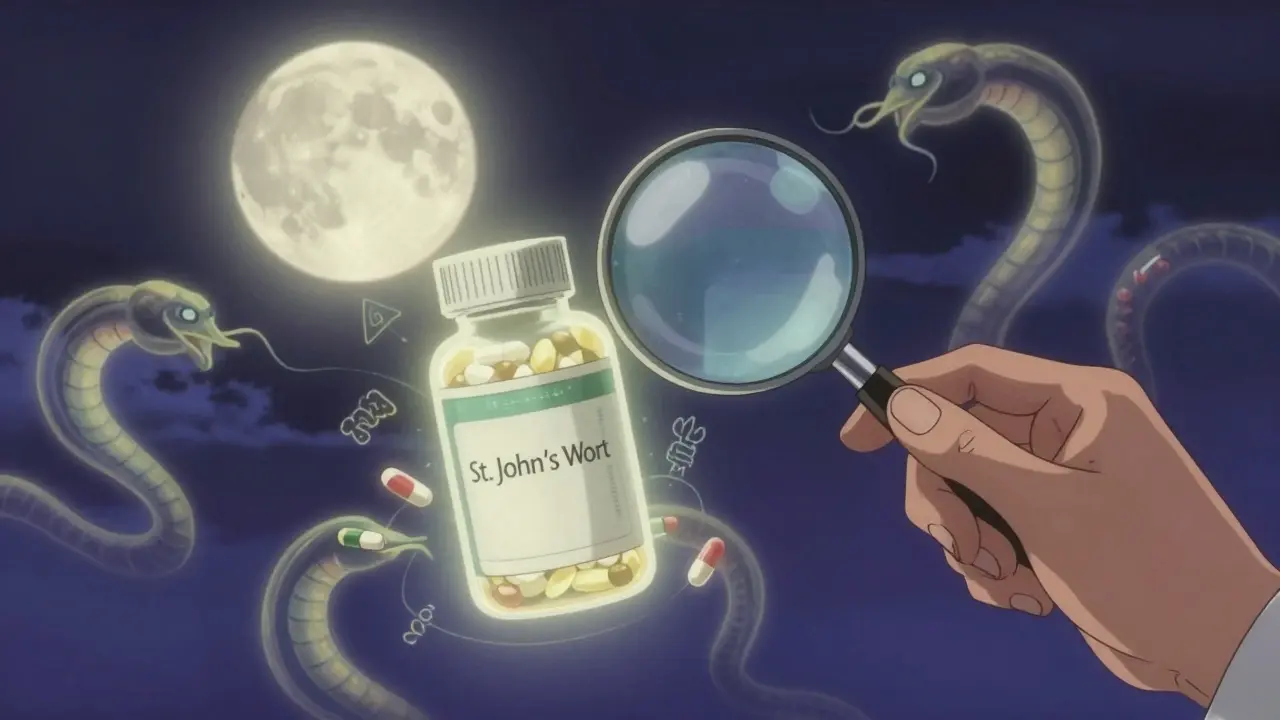
- St. John’s wort: This herb is commonly used for mild depression, but it can interfere with over 50 medications, including SSRIs, birth control, blood thinners, and heart drugs. It can cause serotonin syndrome - a dangerous spike in brain chemicals that leads to seizures, fever, and even death.
- Goldenseal: Often sold as a cold remedy, it can block liver enzymes that break down medications. This means drugs like statins, blood pressure pills, and diabetes meds can build up to toxic levels.
- Ginkgo biloba: It thins the blood. If you’re on warfarin, aspirin, or clopidogrel, it can increase bleeding risk. Even a minor cut can become serious.
- Calcium and dairy products: These can bind to antibiotics like tetracycline or fluoroquinolones, making them useless. Take them at least 4 hours apart.
- Grapefruit and citrus fruits: They block enzymes that break down dozens of drugs - including statins, blood pressure meds, and anti-anxiety pills. One grapefruit can have effects for over 24 hours.
Even “safe” supplements like vitamin D or fish oil can interact. Vitamin D can raise calcium levels, which might be risky if you’re on certain heart medications. Fish oil can thin the blood - a problem if you’re already on a blood thinner.
Food-Drug Interactions You Can’t Ignore
It’s not just pills and powders. Your breakfast can change how your medication works.
- Dairy and calcium supplements: These can stop antibiotics like ciprofloxacin or doxycycline from being absorbed. Take them 2-4 hours before or after your medication.
- Leafy greens: High in vitamin K, foods like spinach, kale, and broccoli can make blood thinners like warfarin less effective. You don’t need to avoid them - just keep your intake consistent.
- Alcohol: It can worsen side effects of painkillers, antidepressants, and sleep aids. It can also damage your liver when combined with statins or acetaminophen.
- Salt and high-sodium foods: These can reduce the effectiveness of blood pressure medications and cause fluid retention.
There’s no universal rule. What works for one person might not affect another. That’s why your pharmacist needs to know your exact habits.
What Your Pharmacist Will Ask - And Why
A good pharmacist won’t just glance at your list. They’ll ask:
- “Why are you taking this supplement?”
- “When do you take it - before or after meals?”
- “Have you noticed any changes since you started it - like dizziness, nausea, or unusual bruising?”
- “Are you taking anything else that’s not on this list?”
These questions aren’t just routine. They’re designed to uncover hidden risks. For example, someone taking metformin for diabetes might not realize it depletes vitamin B12. A pharmacist can spot that gap and recommend a test or supplement to prevent nerve damage. Or they might notice that a patient on a proton pump inhibitor (PPI) for heartburn is also taking calcium supplements - a combo that can lead to bone loss over time.

What to Ask Your Pharmacist
You have the right to ask. Don’t be shy. Here are key questions to ask:
- “Could this supplement interfere with any of my medications?”
- “Is there a better time of day to take this to avoid interactions?”
- “Are there foods I should avoid while taking this?”
- “Should I stop taking this before a surgery or dental procedure?”
- “Is there a safer alternative?”
If they say, “It’s probably fine,” ask for evidence. Ask if they’ve checked a reliable database like Lexicomp or Micromedex. Pharmacists have access to tools that flag interactions in seconds. If they’re not using them, it’s worth asking why.
What You Shouldn’t Do
- Don’t assume “natural” means safe. Herbal doesn’t mean harmless.
- Don’t stop or start a supplement without talking to someone. Even if it’s “just a vitamin.”
- Don’t rely on internet forums or influencers. One person’s “miracle cure” could be your next ER visit.
- Don’t wait until you feel sick to ask. Many interactions build up slowly - fatigue, confusion, or muscle pain can be early signs.
Why Pharmacists Are Your Best Bet
Over 93% of Americans live within 5 miles of a community pharmacy. You can walk in without an appointment. They’re trained to spot interactions. They’re not trying to sell you anything - they’re trying to keep you safe.
By 2027, most community pharmacies in the U.S. will offer structured supplement counseling. That means they’ll have time set aside just for this. But you don’t have to wait. Bring your list today. Ask for 10 minutes. Most pharmacists will be happy to help.
Supplements aren’t the enemy. But they’re not harmless either. When used wisely - and with full transparency - they can support your health. When used blindly, they can undo years of medical care. Your pharmacist is the bridge between what you think you need and what your body actually needs.
Can I just tell my doctor instead of my pharmacist?
Your doctor is important, but pharmacists are specialists in medications and how they interact. They see every prescription you fill, know every over-the-counter product you buy, and track how long you’ve been on each drug. They’re the only ones who see your full medication picture - not just what’s on paper. If you’re taking supplements, your pharmacist is the best person to ask.
Do I need to bring all my supplement bottles?
Not always, but it helps. If you can bring the bottles, your pharmacist can check the exact brand, dosage, and ingredients. If not, write down the brand name, active ingredients, and how much you take. Many supplements have different strengths - a “500 mg” vitamin C from one brand might be different from another. Details matter.
Are there supplements that are generally safe?
Some have low interaction risk when used as directed - like vitamin D (if you’re not on certain kidney meds), vitamin B12 (for most people), and magnesium (unless you have kidney disease). But “low risk” doesn’t mean “no risk.” Even these can interact if you’re on multiple medications. Always check.
What if I’m taking a supplement for a condition my doctor doesn’t know about?
Tell them anyway. Many people take supplements for anxiety, sleep, or joint pain without telling their doctor because they think it’s “just natural.” But if that supplement interacts with your blood pressure or heart medication, it could be dangerous. Your pharmacist doesn’t judge - they just want to keep you safe.
How often should I review my supplements with my pharmacist?
At least once a year - or whenever you start, stop, or change a supplement or medication. Your body changes over time. So do your medications. A supplement that was safe last year might not be safe now. Make it part of your annual health check.




Marissa Staples
March 24, 2026 AT 21:58It’s wild how we treat supplements like harmless candy when they’re basically unregulated pharmaceuticals in disguise.
My grandma took St. John’s wort for ‘mild depression’ and ended up in the ER because it tanked her blood pressure med. No one told her.
Pharmacists aren’t just pill dispensers-they’re the last line of defense against well-meaning ignorance.
I wish more people saw them that way.
Rachele Tycksen
March 26, 2026 AT 20:48i just took my gummy vitamins with my coffee and now im scared lmao
Korn Deno
March 28, 2026 AT 09:33The real issue isn’t supplements-it’s the illusion of control.
We think popping a pill fixes what we won’t fix with sleep, movement, or food.
Supplements are a Band-Aid on a broken leg.
But hey, if it makes you feel better while you wait for real change, fine.
Just don’t pretend it’s medicine.
And please tell your pharmacist. They’re not judging. They’re just the ones who’ve seen the aftermath.
Aaron Sims
March 29, 2026 AT 18:41Oh wow, so now we’re supposed to trust pharmacists? The same ones who pushed opioids like candy?
And don’t get me started on ‘FDA doesn’t regulate’-that’s just a PR line to make you feel safe while they profit off your fear.
Who even wrote this? A Big Pharma shill?
Ever heard of the supplement industry being worth $500B? Yeah, they want you scared, confused, and buying more ‘natural’ nonsense.
My advice? Skip the list. Skip the pharmacist. Just eat real food and sleep more.
Everything else is marketing.
Agbogla Bischof
March 31, 2026 AT 06:07As a pharmacist in Lagos, I can confirm: this is not just an American issue.
People here take ashwagandha with antihypertensives, garlic extract with warfarin, and ginger tea with insulin-no awareness, no consultation.
Many believe ‘natural’ = ‘no side effects.’ This is dangerous misinformation.
I keep a laminated handout on common interactions and hand it out for free.
It’s not about scaring people-it’s about giving them agency.
One man stopped his ginkgo after I showed him the bleeding risk. He thanked me last week.
That’s why this matters.
Pat Fur
April 2, 2026 AT 00:28My mom took calcium with her thyroid med for years.
Turns out it blocked absorption.
Her TSH was through the roof.
Pharmacist caught it during a refill.
She didn’t even know she was doing it wrong.
Now she brings her bottle every time.
Small habits, big consequences.
Anil Arekar
April 3, 2026 AT 12:22It is a matter of profound importance that individuals engage in transparent communication with their healthcare providers regarding all substances consumed, whether pharmaceutical, nutraceutical, or botanical in nature.
The pharmacological landscape is complex, and individual metabolic pathways vary significantly.
It is therefore incumbent upon the patient to provide complete and accurate information to ensure therapeutic efficacy and safety.
Pharmacists are uniquely positioned to serve as stewards of medication safety, and their expertise should be sought with humility and gratitude.
Thank you for this thoughtful and necessary guidance.
James Moreau
April 3, 2026 AT 19:40Just want to say-I brought my whole supplement cabinet to my pharmacist last month.
She spent 20 minutes with me.
Turns out my magnesium was messing with my blood pressure med.
She swapped me for a different form.
My headaches are gone.
She didn’t sell me anything.
Just helped.
Thanks, pharmacists.
Zola Parker
April 4, 2026 AT 18:44Yeah right, ‘pharmacists are trained to catch interactions’…
What about the ones who get paid commission on supplement sales?
Ever heard of ‘pharmacist-owned supplement stores’?
They’re everywhere.
And they’re the ones telling you to ‘take this turmeric for inflammation’ while you’re on blood thinners.
So… who’s really protecting you?
🤔
florence matthews
April 5, 2026 AT 12:45I used to think fish oil was ‘just a healthy fat’ until my pharmacist said, ‘You’re on Plavix? That’s a bleeding risk.’
She gave me a printout.
Now I only take it every other day.
And I always ask: ‘Is this gonna mess with my meds?’
It’s not paranoia-it’s peace of mind. 🙏
Kenneth Jones
April 5, 2026 AT 17:47Stop acting like pharmacists are saints. They’re employees. They follow protocols. They don’t care about your vitamins.
They care about liability and pharmacy metrics.
That ‘10-minute consultation’? It’s a box they check so they don’t get sued.
You think they’re saving lives?
No. They’re covering their asses.
And you’re paying for it with your trust.