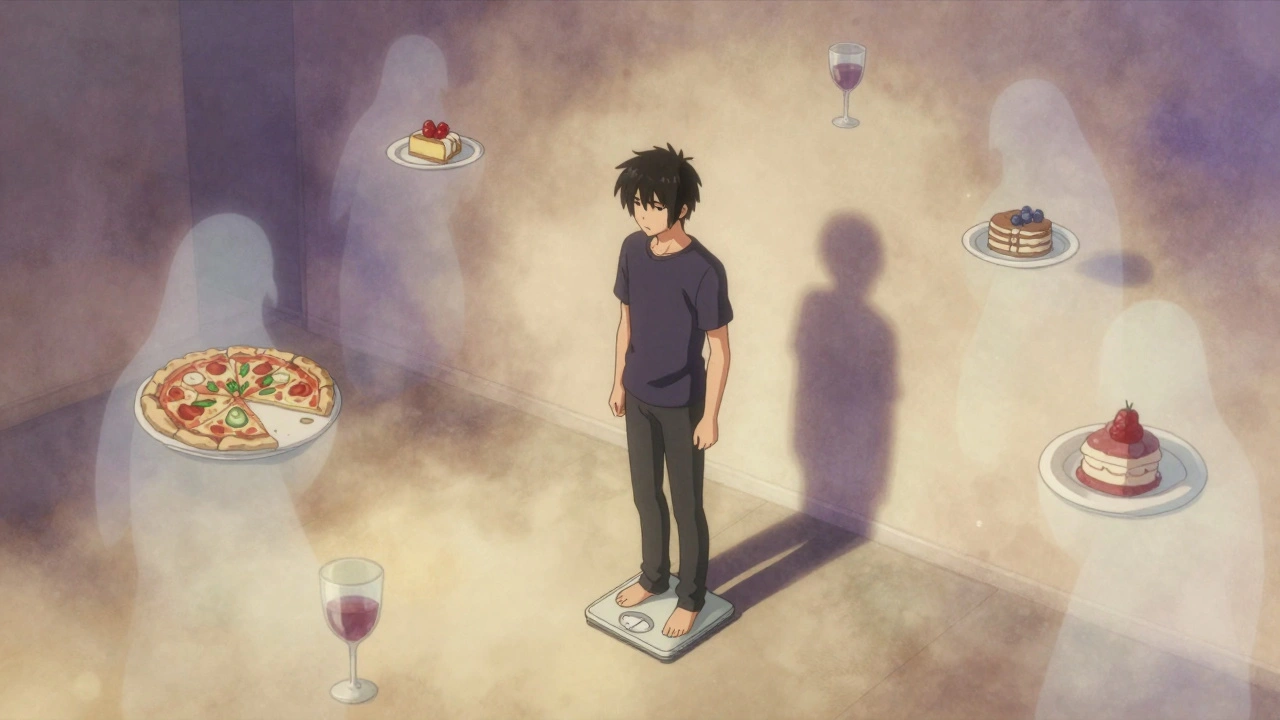
Most people think weight gain happens slowly over months. But if you’re trying to lose weight and keep it off, your biggest enemy might not be fast food or sugary snacks-it’s weekends.
Every Friday night, the rules change. The gym gets skipped. The salad gets swapped for pizza. Wine turns into cocktails. Dessert isn’t a treat anymore-it’s a ritual. By Sunday night, you’ve added half a kilo. Monday morning, you step on the scale, sigh, and vow to start over. This isn’t laziness. It’s a pattern. And it’s happening to millions of people, including those who nail their diet Monday through Thursday.
Back in 2008, researchers at Washington University tracked 48 adults for a full year. What they found was shocking: people lost weight during the week, but on Saturday, they stopped losing-and sometimes gained. Not because they binged. But because they ate just a little more. Thirty-six percent of their Saturday calories came from fat. They drank more alcohol. Ate more snacks. Ate later. And didn’t burn it off. Over a year, that added up to nearly 9 pounds of weight gain-just from weekends.
Why Weekends Are a Weight Loss Trap
It’s not that you’re eating more on weekends because you’re hungrier. It’s because your brain switches modes. Weekdays are about control: meal prep, work meetings, tight schedules. Weekends are about freedom. And freedom, when it comes to food, often means less awareness.
Studies show that 70% of people experience measurable weight gain during weekends. In one 2023 study of 368 Australians, participants gained an average of 0.3% of their body weight each week-mostly between Friday night and Sunday night. That’s about 0.26% of total body weight per year. Sounds small? For someone weighing 80 kg, that’s over 200 grams of fat per year. Multiply that by five years? You’ve gained nearly a kilo. Just from weekends.
And it’s not just food. Exercise habits collapse too. People who hit the gym five days a week often skip Saturday and Sunday. Even if they move more on Saturday-walking the dog, playing with kids-they don’t burn enough to offset the extra calories. One study found that people who increased their daily exercise by 20% still gained weight on weekends because they ate more to “reward” themselves.
The Myth of ‘I’ll Start Again Monday’
Many people treat weekends like a reset button. They think, ‘I’ll eat what I want now, then cut back Monday.’ But your body doesn’t work that way. Weight doesn’t vanish because you say so. Extra calories on Saturday turn into fat by Sunday night. And when Monday rolls around, your metabolism is already slower from the extra intake. You feel sluggish. You crave carbs. You eat more. The cycle repeats.
And here’s the cruel twist: the more you restrict during the week, the more your body craves on the weekend. It’s biology. Your brain is wired to seek out high-calorie foods after days of restraint. That’s why people who diet strictly Monday to Friday often overeat on Saturday. It’s not weakness. It’s your survival instinct kicking in.
What Doesn’t Work
Just working out more won’t fix it. You’d need to run for an hour every day just to burn off the extra calories from one weekend meal. And even then, you’re likely to eat more because you feel you’ve “earned” it.
Same goes for fasting or extreme dieting during the week. The harder you restrict, the bigger the rebound. One study showed that people who tried intermittent fasting during the week still gained weight on weekends because they didn’t adjust their eating habits-they just delayed them.
And here’s something most people don’t realize: if you’re not tracking your food on weekends, you’re probably underestimating your intake by 20-30%. That’s because snacks, drinks, bites off your kid’s plate, and restaurant portions aren’t counted. You think you had one glass of wine. You actually had three. You think you ate one slice of pizza. You ate two-and the garlic bread on the side.

What Actually Works
Success doesn’t come from being perfect. It comes from being smart.
1. Weigh yourself every morning
People who weigh themselves daily-even on weekends-are 30% more likely to maintain their weight. It’s not about obsession. It’s about feedback. If you see a 0.5 kg jump on Sunday morning, you know something changed. You don’t need to panic. You just need to adjust. Maybe you skip dessert Monday night. Or take a walk after dinner. Small corrections prevent big gains.
2. Plan your weekend meals
You wouldn’t show up to work without a plan. Why do it with food? Spend 15 minutes on Friday night deciding what you’ll eat Saturday and Sunday. Write it down. Grocery shop on Friday. Prep a few healthy snacks. Have grilled chicken ready. Keep fruit on the counter. When you’re hungry and tired, your brain will reach for what’s easy. Make healthy easy.
3. Cut the liquid calories
Alcohol, sugary coffee drinks, soda, and juice add up fast. One glass of wine = 120 calories. Three = 360. That’s a whole meal. A single latte with syrup and cream = 250 calories. Two a day = 500 extra. That’s 3,500 calories over the weekend. One pound of fat.
Swap one drink for sparkling water with lime. Choose dry wine over sweet. Skip the whipped cream. These small swaps can save you 500-800 calories per weekend.
4. Eat more protein and fiber
Protein keeps you full longer. Fiber slows digestion and stabilizes blood sugar. Both reduce cravings. Add eggs to breakfast. Have lentils or chicken with lunch. Snack on nuts or apple with peanut butter. These foods don’t just fill you up-they help you stay on track without feeling deprived.
5. Move more, not harder
You don’t need a 90-minute gym session. Just add 2,000 steps. That’s a 20-25 minute walk. Do it after lunch on Saturday. Take the stairs. Park farther away. Walk the dog. Walk the kids to the park. These small bursts add up. And they help you burn off the extra without feeling like punishment.
The Social Trap
Weekends are social. Dinner with friends. Brunch with family. Drinks after work. Saying no feels rude. But you don’t have to say no. You just have to be strategic.
Before you go out, eat a small snack with protein and fiber-like Greek yogurt with berries or a hard-boiled egg. That way, you’re not starving when you arrive. At the restaurant, ask for the sauce on the side. Share a dessert. Order water first. If you’re going to have alcohol, pick one drink and savor it slowly.
And here’s a secret: most people don’t notice if you’re eating less. They’re focused on their own plates. You’re not being awkward. You’re being smart.

It’s Not About Perfection
Some experts say you should treat weekends like weekdays-strict, consistent, no exceptions. Others say you should allow flexibility. The truth? Both can work. But only if you’re aware.
The most successful people aren’t the ones who never slip. They’re the ones who notice when they slip-and fix it fast. They don’t wait until Monday to restart. They adjust on Sunday night. They skip dessert. They take a walk. They drink water instead of wine.
Weight management isn’t about being perfect. It’s about being consistent with small, smart choices. And weekends? They’re not your enemy. They’re just another day. One you can handle-if you plan for it.
Quick Wins for This Weekend
- Step 1: Weigh yourself Friday night and Sunday morning. Write down the numbers.
- Step 2: Pick one drink to cut. Swap soda for sparkling water. Or wine for a low-calorie spritzer.
- Step 3: Plan one healthy meal. Grill chicken. Roast veggies. Make a big salad.
- Step 4: Add 2,000 steps. Walk after lunch Saturday. Walk after dinner Sunday.
- Step 5: Eat protein at every meal. Eggs, chicken, beans, tofu, Greek yogurt.
Do those five things. That’s it. No diet. No deprivation. Just awareness. And action.
Why This Matters Long-Term
Over time, weekend weight gain adds up. A 2023 study found that adults who didn’t address weekend eating gained 0.26% of their body weight each year. For someone who weighs 80 kg, that’s 208 grams per year. In five years? Over a kilo. In ten? Two kilos. That’s not a few extra pounds. That’s a new clothing size.
But the reverse is also true. If you stop weekend weight gain, you’re not just avoiding gain-you’re actively losing. One study of young adults showed that those who cut just 100 calories per day (or burned them with 2,000 extra steps) cut their risk of obesity in half over three years.
You don’t need to be perfect. You just need to be consistent. And weekends? They’re the easiest place to start.





Jessica Baydowicz
December 4, 2025 AT 14:16Okay but can we talk about how weekends are basically just a free pass to eat like a raccoon in a dumpster? I used to do this every week-salad Monday, pizza Saturday, regret Sunday. Then I started weighing myself on Friday night and Sunday morning. Just two numbers. That’s it. And suddenly? I stopped pretending I didn’t gain half a kilo. It’s not magic, it’s just awareness. And honestly? It’s kind of empowering.
Shofner Lehto
December 4, 2025 AT 17:05The research cited here is solid, but the real issue isn’t calories-it’s identity. When you label yourself as someone who 'can’t eat on weekends,' you set up a psychological trap. The fix isn’t restriction or tracking. It’s integration. Make your weekend meals part of your lifestyle, not a rebellion against it. Protein at brunch. Walk after dinner. One glass of wine, not three. Consistency doesn’t mean perfection. It means continuity.
Yasmine Hajar
December 5, 2025 AT 15:22Y’all are overcomplicating this. I used to gain 2 lbs every weekend. Then I started doing ONE thing: no drinks after 8 PM. No exceptions. Not even a sip. And guess what? I lost 11 lbs in 6 months without changing a single meal. Alcohol is the silent thief. It’s not the pizza. It’s not the dessert. It’s the wine you think is ‘just one glass’-but you had three. And then you’re hungry. And then you eat. And then you cry. Don’t fight the urge. Just cut the liquid. You’ll thank me later.
Karl Barrett
December 6, 2025 AT 05:51This framing of ‘weekend creep’ as a behavioral anomaly is reductive. It ignores the neuroendocrine feedback loops activated by chronic caloric restriction during the week. The hypothalamic-pituitary-adrenal axis becomes dysregulated, leading to increased ghrelin secretion and decreased leptin sensitivity-hence the weekend binge pattern. It’s not willpower. It’s physiology. The solution isn’t just ‘plan meals’-it’s recalibrating your metabolic set point through consistent, moderate intake, not cyclical deprivation. The 2023 Australian study didn’t account for circadian misalignment, which independently amplifies fat storage during evening meals. You can’t out-walk a circadian mismatch.
Jake Deeds
December 8, 2025 AT 03:57Wow. Just… wow. I’ve been waiting for someone to say this out loud. People think they’re ‘being good’ during the week, then turn into monsters on Saturday. It’s not just unhealthy-it’s *lazy*. And selfish. You’re not ‘rewarding’ yourself. You’re sabotaging your future self. And then you cry about how hard it is to lose weight. Newsflash: it’s not hard. You’re just choosing to be weak. I’ve been at my goal weight for 8 years. I don’t ‘plan’ weekends. I just don’t eat like a trash panda. Simple. Hard. Effective.
val kendra
December 8, 2025 AT 04:00Just weigh yourself Sunday morning. That’s it. No journaling. No apps. No guilt. Just look at the number. If it’s up? Skip dessert Monday. Walk 20 minutes after dinner. Done. I used to think I needed a whole system. Turns out, all I needed was to stop lying to myself. And drink water instead of wine. One swap. One week. I lost 1.5 lbs. Didn’t even try. Just stopped pretending I didn’t know what I was doing.
Isabelle Bujold
December 9, 2025 AT 10:52I’ve been tracking my weekend calories for over a year now, and I can confirm the 20-30% underestimation is absolutely real. I thought I was eating one slice of pizza and a glass of wine. Turns out, I ate two slices, half a bag of chips, two glasses of wine, and a spoonful of ice cream because ‘I was just tasting it.’ When I started logging everything-even the ‘tiny’ bites-I realized I was consuming an extra 1,200 calories per weekend. That’s 62,400 calories a year. That’s 17.8 pounds of fat. I didn’t even realize I was doing it. Now I have a ‘weekend plate’ rule: one protein, one carb, one veg, no seconds. And I still enjoy everything. It’s not deprivation. It’s mindfulness.
George Graham
December 11, 2025 AT 00:32I used to think I needed to be perfect. Then I had a kid. And I realized: you don’t need to be perfect. You need to be present. I don’t count calories. I don’t weigh myself daily. But I do make sure I move. Every Saturday, I take the kids to the park. We walk. We climb. We play tag. I burn calories without thinking about it. And I eat what I want-but I don’t eat mindlessly. I chew slowly. I taste. I stop when I’m full. It’s not about control. It’s about connection. To your food. To your body. To your life.
John Filby
December 11, 2025 AT 13:50This is so true 😅 I used to think I was ‘being good’ all week, then I’d hit the bar on Friday and think, ‘eh, I earned it.’ Then I realized I was drinking 300 calories just in cocktails, plus the nachos, plus the dessert… and I’d be up 2 lbs by Monday. Now I do ‘one drink, one snack’ rule on weekends. And I walk after dinner. It’s not hard. It’s just… different. And I feel way better. Like, actually better. Not just ‘less fat’ better. Like, energy better.
Elizabeth Crutchfield
December 11, 2025 AT 23:17i was so mad at myself for gaining weight on weekends until i realized i was just eating like a zombie. no one was watching. no one cared. i just kept grabbing stuff. now i put my phone down at dinner. i eat slow. i drink water. i dont even think about it anymore. its just… what i do. and the scale? it stopped going up. lol
Ben Choy
December 12, 2025 AT 16:20Love this. Just one thing to add: if you’re going to have alcohol, make it the last thing you consume-not the first. I used to start with wine, then eat, then drink more. Now I eat first, then one drink. I’m full. I’m not hungry. I don’t crave more. And I sleep better. It’s a tiny shift, but it changes everything. Also, sparkling water with lime after dinner? Game changer. 🍋
Emmanuel Peter
December 12, 2025 AT 20:27Let’s be real-this isn’t about weekends. It’s about control. You’re not ‘losing weight during the week’-you’re starving yourself. That’s why you binge. You’re not a victim of biology. You’re a victim of your own self-loathing. The real problem? You hate your body so much you punish it with restriction, then reward it with chaos. That’s not a diet. That’s a cycle of abuse. Stop trying to ‘fix’ yourself. Start loving yourself enough to eat like you matter. Not like you’re broken.
Ashley Elliott
December 13, 2025 AT 10:39I love how this post doesn’t shame people. That’s rare. And I love that it says: ‘You don’t have to be perfect.’ But I also want to say: it’s okay to not have all the answers. Some weeks, I slip. I eat the whole pizza. I don’t walk. And I don’t beat myself up. I just… notice. I write it down. I say, ‘Okay, that happened.’ And then I do one small thing differently next time. That’s it. No grand plan. No guilt. Just… gentle correction. That’s how change actually sticks.
Jessica Baydowicz
December 14, 2025 AT 16:21Also-just a heads up: if you’re weighing yourself and see a 0.5 kg jump on Sunday? Don’t panic. That’s probably water weight. Salt. Alcohol. Late-night carbs. It’s not fat. It’s not failure. It’s just your body holding on. The trick? Don’t react. Just go back to your normal routine Monday. Eat protein. Drink water. Walk. And watch it melt. You don’t need to ‘fix’ it. You just need to keep going.