
Most people think they know how much they sleep. You lie down at 11 p.m., wake up at 7 a.m. - that’s eight hours, right? But if you’ve ever felt exhausted after what you thought was a full night’s rest, you’re not alone. The truth is, your brain doesn’t always tell you the whole story. That’s where actigraphy comes in - a simple, non-invasive way to track your real sleep patterns, right from your wrist, at home.
What Exactly Is Actigraphy?
Actigraphy is not new. It started in the 1980s in sleep labs, where researchers strapped bulky devices to wrists to measure movement. The idea was simple: when you’re asleep, you move less. When you’re awake, you move more. Modern devices still use that same principle, but now they’re tiny, sleek, and built into smart rings, fitness bands, and dedicated sleep trackers.
These devices use a tiny sensor called a tri-axial accelerometer. It picks up motion in every direction - up and down, side to side, forward and back. That data gets fed into an algorithm that guesses whether you’re asleep or awake. It doesn’t measure brain waves like a hospital sleep study. It doesn’t track your breathing or heart rhythm. It just watches how much you move. And surprisingly, that’s enough to give you a clear picture of your sleep schedule over days or weeks.
Unlike a one-night sleep study in a lab, actigraphy lets you live your normal life. You sleep in your own bed. You wake up to your alarm. You drink coffee in the morning. That’s the real value: real-world data, not lab-perfect data.
What Does It Actually Measure?
Actigraphy doesn’t give you a dream report. But it does give you four key numbers that matter:
- Total Sleep Duration - how long you actually slept, not how long you lay in bed.
- Sleep Onset Latency - how long it takes you to fall asleep after turning off the lights.
- Sleep Efficiency - the percentage of time in bed that you actually spent sleeping. If you’re in bed for 8 hours but only sleep 6, your efficiency is 75%.
- Wake After Sleep Onset (WASO) - how many minutes you spend awake during the night after falling asleep.
These numbers reveal patterns you’d never notice otherwise. Maybe you’re sleeping 7 hours a night, but you’re waking up three times for 20 minutes each. That’s 60 minutes of lost sleep - and it adds up. Or maybe you’re falling asleep at midnight but waking up at 3 a.m. every night, then tossing and turning until 6 a.m. That’s not insomnia - it’s a circadian rhythm problem.
Actigraphy is especially good at spotting these long-term trends. One night of bad sleep? Normal. Three weeks of the same pattern? That’s a signal.
How Accurate Is It?
Here’s the hard truth: actigraphy isn’t perfect. It’s not a medical scan. It’s an estimate.
The biggest flaw? It can’t tell the difference between lying still and sleeping. If you’re awake but not moving - staring at the ceiling, thinking about your to-do list - the device thinks you’re asleep. That’s called motionless wake. Studies show this mistake happens in 20% to 70% of cases, depending on the device and the person.
That’s why actigraphy is great for tracking sleep duration and timing, but not for telling you whether you’re in deep sleep or REM sleep. Consumer wearables like Fitbit or Oura Ring often claim to track sleep stages, but they’re guessing based on movement and heart rate changes. A 2022 Stanford study found these devices were only about 60-70% accurate when compared to lab-grade sleep studies.
Medical-grade actigraphs - like the Philips Actiwatch Spectrum Plus - are more reliable. They use better algorithms and higher sampling rates (100 times per second). But even they can’t replace a full polysomnography test in a sleep lab.
The American Academy of Sleep Medicine says actigraphy has “moderate evidence” for tracking sleep-wake patterns in adults with insomnia. But for diagnosing sleep apnea, restless legs, or narcolepsy? Not enough. That’s why doctors use it to monitor progress, not to make the first diagnosis.
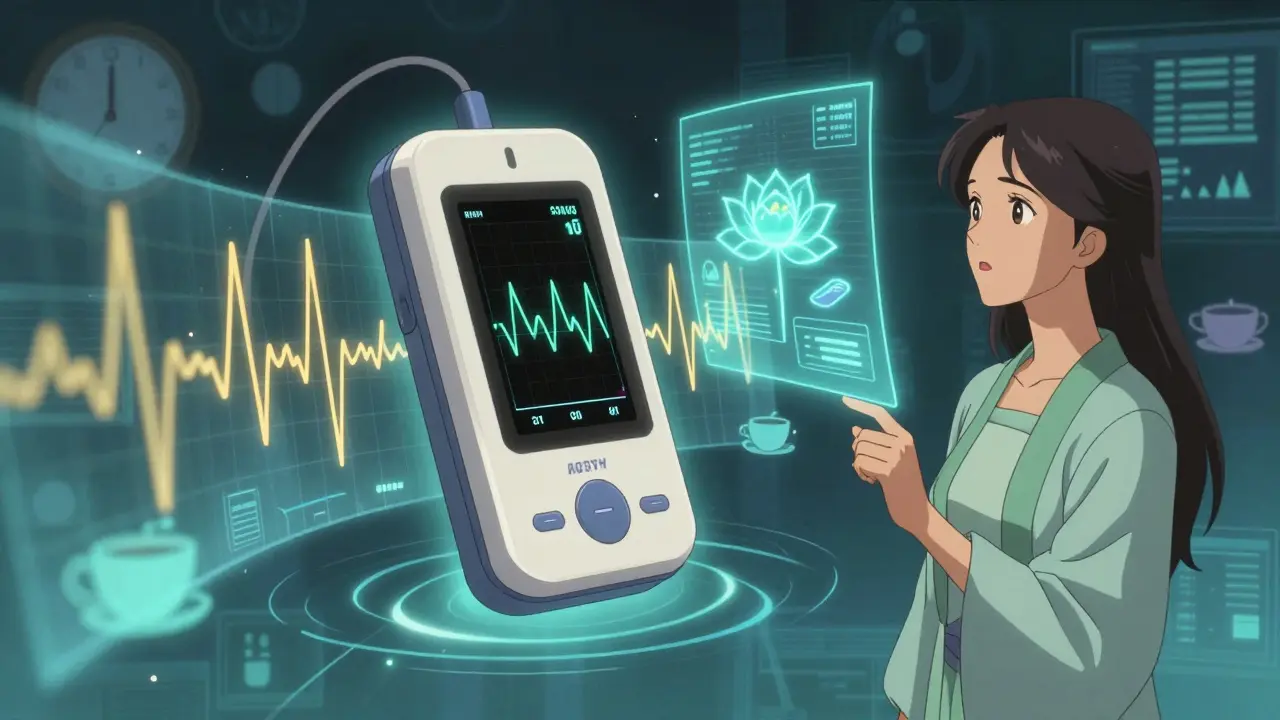
Consumer vs. Medical Devices
There’s a big gap between what you can buy online and what a sleep clinic uses.
Consumer wearables - Fitbit, Oura Ring, Apple Watch, Garmin - are designed for wellness. They’re affordable ($99-$299), easy to use, and look good on your wrist. They sync with apps that give you daily scores, bedtime reminders, and “readiness” ratings. They’re great for building awareness.
Medical-grade actigraphs - like those from ActivInsights or Philips - are tools for professionals. They’re bulkier, not waterproof, and cost $1,200-$1,800. They don’t have screens or apps. They just record raw movement data for weeks at a time. Clinicians download the data into specialized software to analyze patterns.
Here’s the key difference: medical devices are validated in clinical studies. Their algorithms are tested against lab sleep studies. Consumer devices? Not always. A 2023 Consumer Reports survey found that 63% of users didn’t understand what their sleep efficiency score actually meant. And 35% of negative Fitbit reviews complained about inaccurate sleep stage tracking.
Bottom line: if you’re curious about your sleep, a consumer device is fine. If you’re struggling with chronic insomnia, shift work, or jet lag, and your doctor is trying to figure out why - ask for a medical-grade actigraph.
Who Benefits the Most?
Not everyone needs actigraphy. But for some people, it’s life-changing.
- People with insomnia - Many think they’re sleeping only 3-4 hours a night. Actigraphy often shows they’re sleeping 6-7. That’s not insomnia - it’s sleep perception disorder. Knowing the truth reduces anxiety.
- Shift workers - Working nights? Your body clock is confused. Actigraphy shows how your sleep shifts over weeks, helping you adjust your schedule.
- Travelers with jet lag - Condor Instruments found 82% of frequent flyers improved their sleep schedule after using actigraphy for 4 weeks. They could see exactly when their body was ready to sleep, no matter the time zone.
- People with circadian rhythm disorders - Delayed sleep phase? Advanced sleep phase? Actigraphy tracks your natural rhythm over time, helping doctors design light therapy or melatonin plans.
It’s also becoming common in workplace wellness programs. Fortune 500 companies now give employees sleep trackers. A 2024 Harvard study found a 11% drop in self-reported fatigue after 6 months. That’s not just better sleep - it’s better focus, fewer mistakes, less burnout.

How to Use It Right
Just wearing the device won’t help. You have to use it the right way.
- Wear it on your non-dominant wrist - If you’re right-handed, wear it on your left. Misplacement can reduce accuracy by up to 22%.
- Wear it continuously - Take it off for more than 2 hours a day? Your data becomes unreliable. Aim for 7-14 days straight.
- Don’t overthink single nights - One night of poor sleep? Normal. Look at trends. A 30-45 minute variation day to day is typical.
- Track your habits too - Note when you drink coffee, exercise, or use screens. Actigraphy shows patterns - but you need to connect the dots.
Most people get comfortable with interpreting the data in 2-3 weeks. Apps like Oura’s “Readiness Score” help by explaining what the numbers mean in plain language. Don’t just stare at graphs - read the explanations.
The Dark Side: Anxiety and Privacy
There’s a hidden risk: tracking can make you obsessed.
Dr. Phyllis Zee at Northwestern University calls it “orthosomnia” - when the pursuit of perfect sleep creates sleep anxiety. If you start stressing over a 5% drop in sleep efficiency, you’re not helping yourself. You’re making things worse.
Also, privacy is a real concern. Most consumer sleep apps send your raw movement data to the cloud - often without end-to-end encryption. A 2024 Hacker News thread revealed that some companies sell anonymized sleep data to advertisers or insurers. Senator Tammy Duckworth raised this in a 2024 Senate hearing: if your insurance company sees you’re sleeping poorly every night, could they raise your rates?
Stick to trusted brands. Read privacy policies. If you’re using a device for medical reasons, ask your doctor if they can provide a secure, HIPAA-compliant option.
What’s Next?
The technology is getting smarter. Garmin’s 2024 update added heart rate variability to its algorithm, improving wake detection by 16%. The NIH just funded a $2.8 million project at the University of Michigan to use AI to better spot motionless wake.
Apple is rumored to be launching a “Sleep Study” feature for the Apple Watch later in 2024 - combining actigraphy with audio, temperature, and breathing sensors. That could be a game-changer.
By 2027, experts predict 80% of primary care doctors will use actigraphy data as part of routine health checks. But it won’t replace sleep labs. It will complement them - giving doctors a window into your life, not just a single night in a hospital.
For now, if you’re tired of guessing how much you sleep - and you want real answers - actigraphy is the most practical tool you can use at home. It won’t cure your sleep problems. But it will show you what’s really happening. And that’s the first step to fixing it.
Can actigraphy diagnose sleep apnea?
No. Actigraphy can’t detect breathing pauses, oxygen drops, or airway blockages - the hallmarks of sleep apnea. It might show you’re sleeping less or waking up often, but it can’t confirm the cause. A home sleep apnea test (HSAT) or in-lab polysomnography is required for diagnosis.
Is Oura Ring or Fitbit better for sleep tracking?
Both use actigraphy, but Oura Ring is more focused on sleep and recovery, with better long-term data consistency. Fitbit offers more features like heart rate variability and daily activity tracking, but its sleep stage estimates are less reliable. For pure sleep insight, Oura is more accurate. For overall wellness, Fitbit gives more context.
How long should I wear an actigraphy device?
For reliable data, wear it for at least 7 days - ideally 14. One week shows patterns, but two weeks captures weekends, stress days, and travel. Shorter periods don’t give a full picture of your natural rhythm.
Do I need a doctor’s prescription to use actigraphy?
No. You can buy consumer wearables without a prescription. But if you’re using it for medical reasons - like diagnosing insomnia or circadian rhythm disorder - your doctor may prescribe a medical-grade device. Insurance sometimes covers it if it’s part of a formal sleep evaluation.
Can kids use actigraphy?
Yes. Actigraphy is commonly used in pediatric sleep studies, especially for children with ADHD, autism, or delayed sleep phase. Devices are designed for smaller wrists, and parents often help with data logging. It’s non-invasive and safe for long-term use.
What should I do if my actigraphy data shows I’m not sleeping enough?
Don’t panic. First, check your habits: are you using screens before bed? Drinking caffeine late? Going to bed at different times? Fix those first. If you still feel tired after 2-3 weeks of consistent sleep hygiene, talk to a sleep specialist. Don’t self-diagnose. Actigraphy shows patterns - not causes.





sagar patel
December 25, 2025 AT 19:20Bailey Adkison
December 26, 2025 AT 15:07Katherine Blumhardt
December 28, 2025 AT 09:11Mussin Machhour
December 29, 2025 AT 22:48Ben Harris
December 31, 2025 AT 05:22Justin James
January 1, 2026 AT 10:21Sophie Stallkind
January 2, 2026 AT 15:38Lindsay Hensel
January 3, 2026 AT 07:22Oluwatosin Ayodele
January 3, 2026 AT 20:36Zabihullah Saleh
January 4, 2026 AT 12:49Winni Victor
January 4, 2026 AT 17:07Carlos Narvaez
January 5, 2026 AT 19:45Harbans Singh
January 6, 2026 AT 00:42Terry Free
January 7, 2026 AT 16:07Rick Kimberly
January 9, 2026 AT 01:06