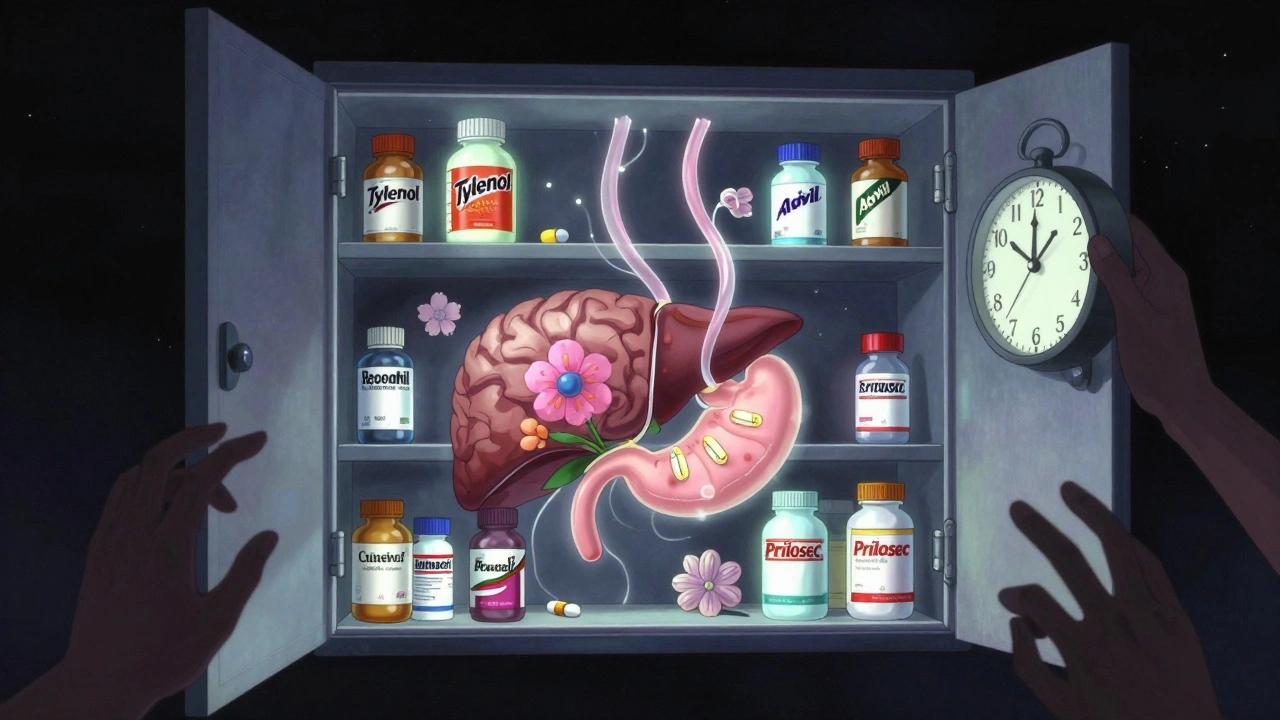
Every year, more than 80% of adults in the U.S. reach for an over-the-counter (OTC) medication before calling their doctor. It’s quick, it’s convenient, and it feels harmless-until it isn’t. You might think grabbing a bottle of Tylenol or Advil is as safe as grabbing a snack, but that’s where things go wrong. OTC meds aren’t harmless. They’re powerful drugs with real risks, and most people don’t know the rules.
What You’re Really Taking: The Big Four Categories
Not all OTC meds are the same. They fall into four main groups, each with different active ingredients, uses, and dangers.
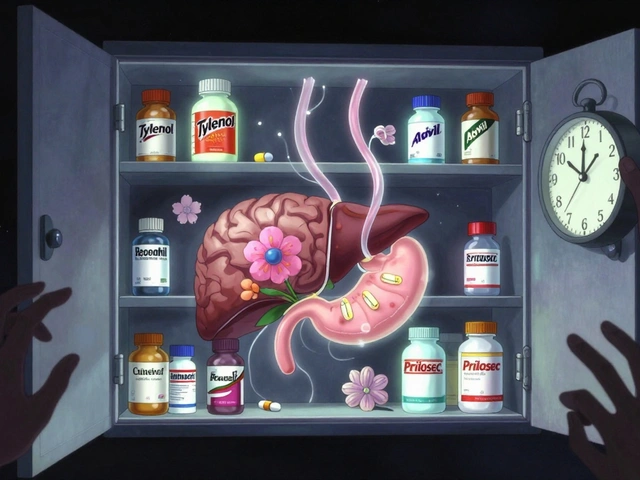
Pain relievers are the most common. Acetaminophen (Tylenol) is used by over 235 million Americans each year. It’s great for fever and mild pain, and it’s safe for kids and people on blood thinners. But here’s the catch: taking just a few extra pills a day can wreck your liver. The FDA says 15,000 to 18,000 cases of acute liver failure each year come from acetaminophen overdose. The max daily dose is 4,000 mg-about eight 500 mg tablets. Many cold and flu pills already contain it, so stacking them is a recipe for disaster.
NSAIDs like ibuprofen (Advil, Motrin) and naproxen (Aleve) are better for swelling, muscle aches, and arthritis. But they can cause stomach bleeding, especially in older adults or people with ulcers. Studies show NSAIDs increase bleeding risk by 2 to 4 times. Don’t take them if you have kidney disease, heart failure, or inflammatory bowel disease. Ibuprofen max is 1,200 mg per day. Naproxen is stronger-stick to 660 mg max.
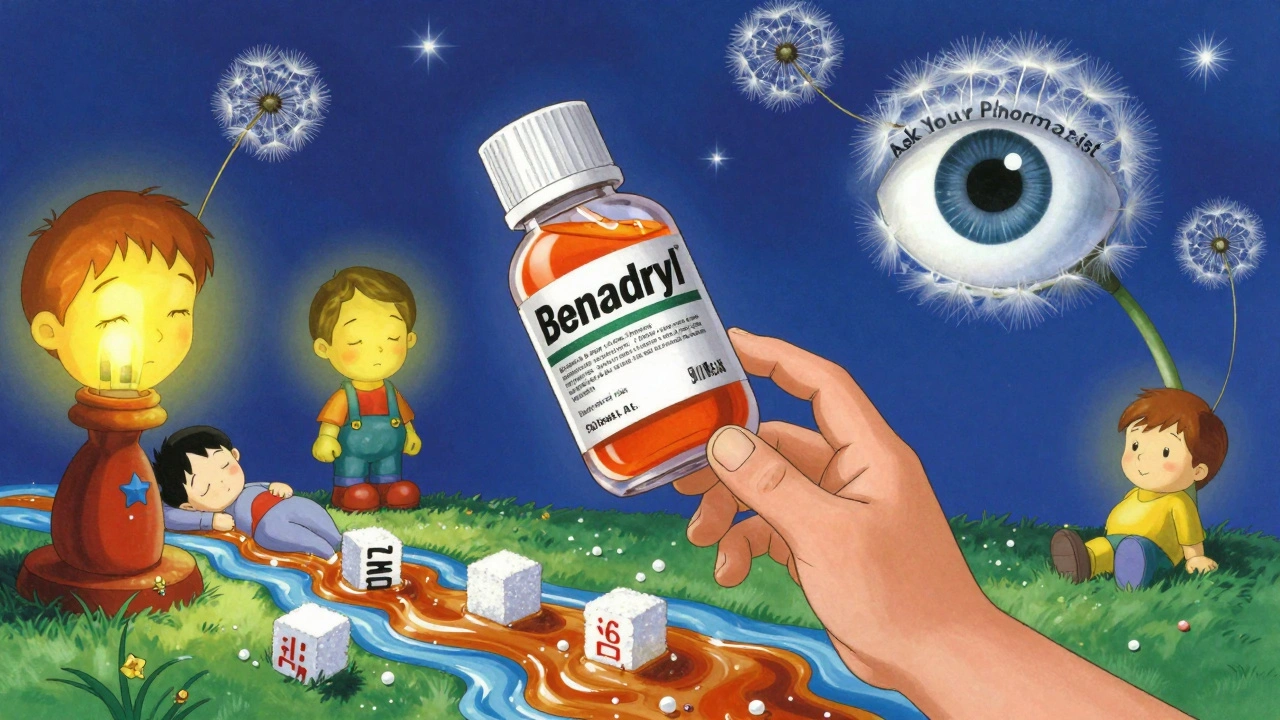
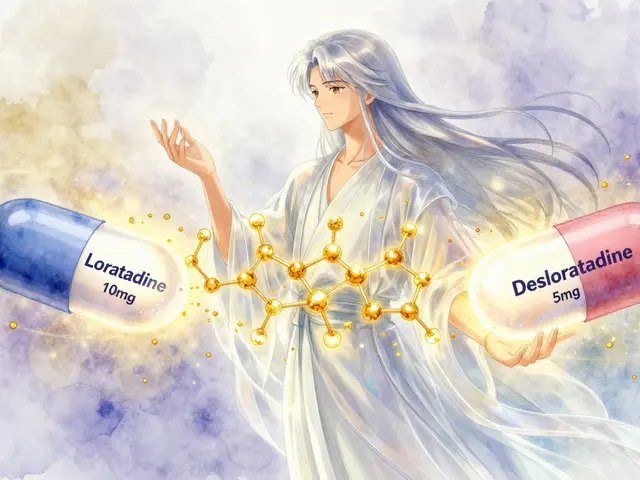
Cold and allergy meds are trickier than they look. First-gen antihistamines like diphenhydramine (Benadryl) work fast-but they make you so sleepy you could fall off a chair. That’s why the FAA bans pilots from flying for 12 hours after taking it. It’s also dangerous for people over 65: a 2021 JAMA study found it raises fall risk by 30%. Second-gen options like loratadine (Claritin) and fexofenadine (Allegra) work just as well for allergies but don’t cause drowsiness. They’re the smart pick for daily use.
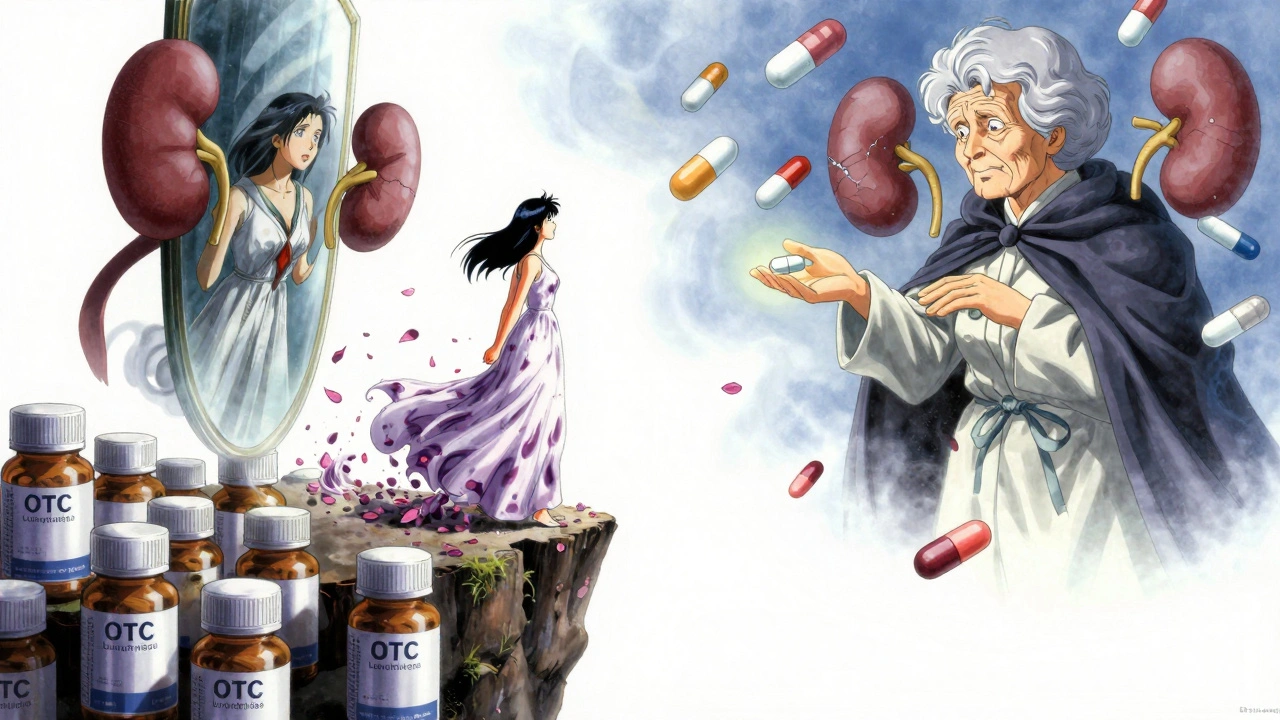
Gastrointestinal meds include antacids (Tums), H2 blockers (Pepcid), and proton pump inhibitors (Prilosec). Tums and Pepcid are fine for occasional heartburn. But if you’re popping Prilosec every day for months, you’re risking kidney damage. A 2023 JAMA study linked long-term PPI use to a 20-50% higher chance of chronic kidney disease. And loperamide (Imodium) for diarrhea? Don’t use it if you have a fever or bloody stool-it could hide a serious infection.
When OTC Medications Become Dangerous
People think OTC means safe. It doesn’t. The FDA says 25% of adults believe OTC meds can’t hurt you no matter how much you take. That’s why 68% of accidental overdoses involve these drugs.
One of the biggest mistakes? Combining meds. A typical cold tablet might contain acetaminophen, dextromethorphan (for cough), and pseudoephedrine (for congestion). Take another pain reliever on top? You’ve just doubled your acetaminophen dose. Take a sleep aid with Benadryl? You’re stacking sedatives. That’s how people end up in the ER.
Then there’s chronic use. Many people take OTC meds for months-sometimes years-thinking it’s harmless. A 2023 Health Affairs commentary warned that the line between self-care and self-medication is blurring. People with chronic heartburn are popping PPIs daily. Those with back pain are on ibuprofen every day. That’s not self-care-it’s dangerous.
And don’t forget the hidden ingredients. Some toothpastes, anti-dandruff shampoos, and first-aid ointments are classified as OTC drugs. Fluoride toothpaste (1,000 ppm or higher) is technically a drug. So is selenium sulfide shampoo. They’re regulated like medicine because they change how your body works.
Who Should Avoid These Meds-And Why
Not everyone can take the same OTC meds. Certain groups need extra caution.
Pregnant people: Only acetaminophen is considered safe for pain or fever during pregnancy. NSAIDs like ibuprofen and naproxen can cause kidney problems in the fetus after 20 weeks. The American College of Obstetricians and Gynecologists says avoid them entirely in the third trimester.
Children under 4: Cough and cold medicines are banned for this age group. Since 2008, the FDA has required clear labels saying “do not use.” Why? Between 1969 and 2006, 115 children under 4 died from accidental overdose of these products.
Adults over 65: Diphenhydramine is a no-go. It causes dizziness, confusion, and urinary retention. It’s linked to falls, hospitalizations, and even dementia risk. Instead, use non-sedating antihistamines like loratadine-but even those need a lower dose if kidney function is poor (5 mg daily if creatinine clearance is below 30 mL/min).
People with liver or kidney disease: Acetaminophen can be toxic if your liver is damaged. NSAIDs reduce blood flow to the kidneys, which can worsen kidney disease. Loperamide builds up in the body if your kidneys aren’t working well, leading to dangerous heart rhythms.
Diabetics: Many liquid OTC meds, especially cough syrups and antacids, contain sugar or high-fructose corn syrup. Always check the label. Sugar-free versions exist.
How to Use OTC Meds Safely
There’s a simple way to avoid most OTC medication risks:
- Read the Drug Facts label. Since 2023, the FDA requires all OTC products to use the same format: Active Ingredient, Purpose, Uses, Warnings, Directions, and Other Information. If it doesn’t have this, don’t buy it.
- Don’t mix. Never take two meds with the same active ingredient. If you’re taking a cold pill, check if it already has acetaminophen before taking Tylenol.
- Know your max dose. Write down the daily limit for each med you use. Stick to it.
- Don’t use for more than 7-10 days. If symptoms last longer, see a doctor. OTC meds aren’t meant for chronic conditions.
- Store properly. Keep meds below 86°F (30°C). Heat and humidity ruin them. Don’t leave them in the bathroom or car.
- Check expiration dates. Expired meds lose potency. Some, like liquid antibiotics, can become toxic.
And if you’re unsure? Ask your pharmacist. Ninety-three percent of Americans live within five miles of a pharmacy. Pharmacists are trained to spot dangerous combinations and flag risks. Yet only 42% of people know when to choose acetaminophen over ibuprofen. That gap is deadly.
What’s Changing in OTC Medications
The OTC market is evolving. In 2023, the FDA approved fluticasone furoate (Veramyst) as the first nasal steroid available without age restrictions for allergies. That’s a big deal-it means kids and adults can now use the most effective nasal congestion treatment without a prescription.
Companies are also using tech to help. CVS launched an AI app called OTC Advisor that scans your meds and tells you if something might interact with your health conditions or prescriptions. It’s not perfect, but it’s a step forward.
Pharmacists are gaining more authority too. By 2027, more states will let pharmacists prescribe certain OTC meds for minor conditions-like giving you a starter pack of antihistamines for seasonal allergies without a doctor’s note. That’s good news for access, but it also means you need to be even more informed.
Meanwhile, abuse is rising. Dextromethorphan, found in cough syrups, is being misused by teens to get high. In 2023, the National Institute on Drug Abuse reported 1.2 million ER visits linked to OTC drug misuse-mostly from overuse or abuse of cough meds.
The bottom line? OTC meds are powerful tools. But they’re not toys. The same drug that helps you sleep through the night can kill you if you take too much. The same pill that relieves your headache can cause a stroke if you have high blood pressure.
Respect them. Know them. Ask questions.
Can I take ibuprofen every day for back pain?
No. Ibuprofen is not meant for daily, long-term use. Taking it every day for weeks or months increases your risk of stomach bleeding, kidney damage, and high blood pressure. If you need daily pain relief, talk to your doctor. There may be safer options or underlying issues that need treatment.
Is Tylenol safer than ibuprofen?
It depends. Tylenol (acetaminophen) is safer for your stomach and doesn’t affect blood pressure like ibuprofen. But it’s harder on your liver. If you drink alcohol regularly, have liver disease, or take other meds with acetaminophen, Tylenol can be more dangerous. Ibuprofen is better for inflammation, but worse for your kidneys and gut. Choose based on your health history, not convenience.
Can I give my child Benadryl to help them sleep?
No. Benadryl (diphenhydramine) is not approved for use as a sleep aid in children. It can cause agitation, hallucinations, or seizures in kids. For sleep issues, focus on bedtime routines, screen limits, and a calm environment. Talk to your pediatrician before using any OTC sleep aid.
Are OTC meds safe during pregnancy?
Only acetaminophen is generally considered safe for pain or fever during pregnancy. Avoid NSAIDs like ibuprofen and naproxen after 20 weeks-they can affect fetal kidney development. For allergies, use loratadine or cetirizine. Always check with your OB-GYN before taking any OTC med, even if it’s labeled “safe.”
What should I do if I think I’ve taken too much OTC medicine?
Call Poison Control immediately at 1-800-222-1222 (U.S.) or your local emergency number. Don’t wait for symptoms. Acetaminophen overdose can cause liver damage before you feel sick. Keep the medicine bottle handy-providers need to know the exact ingredient and amount taken.
Do OTC meds expire? Can I still use them after the date?
Yes, they expire. Most OTC meds are effective for 2-3 years after manufacture. After that, they lose strength. Some, like liquid antibiotics or insulin, can become unsafe. Don’t use expired meds for serious conditions. For minor issues like occasional headaches, an expired Tylenol might still work-but it’s not guaranteed. Better to replace it.
What to Do Next
Start by cleaning out your medicine cabinet. Toss anything expired, discolored, or unlabeled. Keep only the essentials: acetaminophen, ibuprofen, a non-drowsy antihistamine, an antacid, and loperamide. Store them in a cool, dry place-not the bathroom.
Make a list of your current meds, including OTCs. Bring it to your next doctor or pharmacist visit. Ask: “Is this safe with my other meds?” “Is this okay for my condition?” “Is there a better option?”
And if you’re using an OTC med for more than 10 days? That’s not self-care anymore. That’s a red flag. Time to see a professional.


ian septian
December 8, 2025 AT 23:20Just read the label. Seriously. That’s it.
William Umstattd
December 9, 2025 AT 19:25It’s not just ignorance-it’s willful negligence. People treat pharmacies like convenience stores and expect miracles. The FDA didn’t make these drugs ‘safe’-they made them accessible. Responsibility is not optional. If you’re popping ibuprofen daily like candy, you’re not self-medicating-you’re self-sabotaging. And don’t even get me started on the Benadryl-for-sleep crowd. That’s not a sleep aid. It’s a chemical lobotomy with a side of dementia risk.
Sabrina Thurn
December 10, 2025 AT 04:54There’s a critical gap between public perception and pharmacological reality here. OTC medications are classified as such due to their therapeutic index and risk-benefit profile under supervised use-not because they’re benign. The real issue is systemic: we’ve outsourced health literacy to packaging, and that’s a flawed architecture. For example, the Drug Facts label is standardized, but comprehension isn’t. Studies show that only 34% of adults correctly identify active ingredients across multiple products. Add polypharmacy risks-especially in older adults on multiple prescriptions-and you’ve got a perfect storm. Pharmacists are the last line of defense, yet only 12% of patients proactively consult them before combining OTCs. We need mandatory counseling at point-of-sale for high-risk categories: NSAIDs, antihistamines, and PPIs.
Simran Chettiar
December 10, 2025 AT 05:19When one takes medicine without knowing the essence of the body one is altering one is not healing one is dancing with chaos. The modern man thinks that because a pill is sold on a shelf it is not a force of nature. But every molecule has memory every chemical has intention. Acetaminophen is not just a painkiller it is a silent assassin in the liver’s cathedral. And the mind that reaches for it without reverence is already broken. We have forgotten that medicine was once sacred. Now it is commodity. And the soul pays the price in silent organ failure. The body remembers what the mind forgets. And the body does not forgive.
Sarah Gray
December 11, 2025 AT 07:01Of course people overdose. They’re lazy. They don’t read. They don’t think. They just grab the bottle with the prettiest label. And then they wonder why they’re in the ER. This isn’t rocket science. It’s basic reading comprehension. If you can’t follow a 10-line label, maybe you shouldn’t be allowed to buy anything that isn’t a banana.
Carina M
December 13, 2025 AT 04:10It is an incontrovertible fact that the proliferation of over-the-counter pharmaceuticals has precipitated a moral and physiological decline in the American populace. The normalization of self-diagnosis, coupled with the commodification of pharmacological intervention, represents not merely a public health failure, but a profound epistemological collapse. One cannot reasonably expect the citizenry to exercise discernment when the very infrastructure of healthcare delivery has been reduced to a retail transaction. The FDA’s labeling reforms, while commendable in form, are woefully insufficient in substance. A label is not a substitute for education. And education, in this context, has been systematically abandoned.
Ajit Kumar Singh
December 14, 2025 AT 05:55Bro in India we have this thing called Dolo 650 and people take 4 at once for headache and say it works better lol and no one dies but somehow in US everyone is scared of Tylenol like its poison I mean its same drug but here you treat it like nuclear material and over there its like oh my god did you read the label oh my god did you know its in your cold medicine oh my god
Lisa Whitesel
December 15, 2025 AT 19:25It’s not about reading labels. It’s about not needing them. If you’re using OTC meds for more than a week you’ve already failed. The system is designed to keep you dependent. The real danger isn’t the drug. It’s the belief that you can fix chronic problems with temporary fixes. You’re not sick. You’re just out of alignment. Go see a doctor. Or better yet-stop self-medicating and start living.