Imagine landing in a new country, your suitcase is unpacked, but you realize you forgot your daily medication. Or worse, you arrive at customs with your prescription, only to be told it’s illegal there. It happens more often than you think. According to recent data, nearly 68% of U.S. travelers face some form of medication access issue when going abroad. The stakes are high: missing doses can disrupt chronic conditions, and breaking local drug laws can lead to confiscation, fines, or even detention.
Navigating the world’s patchwork of pharmaceutical regulations isn’t just about convenience; it’s about safety and legality. With over 170 countries bound by international narcotics treaties but enforcing them differently, what’s legal in one place might be banned in another. This guide breaks down exactly how to find your meds abroad, get local prescriptions if needed, and stay on the right side of the law without stressing out.
Know the Rules Before You Book
The biggest mistake travelers make is assuming their home country’s rules apply everywhere. They don’t. Drug schedules vary wildly. For instance, hydrocodone is a standard painkiller in the United States but is completely prohibited in Japan. Conversely, codeine is available over-the-counter in Mexico but requires special authorization in Australia.
To avoid surprises, check the International Narcotics Control Board (INCB) database. As of late 2025, this resource lists specific regulations for 68 countries. If your destination isn’t listed, assume the strictest possible interpretation and contact the embassy directly. Don’t rely on general travel blogs; look for official government health sites or the CDC Yellow Book, which notes that 97% of countries require original prescription labels matching your passport name.
- Check Controlled Substance Lists: Identify if your med contains opioids, benzodiazepines, or stimulants. These are flagged most often.
- Verify Quantity Limits: Most countries follow a "90-day rule" for personal use. However, Singapore limits supplies to 14 days, and Japan restricts narcotics to 30 days.
- Review Banned Ingredients: Common cold medicines containing pseudoephedrine are banned in New Zealand, Australia, and the UAE due to methamphetamine production concerns. In Q1 2025 alone, Sydney Airport confiscated 387 such items from travelers.
Paperwork That Actually Works
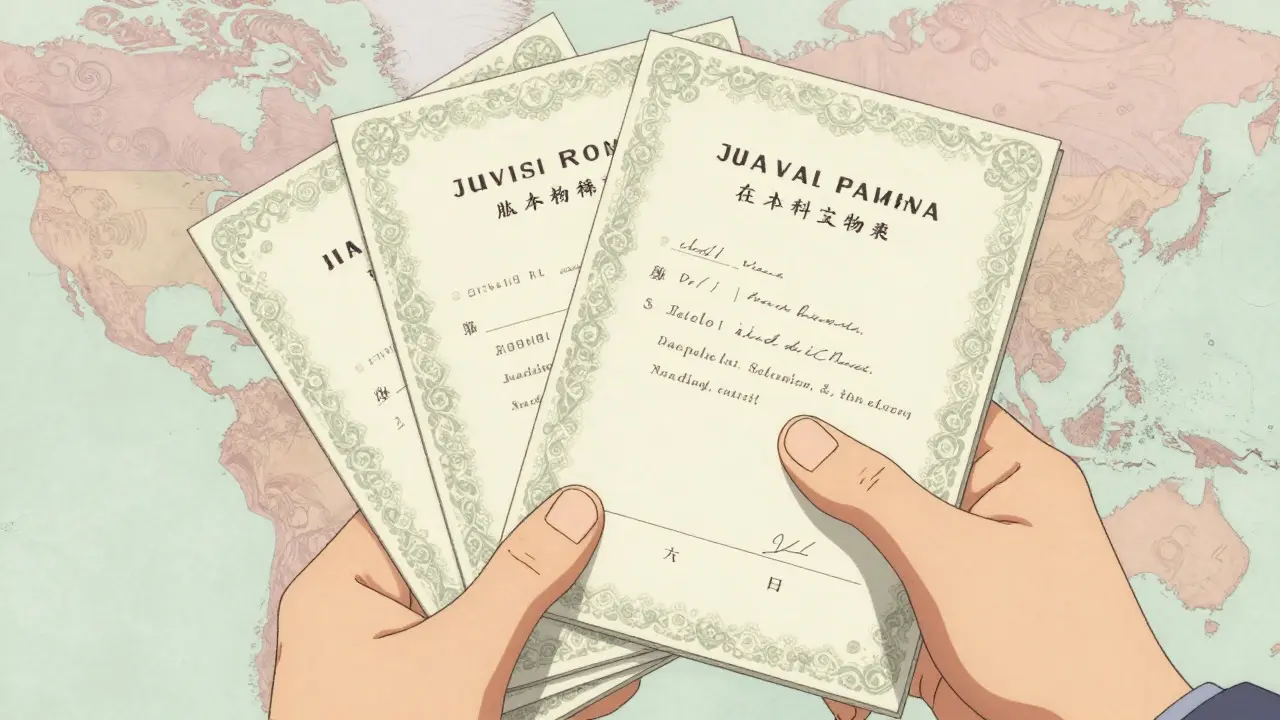
Your doctor’s note is your best friend, but only if it’s done right. A casual scribble won’t cut it. Customs officers need specific details to verify legitimacy. Based on 2025 guidelines, your documentation must include:
- Original Prescription Label: Keep meds in their original pharmacy containers. Blister packs or generic bottles raise red flags.
- Doctor’s Letter on Letterhead: Include your full name (matching your passport), diagnosis, and the International Classification of Diseases (ICD-11) code for your condition. Schengen Area countries require this in 83% of cases.
- Generic and Brand Names: List both. A drug known as Xanax in the U.S. might be called Alprazolam elsewhere. Mismatches cause delays.
- Notarized Translations: If you’re visiting a non-English speaking country, get your documents translated and notarized. This is mandatory in 62% of these destinations.
Pro tip: Carry two copies of all documents. Keep one set in your carry-on and another in a separate bag or digital cloud storage. In 78% of rejection cases at borders, the issue was a mismatched patient name or missing physician contact info.
Getting a Local Prescription When You Run Out
Sometimes, despite best efforts, you run out of meds or lose your supply. Getting a refill locally varies by region. In the European Union, the system is relatively seamless. Thanks to the EU Falsified Medicines Directive and the European Prescription initiative, you can transfer prescriptions between 24 member states with a 98.7% success rate. If you have a German e-prescription, you can likely fill it in France within hours.
Outside the EU, it gets trickier. In Southeast Asia, Thailand allows 30-day supplies with a local prescription, but Malaysia prohibits all benzodiazepines regardless of paperwork. To navigate this:
- Use Verified Networks: Look for clinics affiliated with the International Association for Medical Assistance to Travellers (IAMAT). They have 1,400 verified clinics worldwide that understand traveler needs.
- Telemedicine Options: By September 2025, 41 countries had expanded telemedicine capabilities for tourists. Services like MediFind operate in 28 countries with an 85% success rate in sourcing medications.
- Emergency Rooms: In developing nations, hospital pharmacies may stock limited essential drugs. Bring a list of generic names to show local pharmacists.
If you’re dealing with ADHD medications like Adderall, expect hurdles. These are Schedule II controlled substances in the U.S. and often require special import permits or pre-arrival authorization in places like the UAE, where 1,247 travel disruptions were documented in 2024 due to lack of prior approval.
Airport Security and Liquids
Flying with meds adds another layer of complexity. The Transportation Security Administration (TSA) updated its rules in April 2025 to allow "reasonable quantities" of medically necessary liquids exceeding the standard 3.4-ounce limit. However, you must declare them at security checkpoints.
Here’s how to handle airport security smoothly:
- Keep Meds in Carry-On: Checked bags can get lost or exposed to extreme temperatures. Always keep daily meds with you.
- Separate Liquids: Place liquid medications in a separate bin for screening. Inform the officer before you start the process.
- Use TSA Cares: Call the TSA Cares program 72 hours before your flight. They provide expedited screening and support for passengers with medical conditions, used by 76% of frequent travelers with complex needs.
Remember, security agents aren’t pharmacists. They care about explosives, not dosages. But clear communication prevents unnecessary delays.

Common Pitfalls and How to Avoid Them
Even seasoned travelers slip up. Here are the most common errors based on user reports and expert analysis:
| Mistake | Consequence | Solution |
|---|---|---|
| Carrying meds in unlabeled pill organizers | Confiscation or suspicion of smuggling | Keep in original pharmacy bottles with labels |
| Ignoring destination-specific bans | Fines or detention (e.g., Zolpidem in UAE) | Check INCB database and embassy websites 90 days prior |
| Bringing excessive quantities | Treated as commercial import | Stick to the 90-day max unless authorized otherwise |
| Using brand names only | Pharmacist confusion | List both brand and generic (INN) names |
One major red flag is bringing over-the-counter meds that contain restricted ingredients. In the U.S., decongestants with pseudoephedrine are easy to buy. In Australia and New Zealand, they’re tightly controlled. Always check active ingredients, not just the product name.
Future Changes to Watch
The landscape is shifting. The WHO released new guidelines in May 2025 aiming to standardize documentation templates for controlled medicines, expected to roll out globally by mid-2026. Meanwhile, the U.S. Affordable and Safe Prescription Drug Importation Act of 2025 (H.R. 3162) passed in June 2025, allowing imports from certified pharmacies in Canada, the UK, the EU, and Switzerland starting May 2026.
For now, preparation is key. Start planning 8-12 weeks before your trip. Contact your doctor early, secure translations, and verify airline policies. The effort pays off in peace of mind.
Can I bring my prescription medication into any country?
Not necessarily. While most countries allow personal-use medications, many ban specific ingredients like pseudoephedrine or strict controls on opioids and benzodiazepines. Always check the destination’s controlled substance list via the INCB or local embassy. Some countries, like Japan and Singapore, have very short allowable supply limits (30 and 14 days respectively).
Do I need a translator for my prescription?
In 62% of non-English speaking countries, a notarized translation is mandatory. Even if not required, it helps local pharmacists identify your medication. Ensure the translation includes both brand and generic names, dosage, and your doctor’s contact information.
What if I run out of medication while abroad?
Your options depend on the location. In the EU, you can often transfer prescriptions easily. Elsewhere, seek help from IAMAT-affiliated clinics or use telemedicine services like MediFind. Carry a list of generic drug names to show local pharmacists. Avoid buying street meds, as quality control varies widely.
How much medication can I carry?
Most countries follow a 90-day personal use limit. However, always verify specific national rules. Japan limits narcotics to 30 days, and Singapore to 14. Carrying more than allowed may require a special import permit from the destination’s health ministry.
Are over-the-counter meds safe to bring?
Often yes, but check ingredients. Common OTC drugs in the U.S. may contain banned substances elsewhere. For example, pseudoephedrine is restricted in Australia, New Zealand, and the UAE. Check active ingredients against the destination’s banned list before packing.
What should I do at airport security with liquid meds?
Declare them to TSA officers. Since April 2025, reasonable quantities of medically necessary liquids exceed the 3.4-ounce limit. Keep them in your carry-on, separate from other liquids, and inform the officer before screening begins. Use TSA Cares for additional support if needed.