Traveling with controlled medications isn’t just about packing a pill bottle. It’s about avoiding theft, legal trouble, and medical emergencies-all in one trip. If you’re carrying something like oxycodone, hydrocodone, or even a benzodiazepine, you’re carrying a target. Thieves know the street value. Border agents know the rules. And airlines? They’ve been trained to watch for it. The good news? With the right steps, you can move safely, legally, and without stress.
Know What You’re Carrying-and Why It Matters
Controlled medications are divided into five schedules by the U.S. Drug Enforcement Administration (DEA). Schedule II drugs-like oxycodone, fentanyl, and Adderall-are high-risk for abuse and theft. Schedule III to V include things like ketamine, certain sleep aids, and mild painkillers. Even though they’re lower risk, they’re still targeted. Why? Because they’re valuable on the black market. According to the CDC, about 12% of all medication incidents during travel involve controlled substances. That’s not random. It’s calculated.And it’s not just the U.S. That matters. Countries like Japan, Saudi Arabia, and Singapore have near-zero tolerance for even small amounts of certain medications. Pseudoephedrine in cold pills? Banned in Japan. Diazepam? Illegal in Saudi Arabia without special permits. You can’t assume your prescription works everywhere. Always check the destination country’s rules before you pack.
Never Check Your Medications
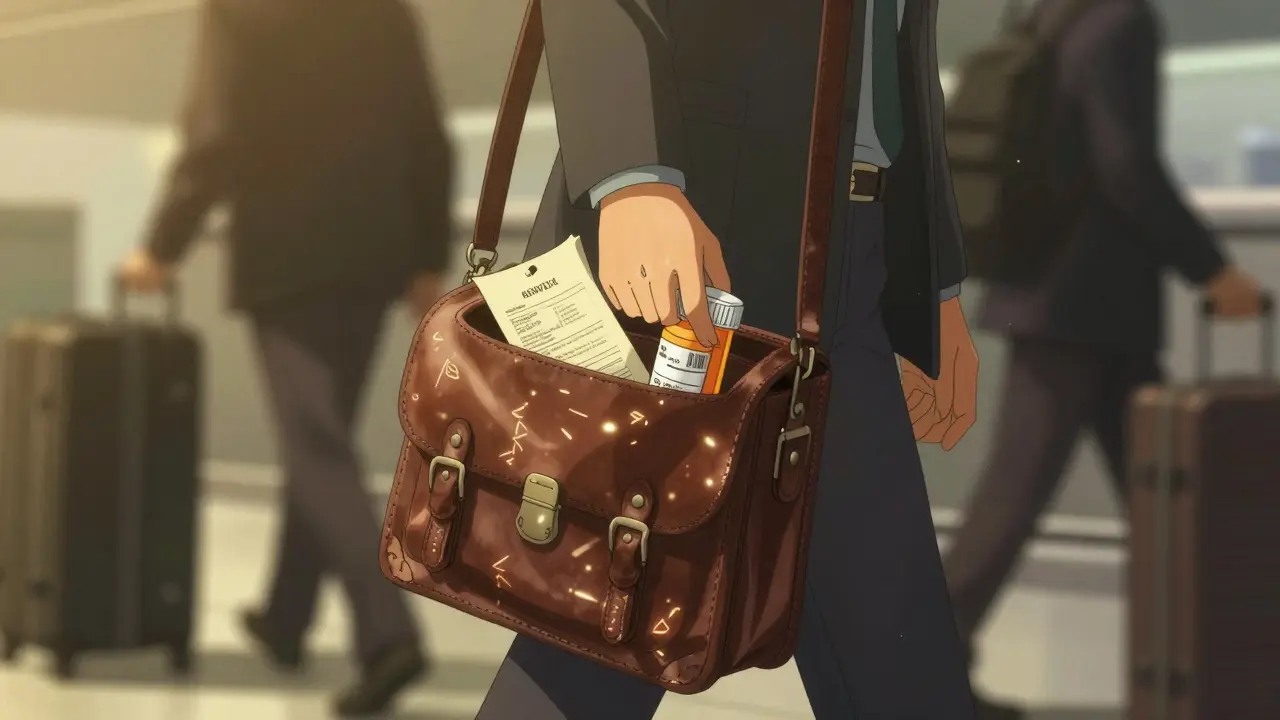
This is non-negotiable. The Transportation Security Administration (TSA) requires all medications, especially controlled substances, to stay in your carry-on. Why? Because checked luggage gets lost, stolen, or mishandled. SITA’s 2022 report found that 25.5 bags per 1,000 passengers are mishandled. That’s one in 40. If your medication’s in there, it’s gone. And if it’s a Schedule II drug, replacing it while overseas can take weeks-or be impossible.Keep your meds in your purse, backpack, or carry-on bag. Never leave them in a rental car, hotel room safe, or suitcase-even if it’s locked. The most common thefts happen when travelers think they’re being smart by locking things up. In reality, 92% of medication thefts occur during hotel stays or when meds are left unattended in vehicles, according to Cleveland Clinic’s Dr. Sarah Wyman.
Use Original Containers-Always
Your prescription bottle isn’t just packaging. It’s your legal proof. The Cleveland Clinic says 78% of airport issues come from meds not being in original containers. Even if you’ve transferred pills to a pill organizer for convenience, you still need the original bottle with you.What’s on that bottle? Your name, the pharmacy’s name, the drug name, strength, dosage, and prescribing doctor. Without it, TSA agents, customs officers, or police can’t verify it’s yours. If you’re worried about privacy, the International Narcotics Control Board allows you to transfer a small amount to a secondary container-as long as it has all the same info printed on it. No handwritten labels. No generic plastic boxes. No excuses.
Carry the Right Paperwork
A prescription alone isn’t enough for international travel. You need a doctor’s letter. The CDC’s 2024 Yellow Book recommends a standardized letter that includes:- Your full name and date of birth
- Medication name, dosage, and quantity
- Diagnosis (e.g., chronic pain, ADHD, anxiety)
- Physician’s name, license number, and contact info
- Signature and date
Get it printed on official letterhead. Notarize it if you can. Canadian travelers using this method have a 98.7% success rate at borders, according to Travel.gc.ca. In the U.S., 32 states-including California, Texas, and Florida-require original pharmacy labels even for domestic flights. Don’t gamble. Bring the letter. Bring the bottle. Bring both.
Use a Secure, Discreet Storage Solution
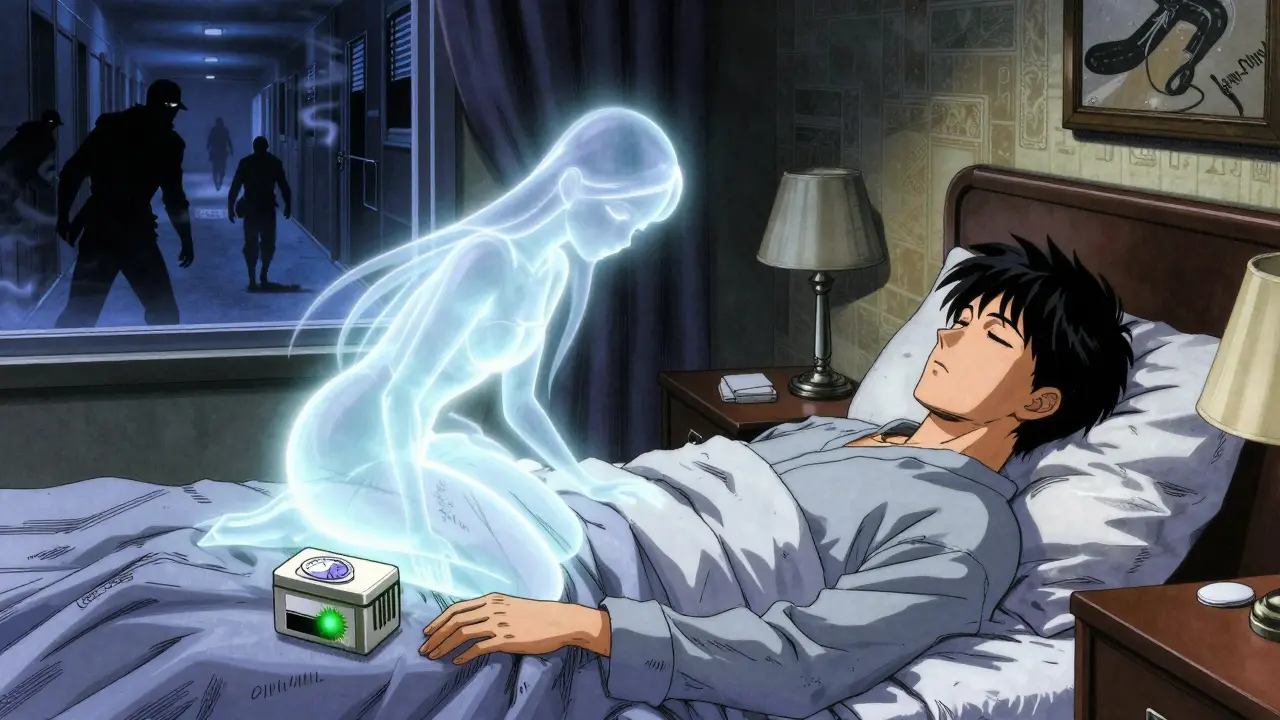
There’s a reason travel medication security products hit $217 million in sales in 2023. And 43% growth is projected through 2030. Why? Because people are finally catching on.Look for RFID-blocking medication cases. These block digital signals that could be used to scan for electronic prescriptions or tracking chips. Some even have tamper-evident seals that change color if opened. They’re small, quiet, and fit in your pocket. Pair it with your hotel safe. Don’t rely on one. Use both.
Aggregated reports from PackPoint show that travelers using RFID cases + hotel safes reduce theft by 76%. That’s not luck. That’s strategy. Avoid anything that looks like a pill bottle. No branded containers. No logos. Keep it plain.
Know the Rules for Refills and Replacements
If your meds are stolen, you’re not just out of pills-you’re out of options. DEA rules say Schedule II drugs can’t be refilled early unless you get special permission. That means no pharmacy will give you a replacement without a police report and a new prescription from your doctor.Insurance companies like UnitedHealthcare require police reports filed within 24 hours to approve claims for stolen controlled substances. Without it? Only 17% of claims get paid. With it? 89% do.
Here’s what to do if it happens:
- Report the theft to local police immediately. Get a case number.
- Call your doctor. Ask them to fax a new prescription to a pharmacy near you.
- Contact your insurance. Submit the police report.
- Use the DEA’s new pilot program (launched April 2024) if you’re in one of the 17 participating U.S. states. Electronic verification cuts replacement time from 72 hours to under 4.
Don’t wait. Act fast. Every hour counts.
International Travel? Check Before You Go
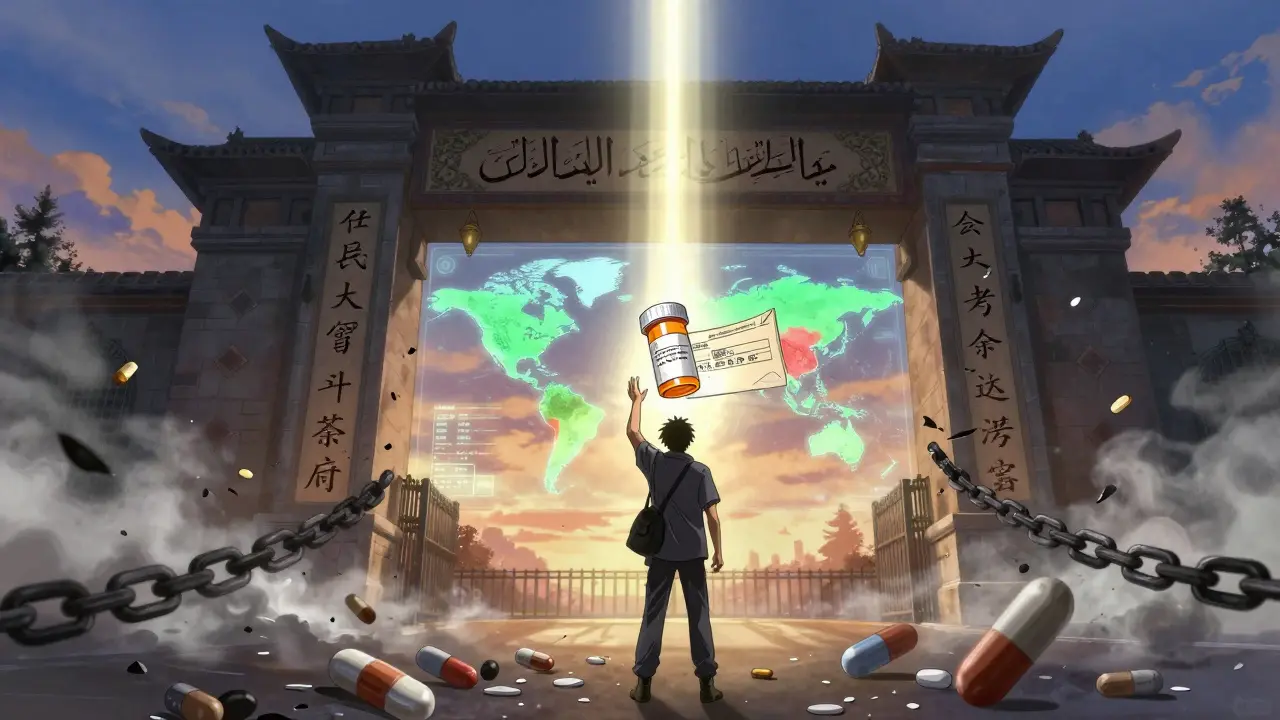
Sixty-seven percent of countries will confiscate your meds without proper documentation. Forty-one countries require advance approval-even for Schedule III-V drugs like Xanax or tramadol.Some countries have outright bans:
- Japan: Pseudoephedrine, codeine, and many ADHD meds are illegal. Even over-the-counter cold pills can get you detained.
- Saudi Arabia: 147 controlled substances are banned entirely, including some antidepressants and sleep aids.
- United Arab Emirates: Benzodiazepines require pre-approval. Carry your letter.
- Australia: You must declare all controlled substances on arrival. Failure to do so can mean fines or jail.
Use the International Narcotics Control Board’s interactive portal (updated September 2024) to check country-specific rules. It’s free. It’s updated. It’s your best tool.
What About Airline Security?
IATA implemented Resolution 783 in January 2022, requiring all member airlines to train staff to spot fake prescriptions and identify real ones. That means fewer delays-but only if you’re prepared.When you go through security:
- Take your meds out of your bag before reaching the X-ray machine.
- Keep them visible and separate from other items.
- Be ready to show your prescription and doctor’s letter.
- Don’t argue. Stay calm. If they ask questions, answer honestly and show your documents.
Over 317 hotel thefts were reported on TripAdvisor between 2022 and 2023. Most involved travelers who stored meds in checked luggage or left them on a nightstand. Don’t be one of them.
What’s Changing in 2025?
The world is moving toward digital verification. The EU is piloting blockchain-based prescription systems that cut medication-related travel incidents by 92%. The U.S. isn’t there yet-HIPAA rules make it slow. But the DEA’s electronic verification pilot is a sign of things to come.For now, stick to the basics:
- Original container + doctor’s letter = your golden ticket
- Carry-on only = no exceptions
- Discreet, secure storage = your best defense
- Police report if stolen = your only path to replacement
Medication theft isn’t a myth. It’s a real risk. But it’s also preventable. You don’t need to be an expert. Just follow the steps. Stay informed. Stay prepared.
Can I put my controlled medication in a pill organizer when traveling?
You can use a pill organizer for daily convenience, but you must carry the original prescription bottle with you at all times. Airport security and customs require the original container with your name, pharmacy, and prescribing doctor clearly printed on it. Without it, you risk detention, confiscation, or delays.
What happens if I’m caught with controlled medication without a prescription abroad?
Consequences vary by country. In some places, you’ll face fines or confiscation. In others, like Japan or Saudi Arabia, you could be arrested or jailed. Even if you have a U.S. prescription, it’s not valid overseas. Always check the destination country’s rules before you travel.
Do I need to declare my medications at customs?
Yes, in most countries. Some require you to declare all medications on arrival forms. Others ask verbally during inspection. When in doubt, declare them. It’s better to be honest upfront than to be accused of hiding something. Always carry your prescription and doctor’s letter.
Can I bring more than a 30-day supply of my medication?
For Schedule III-V medications, the International Narcotics Control Board allows up to a 30-day supply as of September 2024. For Schedule II drugs, stick to a 14-day supply plus 2-3 extra doses. Carrying more increases your risk of confiscation or legal trouble. Always check your destination’s limits.
What should I do if my medication is stolen while traveling?
File a police report immediately-within 24 hours if possible. Contact your doctor to request a new prescription. Call your insurance company and submit the police report. If you’re in the U.S. and in a participating state, use the DEA’s electronic verification system to speed up replacement. Never try to buy medication on the street.
Are there special rules for flying with injectable controlled medications?
Yes. Injectable medications must be in their original labeled containers and accompanied by a doctor’s letter explaining medical necessity. You may be asked to show the syringes and vials at security. Never pack them in checked luggage. Keep them in your carry-on with ice packs if needed, and declare them if they require refrigeration.