Leaving the hospital can feel like a relief, but it often marks the start of a confusing period for your health. You’re handed a stack of papers, a new list of pills, and instructions that might not match what you were taking at home just days ago. This gap is where drug interactions hide. They don’t always show up immediately; sometimes they creep in over weeks, causing side effects or reducing the effectiveness of your treatment.
Medication reconciliation is the formal process of comparing your current medication orders with everything you were actually taking before admission. It’s not just a clerical task; it’s a critical safety step designed to catch omissions, duplications, dosing errors, and dangerous combinations. According to the National Quality Forum, this process is essential for preventing adverse drug events, which can reduce complications by 30-50%. Yet, despite its importance, many patients leave the hospital without a clear understanding of how their regimen has changed. Here is how you can take control of your own medication safety after discharge.
Why Discharge Is the Most Dangerous Time for Medication Errors
The transition from inpatient to outpatient care is fragile. During your hospital stay, doctors often hold certain medications temporarily-perhaps stopping blood thinners before surgery or adjusting painkillers based on IV administration. The problem arises when these temporary holds aren’t reversed correctly at discharge. Dr. David Bates from Harvard Medical School notes that reconciliation failures often stem from not resuming medications held during the stay and insufficient patient education. If a doctor stops warfarin pre-operatively but forgets to restart it upon discharge, you face a significant risk of clotting issues within days.
Statistically, the risk is high. A study published in the Annals of Internal Medicine found that 18.7% of medication changes made during hospitalization are unintentionally continued post-discharge. For patients on complex regimens, this is even more alarming. If you are taking five or more medications, your risk of experiencing an interaction due to reconciliation failure jumps significantly. In fact, 29% of U.S. adults take five or more medications, creating a dense web of potential conflicts that requires careful management.
The Step-by-Step Process for Effective Reconciliation
You don’t need to be a pharmacist to perform basic reconciliation, but you do need a systematic approach. The American Society of Health-System Pharmacists (ASHP) recommends a specific workflow that you can mirror at home. Here is how to execute it:
- Gather Your Pre-Admission List: Before you left the hospital, you likely provided a list of your home meds. Dig that out. If you didn’t write one down, try to reconstruct it using pill bottles, pharmacy records, or memory. This is your baseline.
- Obtain the Discharge Summary: Ask for the official discharge summary if you haven’t received it yet. This document usually contains the most reliable medication data, with a lower error rate than self-reporting. Highlight any new prescriptions or discontinued drugs.
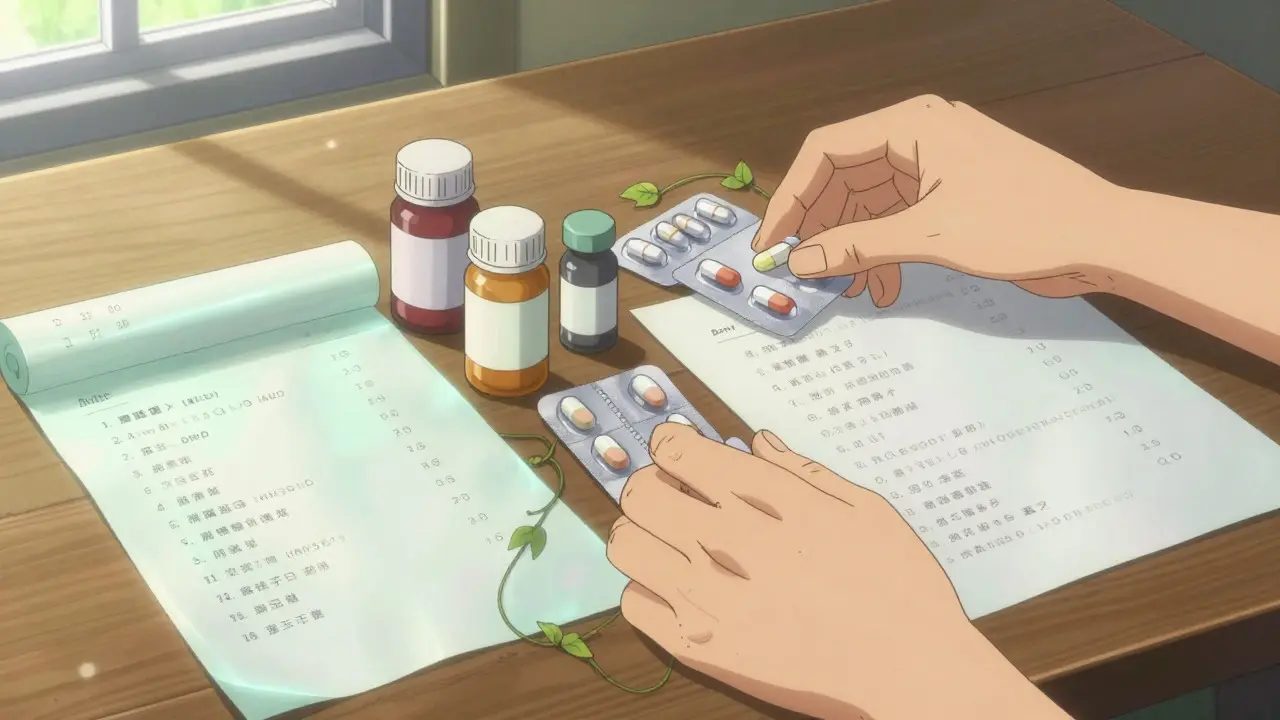
- Compare Side-by-Side: Place your pre-admission list next to the discharge list. Look for three things: missing medications (omissions), added medications (duplications or new therapies), and dosage changes.
- Check for Interactions: Use a reputable drug interaction checker online or ask your pharmacist specifically about the new combination. Pay attention to timing-if two drugs must be taken hours apart, note it clearly.
- Verify with Your Primary Care Provider (PCP): Schedule a follow-up within 7-14 days. Bring both lists. This visit is crucial because your PCP needs to confirm that the hospital’s plan aligns with your long-term health goals.
Common Pitfalls That Lead to Dangerous Interactions
Even with good intentions, mistakes happen. One of the most common pitfalls is the "unintentional continuation." Imagine you were on antibiotics for a short course in the hospital. If the discharge summary doesn’t explicitly state "stop after 5 days," you might keep taking them until the bottle is empty. This isn’t just wasteful; it can disrupt your gut flora or mask other infections.
Another frequent issue is the duplication of supplements. Many patients take over-the-counter vitamins or herbal remedies that aren’t listed on their prescription chart. For example, St. John’s Wort can interact with antidepressants, while calcium supplements can block the absorption of certain thyroid medications. When you reconcile, include every pill, powder, and drop you consume, not just those with a white label from the pharmacy.
Dosing frequency discrepancies are also a major source of error. A 2020 study in the Journal of the American Geriatrics Society found that nearly 12% of discrepancies involved incorrect frequencies. Did the hospital say "take twice daily" when your home routine was "once daily in the morning"? Small shifts like this can lead to toxicity or sub-therapeutic levels over time.
How to Communicate Effectively with Healthcare Providers
Communication breakdowns are as common as medical ones. Only 58% of Medicare beneficiaries recall receiving clear medication instructions at discharge. To bridge this gap, use specific language when talking to your doctors and pharmacists.
- Ask "What changed?": Instead of asking "Is this okay?", ask "Which of my old medications did you stop, and why?" This forces a direct comparison.
- Request a Written Action Plan: The ASHP MATCH Toolkit suggests a "Medication Action Plan" that verifies three elements: purpose, administration, and warning signs. Ask your provider to explain the *purpose* of each new drug in plain English.
- Confirm Follow-Up Timing: Ensure you have a concrete date for your post-discharge checkup. Under Transitional Care Management codes, patients should be seen within 7-14 days. Don’t wait for symptoms to appear.

Tools and Resources to Support Your Reconciliation
You don’t have to do this alone. Several tools can help streamline the process. Digital health apps now allow you to scan pill bottles and create automated interaction alerts. While no app replaces professional advice, they serve as excellent first-line checks.
Your local community pharmacist is another underutilized resource. Unlike hospital pharmacists who may be rushed, community pharmacists often have more time to review your entire history. Bring all your bottles-including those from different pharmacies-to ensure they see the full picture. Many pharmacies offer free medication reviews, especially for seniors or those on multiple drugs.
If you are managing a loved one’s care, consider using a shared digital calendar or a physical binder dedicated to their health records. Keep the discharge summary, insurance cards, and contact numbers for specialists in one place. This centralization reduces the cognitive load on caregivers and minimizes the chance of missed doses or conflicting instructions.
When to Seek Immediate Help
While most reconciliation issues are manageable with planning, some signs indicate a serious problem requiring immediate medical attention. Watch for:
- New or worsening bleeding or bruising (sign of anticoagulant issues).
- Confusion, dizziness, or fainting (could indicate blood pressure or heart rate med interactions).
- Allergic reactions such as rash, swelling, or difficulty breathing.
- Sudden return of symptoms that were being treated (e.g., chest pain, shortness of breath).
If you notice any of these, don’t wait for your scheduled follow-up. Call your primary care provider or go to the nearest emergency department. Bring your medication list so they can quickly identify the culprit.
How soon after discharge should I reconcile my medications?
Ideally, you should begin reconciliation immediately upon returning home. However, a comprehensive review with your primary care provider should occur within 7 to 14 days. This timeframe aligns with standard Transitional Care Management guidelines and allows enough time for initial stabilization while catching early issues.
What is the most common type of medication error after hospital discharge?
Omissions are the most common error, accounting for nearly 43% of discrepancies. This usually happens when a medication held during the hospital stay is not restarted at discharge. Duplications and dosing frequency errors are also prevalent, making side-by-side comparison critical.
Do I need to include over-the-counter supplements in my medication list?
Yes, absolutely. Over-the-counter drugs, vitamins, minerals, and herbal supplements can interact with prescription medications. For instance, calcium can interfere with thyroid hormone absorption, and St. John’s Wort affects antidepressant efficacy. Include everything you consume regularly in your reconciliation list.
Who is responsible for ensuring my medications are reconciled?
It is a shared responsibility. Hospitals are mandated to perform reconciliation before discharge, and primary care providers must verify the regimen during follow-up. However, patients play a vital role by keeping accurate records and asking questions. Active participation significantly reduces the risk of adverse events.
What should I do if my hospital discharge summary is unclear?
Call the hospital’s main number and ask to speak with the discharging physician’s office or the pharmacy department. Request clarification on any ambiguous instructions. If possible, get the clarification in writing via email or a faxed addendum to your medical record. Clear documentation prevents future confusion.