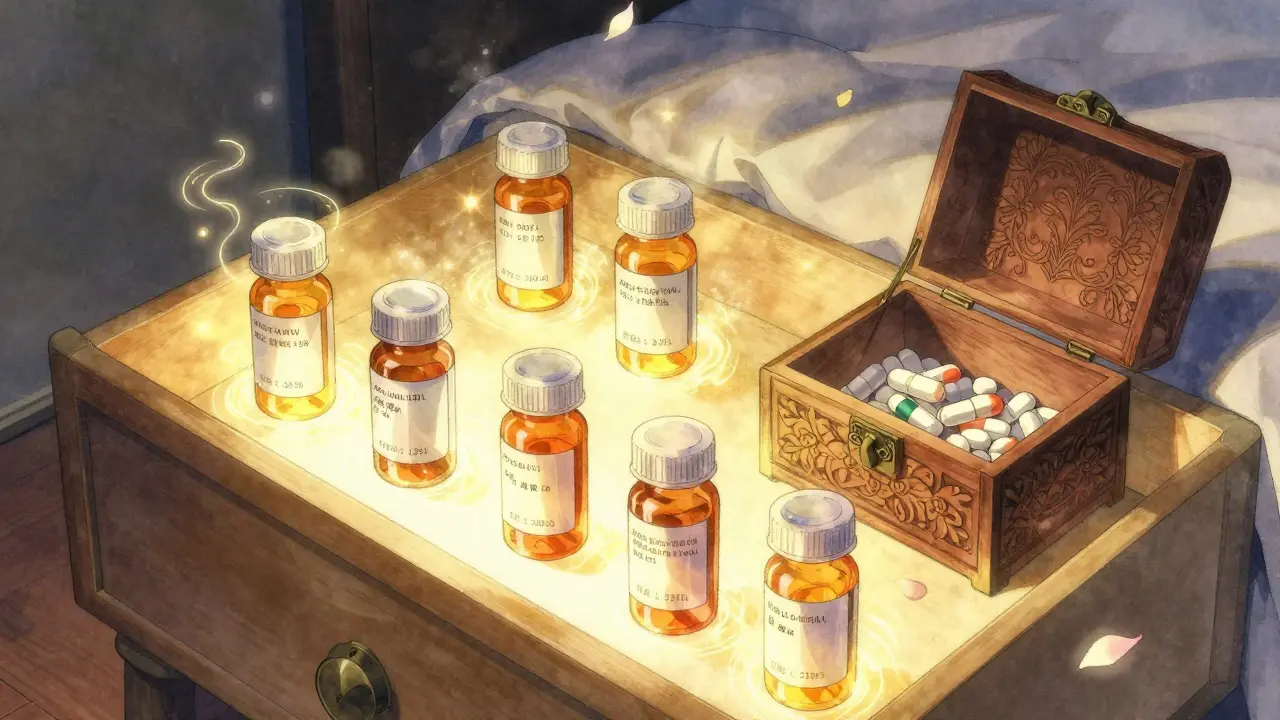
Every year, millions of unused or expired medications sit in bathroom cabinets, kitchen drawers, and medicine chests across the U.S. Many people don’t realize how dangerous this can be - not just for kids and pets, but for the environment and even for themselves. Improper storage and disposal of prescriptions can lead to accidental poisonings, drug abuse, and contamination of drinking water. The good news? It’s easy to get it right if you know the basics.
Where to Store Medications Safely
Medications aren’t meant to live in the bathroom. Heat and moisture from showers and sinks can break down pills and liquids, making them less effective or even unsafe. The best place to store most prescriptions is a cool, dry spot - like a bedroom drawer or a locked cabinet away from direct sunlight.
The ideal temperature range for most medicines is between 68°F and 77°F (20°C to 25°C). Some, like insulin or certain biologics, need refrigeration at 36°F to 46°F (2°C to 8°C). Always check the label. If it says "refrigerate," keep it in the fridge - but never freeze unless instructed.
Controlled substances - opioids like oxycodone, benzodiazepines like Xanax, or stimulants like Adderall - need extra care. These drugs are high-risk for misuse. The FDA recommends storing them in a locked box or container, out of reach of children, teens, and visitors. A simple combination lockbox from the hardware store works fine. Don’t rely on hiding them under a mattress or in an unmarked jar.
Keep all medications in their original bottles. The labels include critical info: your name, the prescribing doctor, dosage instructions, and expiration dates. Removing labels or transferring pills to pill organizers without clear labeling increases the risk of mixing up medications - or worse, giving the wrong drug to someone else.
When Medications Expire - What to Do
Expiration dates aren’t just suggestions. They’re based on testing that shows when the drug is guaranteed to be safe and effective. After that date, potency drops. Some medications, like antibiotics or epinephrine auto-injectors, can become dangerously ineffective.
But here’s the thing: you don’t need to toss every expired pill the second the date passes. If it’s been a few months past the date and you’re not in a medical emergency, it’s likely still okay. But if you’re unsure, or if the pill looks cracked, discolored, or smells odd - throw it out.
The safest and most responsible way to dispose of unused or expired medications is through a drug take-back program. These are often hosted by pharmacies, hospitals, or local law enforcement agencies. The DEA’s National Take Back Initiative runs twice a year, but many permanent collection sites are available year-round. As of 2022, over 11,000 locations across the U.S. accept unused prescriptions.
Find your nearest drop-off point by visiting DEA.gov/takebackday or calling your local pharmacy. You can drop off pills, patches, liquids, and even needles (in sealed containers) - no questions asked.
What to Do If There’s No Take-Back Option
If you can’t get to a take-back site, the FDA has a clear, safe method for home disposal - and it’s not flushing.
First, remove the pills from their original container. Don’t crush them. Then mix them with something unappetizing - used coffee grounds, cat litter, or dirt. This makes them unappealing to kids or pets, and discourages people from digging through the trash to find them.
Put the mixture in a sealed plastic bag or container - a jar with a tight lid works too. Then throw it in your household trash. Before tossing the empty pill bottle, scratch out your name and prescription number with a permanent marker. This protects your privacy.
There’s one exception: the FDA’s flush list. These are 15 specific opioid pain medications and one benzodiazepine that pose such a high risk of accidental overdose if found that the FDA says it’s safer to flush them immediately if no take-back option is available. The list includes drugs like fentanyl patches, oxycodone, and naloxone. Check the FDA’s current flush list online or ask your pharmacist - it’s updated regularly.
What Healthcare Facilities Must Do
Hospitals, nursing homes, and pharmacies have stricter rules. Since 2019, the EPA’s Subpart P regulation bans flushing hazardous pharmaceutical waste down the drain. That includes chemotherapy drugs, certain antibiotics, and other chemicals classified as hazardous under federal law.
About 5% to 10% of all pharmaceutical waste falls into this hazardous category. These must be collected in labeled, leak-proof, puncture-resistant containers and shipped to licensed incineration facilities. Disposal records must be kept for at least three years.
Controlled substances in healthcare settings can’t go into regular take-back bins. They must be handled by Environmental Health and Safety (EHS) departments with strict documentation under DEA rules. Nurses and staff often struggle with this - a 2021 survey found 42% were confused about what counts as hazardous waste.
And yes, it’s expensive. Hospitals now spend an average of $12,500 more per year on pharmaceutical waste management since Subpart P took effect. But the environmental cost of getting it wrong is far higher.
Why Flushing Is a Bad Idea
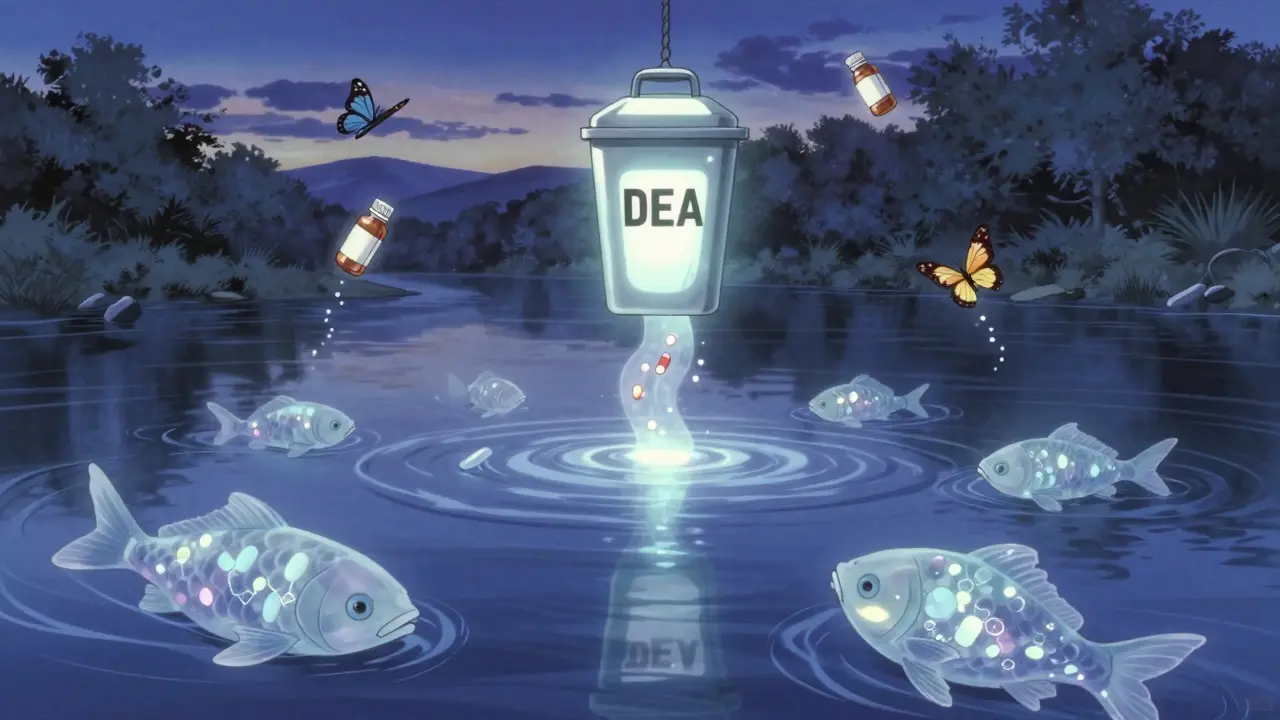
Flushing pills might seem convenient, but it’s harmful. Pharmaceuticals don’t break down in water treatment systems. They end up in rivers, lakes, and even drinking water. The EPA estimates that 247 million pounds of pharmaceuticals enter U.S. waterways every year because of improper disposal.
Even tiny amounts can affect aquatic life. Studies have shown fish developing reproductive issues and altered behavior from exposure to antidepressants and hormones in water. While the direct health risk to humans from trace amounts is still being studied, the precaution is clear: don’t flush unless it’s on the FDA’s approved list.
And here’s a myth to bust: pouring pills down the sink or toilet doesn’t make them disappear. It just moves the problem elsewhere.
Common Mistakes and How to Avoid Them
People make the same mistakes over and over:
- Keeping old prescriptions “just in case” - don’t. They can expire, degrade, or be misused.
- Sharing meds with family members - never. A drug that works for you could be dangerous for someone else.
- Using the bathroom as a medicine cabinet - humidity ruins pills.
- Throwing pills directly into the trash without mixing them - makes them easy to find and misuse.
- Assuming all take-back programs accept controlled substances - they don’t. Only DEA-authorized collectors can take them.
Tip: Set a reminder every six months to clean out your medicine cabinet. Take everything out, check expiration dates, and sort what needs disposal.
What’s Changing in 2025
The rules are getting tighter. The EPA is considering new water quality standards for pharmaceuticals by 2025. Some states are already requiring pharmacies to offer free take-back services. The DEA is also reviewing proposals to expand authorized collection sites - possibly letting more pharmacies and clinics accept controlled substances year-round.
Technology is helping too. Smart disposal kiosks are being piloted in over 120 hospitals. These machines scan your medication, identify whether it’s hazardous or controlled, and route it to the right disposal stream. They even print a receipt for your records.
Long-term, more healthcare systems are treating pharmaceutical waste like any other environmental risk - part of sustainability plans. By 2025, nearly 9 out of 10 healthcare executives say they’ll integrate medication disposal into their green initiatives.
Bottom Line: Your Role in Safe Medication Handling
You don’t need to be a pharmacist to handle prescriptions safely. Just follow three simple rules:
- Store meds in a cool, dry, locked place - especially controlled substances.
- Use a take-back program whenever possible.
- If you must dispose at home, mix pills with coffee grounds or cat litter, seal them, and toss in the trash - never flush unless it’s on the FDA’s list.
Every pill you dispose of properly is one less chance for a child to get sick, one less drug to fuel addiction, and one less toxin in our water. It’s a small act - but it matters.
Can I flush any medication down the toilet?
Only if it’s on the FDA’s official flush list - which includes 15 opioid painkillers and one benzodiazepine like diazepam. These are high-risk drugs that can cause fatal overdoses if found by children or pets. For all other medications, flushing is harmful to the environment and should be avoided. Always check the label or ask your pharmacist before flushing.
What if I can’t find a drug take-back location near me?
If no take-back site is available, use the FDA’s home disposal method: remove pills from their container, mix them with something unappealing like coffee grounds or cat litter, seal them in a plastic bag, and throw them in your household trash. Scratch out your personal info on the empty bottle before tossing it. This method reduces environmental contamination by 99.8% compared to flushing.
Are expired medications still safe to use?
Most medications remain effective for a short time past their expiration date, but potency can drop. For critical drugs like epinephrine, insulin, or antibiotics, using expired versions can be dangerous. If you’re unsure, don’t risk it. Dispose of them properly and get a new prescription if needed. The FDA doesn’t recommend using expired drugs for life-threatening conditions.
Can I throw away needles or syringes in the trash?
No. Needles and sharps must be placed in a puncture-resistant container - like a dedicated sharps container or a heavy-duty plastic bottle with a secure lid. Once full, seal it and take it to a pharmacy or hospital that accepts sharps for disposal. Many pharmacies offer free sharps disposal programs. Never put loose needles in the trash - it puts sanitation workers at risk.
Why can’t I just give my extra pills to a friend who needs them?
It’s illegal and dangerous. Medications are prescribed based on individual health conditions, weight, allergies, and other factors. A drug that helps you could cause serious harm to someone else - even a family member. Giving away prescriptions can lead to overdose, dangerous interactions, or legal consequences. Always dispose of unused meds properly instead.
Do pharmacies really accept old medications?
Yes - many do. Most chain pharmacies like CVS, Walgreens, and Rite Aid have permanent drop-off bins in their lobbies. These are authorized by the DEA to collect unused prescriptions, including controlled substances. Look for the bright green disposal bin near the pharmacy counter. If you’re unsure, call ahead - not all locations participate, but most do.
For more information on safe disposal, visit the FDA’s website or contact your local pharmacy. When it comes to medications, the right choice isn’t just convenient - it’s necessary.

Ryan van Leent
December 18, 2025 AT 00:42Why do we even need all these rules i mean its just pills right people have been dumping meds in the toilet since the 80s and the world didnt end
Laura Hamill
December 19, 2025 AT 19:42THE GOVERNMENT IS LYING ABOUT FLUSHING!!!
They want us to think its safe to throw pills in the trash so they can track us through the water supply!!!
Theyre putting microchips in the coffee grounds now too!!!
Remember when they said smoking was fine??
Same playbook!!
Im not mixing my oxycodone with cat litter for some agenda!!
My pills are MY BUSINESS!!
And dont even get me started on those smart kiosks!!
Thats how they steal your data!!
THEY WATCH YOU WHEN YOU DROP OFF PILLS!!
THEY KNOW WHO YOU ARE!!
THEY KNOW WHAT YOU TAKE!!
THEYRE USING THIS TO CREATE A DRUG DATABASE FOR THE NEW WORLD ORDER!!
IM KEEPING MINE IN A LOCKED CASKET UNDER MY BED!!
AND I DARE YOU TO TELL ME IM WRONG!!
Vicki Belcher
December 21, 2025 AT 15:15This is such a helpful guide!! 🙌
Im so glad someone finally broke this down simply!!
I just cleaned out my cabinet last week and found 3 expired antibiotics and my grandmas Xanax from 2018 😳
Took them to Walgreens right away!!
The bin was right by the pharmacy counter!!
So easy!!
And now my kids wont accidentally grab something they think is candy!!
Thank you for reminding us how small actions matter 💖
PS: I even made a checklist to hang on the fridge!!
Sahil jassy
December 21, 2025 AT 22:15Great post thanks for sharing
My mom in India used to keep all her pills in a tin box on the windowsill
Now she stores them in the closet
She says it feels safer
Small changes make big difference
Thanks for the reminder
Kathryn Featherstone
December 22, 2025 AT 09:58I love how this post balances practical advice with real empathy.
So many people feel ashamed about having leftover meds but this normalizes safe disposal.
I used to hoard antibiotics after my UTI just in case it came back.
Now I know its dangerous and wasteful.
Also the part about sharps containers was eye opening.
I had no idea how risky loose needles were for sanitation workers.
Thank you for writing this with such care.
jessica .
December 23, 2025 AT 19:29YEAH RIGHT THEY WANT US TO THINK THIS IS ABOUT SAFETY BUT ITS ABOUT CONTROL
THEY DONT WANT US TO HAVE PILLS BECAUSE WE MIGHT GET BETTER WITHOUT THEM
THE PHARMA COMPANIES ARE IN BED WITH THE FDA
THEY MAKE MORE MONEY IF YOU KEEP BUYING
THEY DONT WANT YOU TO STORE THEM SAFE THEY WANT YOU TO FLUSH THEM SO THEY CAN TRACK YOUR DNA IN THE WATER
AND THE TAKE BACK PROGRAMS ARE JUST TO COLLECT YOUR INFO
THEY KNOW WHO YOU ARE AND WHAT YOU TAKE
THEYRE BUILDING A HEALTH DATABASE FOR THE SURVEILLANCE STATE
AND THE COFFEE GROUNDS THING?? THATS A TRAP TO MAKE YOU FEEL GOOD WHILE THEY WATCH
IM KEEPING MINE IN A FROZEN TUB OF BUTTER IN THE BACK OF THE FRIDGE
NOBODY WILL FIND IT THERE
AND IF THEY DO THEYLL THINK ITS JUST BREAKFAST
Nina Stacey
December 23, 2025 AT 23:10I just wanted to say thank you for this post because honestly I never realized how many people were doing it wrong
I used to keep my insulin in the bathroom because it was easy to reach
And I used to flush the empty bottles because i thought the water would wash it away
Then my neighbor told me about the take back bins and i felt so guilty
So i went to my local CVS and dropped off 12 bottles and 3 patches
They even gave me a little sticker that says I did my part
Now i have a little drawer in my bedroom with a lock
And i check it every 6 months
It feels so much better to be responsible
And i even told my mom and she started doing it too
So thank you for helping me do the right thing even if i was late to the party
Nicole Rutherford
December 25, 2025 AT 16:50Of course you’re telling people to mix pills with coffee grounds.
That’s the exact same advice they gave during the opioid crisis.
But you didn’t mention that 78% of people who abuse prescription drugs get them from friends or family.
And you think hiding them in a drawer is enough?
Have you met teenagers?
They’ll find anything.
And don’t even get me started on the fact that most pharmacies don’t even have bins open after 6pm.
So what are single parents supposed to do?
Just let their kids have access to unsecured meds?
Or wait until the DEA’s biannual event?
That’s not safety.
That’s negligence dressed up as advice.
Kevin Motta Top
December 26, 2025 AT 10:14Love the clarity here. In my country we don’t have take-back programs, so we bury meds in the backyard with coffee grounds. Works. No one touches it. No water contamination. Simple. Culture matters.
Aboobakar Muhammedali
December 26, 2025 AT 16:30Thank you for writing this
I read this while sitting with my father who is on 7 different medications
He forgets what he takes sometimes
So we made a chart together
And now we go to the pharmacy every month to drop off what he doesn’t need
It’s not perfect
But it’s a start
And today he said thank you for helping me be safe
That meant more than any statistic