Most people throw away expired medications without thinking twice. But what if that pill you tossed out could still be safe and effective? The truth is, medication storage matters far more than the date printed on the bottle. Many drugs remain stable for years past their expiration date-if stored correctly.
Why Expiration Dates Aren’t Always the Full Story
Expiration dates aren’t magic cutoffs. They’re the last date manufacturers guarantee full potency and safety under ideal conditions. The U.S. government’s Shelf-Life Extension Program (SLEP), started in 1986, tested over 3,000 lots of medications from military stockpiles. Results? 88% were still safe and effective years after expiration. Some, like naloxone and fentanyl, showed no loss in potency even after five extra years. The FDA confirmed this in 2019: most properly stored medications don’t suddenly turn dangerous on their expiration date. Potency might drop slightly-maybe 5-10% over time-but not enough to make them useless. The real risk comes from improper storage, not time alone.What Storage Conditions Actually Matter
Not all medications need the same care. The key factors are temperature, humidity, light, and air exposure.- Temperature: Most solid pills and capsules (like ibuprofen, antibiotics, or blood pressure meds) are fine at room temperature-between 20°C and 25°C. Avoid storing them above 30°C. Heat breaks down active ingredients faster.
- Refrigeration: Some meds, like insulin, certain eye drops, and liquid antibiotics, must be kept between 2°C and 8°C. Never freeze them unless the label says so. Freezing can destroy the structure of biologics.
- Humidity: Bathrooms are terrible places to store pills. Steam from showers and sinks raises humidity, which causes tablets to break down or stick together. Keep meds in a cool, dry place like a bedroom drawer or kitchen cabinet away from the stove.
- Light: Light-sensitive drugs like nitroglycerin or certain antibiotics degrade when exposed to sunlight. Keep them in their original amber bottles or opaque containers.
- Air: Once you open a bottle, oxygen gets in. This can oxidize some medications. Always seal containers tightly after use.
Which Medications Can Be Stored Longer-And Which Can’t
Not all drugs behave the same way. Some hold up well. Others don’t. Safe to keep past expiration (if stored well):- Acetaminophen and ibuprofen
- Antibiotics like amoxicillin (if kept dry and cool)
- Antihistamines like loratadine
- Blood pressure meds like lisinopril
- Anti-anxiety drugs like diazepam
- Thyroid meds like levothyroxine
- Insulin and other injectable biologics
- Reconstituted antibiotics (like amoxicillin suspension after mixing)
- Nitroglycerin tablets (lose potency fast)
- EpiPens (epinephrine degrades quickly)
- Tetracycline antibiotics (can become toxic when degraded)
- Eye drops and liquid suspensions (prone to bacterial growth)
What Happens If You Use Expired Medication?
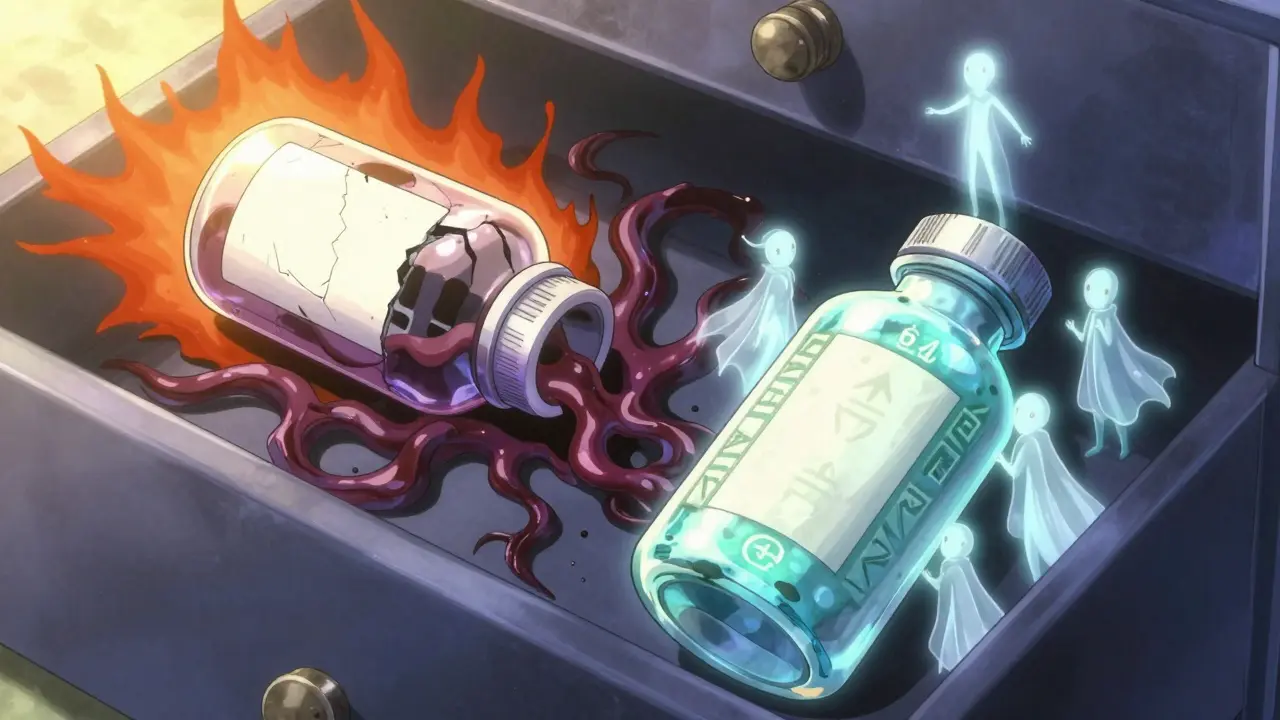
Most expired pills won’t hurt you. But they might not work. Take an expired antibiotic. If it’s lost 20% of its potency, it might not kill all the bacteria. That can lead to lingering infections-or worse, antibiotic resistance. An expired EpiPen might not deliver enough epinephrine during a life-threatening allergic reaction. A degraded nitroglycerin tablet won’t stop a heart attack. The real danger isn’t poisoning. It’s failure. You take a pill thinking it’s working, but it’s not. That’s why experts like Dr. Lee Cantrell from UCSF warn against using liquids, reconstituted drugs, or tetracycline beyond their dates. These can break down into harmful substances.How to Store Medications Like a Pro
Here’s how to maximize shelf life in your home:- Keep meds in original packaging. The bottle or blister pack isn’t just for looks-it’s designed to block light, moisture, and air.
- Use airtight containers. If you transfer pills to a pill organizer, only take out what you need for the week. Store the rest in the original bottle.
- Don’t store in the car or garage. Temperature swings there can destroy medication. Even a hot car in summer can reach 60°C.
- Use a dehumidifier if needed. If you live in a humid climate like Auckland, consider a small dehumidifier in your medicine cabinet area.
- Check for changes. If a pill looks discolored, smells odd, or crumbles easily, toss it. Same with liquids that look cloudy or have particles.
- Use a cool, dark drawer. A bedside table away from windows is better than a bathroom cabinet.
What About the Strategic National Stockpile?
The U.S. government keeps billions of dollars’ worth of meds on hand for emergencies. Their system isn’t perfect-but it’s smart. They use lot-specific tracking instead of blanket expiration dates. Each batch is tested regularly. If it passes chemical and microbiological checks, its shelf life gets extended. In 2024, the FDA approved extending TPOXX (an antiviral for smallpox) from 48 to 60 months. That’s not guesswork. It’s science. They also use advanced packaging: blister packs with moisture barriers, oxygen-absorbing materials, and even modified atmosphere packaging that replaces air inside the container with nitrogen. These aren’t just for hospitals-they’re proof that smart packaging can add years to a drug’s life.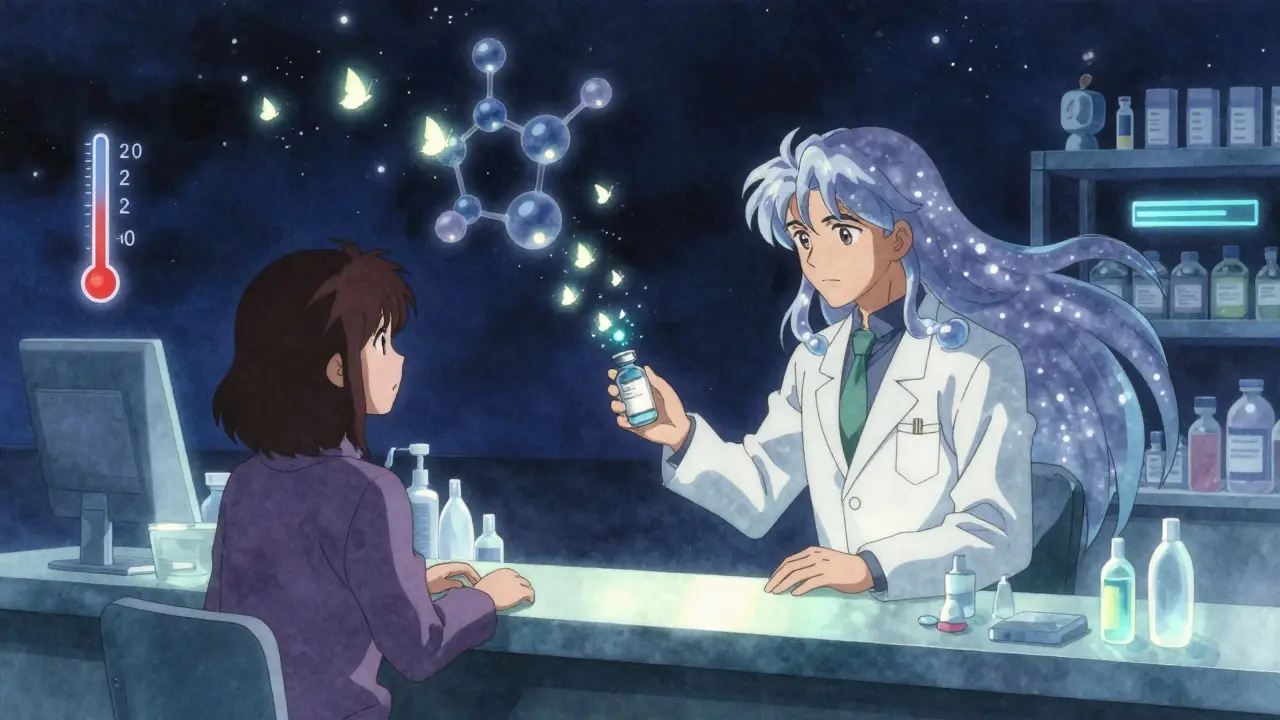
What’s Changing in the Industry
Pharmaceutical companies are moving away from fixed expiration dates. By 2023, 68% of top drugmakers were using real-time stability monitoring. Sensors track temperature and humidity during shipping and storage. If a shipment got too warm for two hours, the system flags it-instead of throwing out the whole batch. Some new packaging even has built-in time-temperature indicators. Imagine a small dot on the bottle that changes color if the meds got too hot. That’s coming to consumer packages soon. But here’s the catch: these technologies are still expensive. For now, they’re mostly in hospitals and stockpiles. For most people, the best tool is still a cool, dry drawer and a little common sense.What to Do With Expired or Unused Meds
Never flush pills down the toilet or toss them in the trash where kids or pets can get them. In New Zealand, you can return expired or unwanted medications to any pharmacy for safe disposal. Most offer free take-back programs. If you’re unsure whether a medication is still good, don’t guess. Ask your pharmacist. They can check the lot number, storage history, and tell you if it’s likely still effective.Bottom Line: Storage Beats Date
The date on your medicine bottle is just a starting point. How you store it determines whether it lasts one year or ten. For most solid pills kept in a cool, dry, dark place, expiration dates are conservative. But for liquids, injectables, and sensitive drugs, the clock ticks faster. If you’re stockpiling meds for emergencies-like during natural disasters or travel-focus on storage quality. Keep them sealed, cool, and dry. Check them every six months. Replace anything that looks off. Your health isn’t worth gambling on. But neither is wasting perfectly good medicine because you didn’t know how to store it right.Can I still use medication after its expiration date?
For most solid oral medications-like pills and capsules-yes, if they’ve been stored properly in a cool, dry, dark place. Studies show many retain potency for years past expiration. But never use expired insulin, epinephrine, nitroglycerin, liquid antibiotics, or eye drops. These can degrade into harmful substances or lose effectiveness quickly.
Where is the best place to store medications at home?
A cool, dry, dark drawer in a bedroom or kitchen cabinet away from the sink, stove, or window. Avoid bathrooms-they’re too humid. Never store meds in the car, garage, or near heat sources. The ideal temperature range is 20-25°C with low humidity.
Do refrigerated medications last longer?
For some, yes. Insulin, certain vaccines, and liquid antibiotics must be refrigerated (2-8°C) to stay stable. But refrigeration doesn’t extend shelf life for pills like ibuprofen or aspirin. In fact, moisture from the fridge can damage them. Only refrigerate what the label says to.
What happens if my medication gets too hot?
Heat can break down active ingredients, reducing potency. Pills might soften, stick together, or change color. Liquid meds can separate or grow bacteria. If your meds were left in a hot car or near a heater, it’s safer to replace them. You can’t tell by looking-so when in doubt, toss it.
Can I transfer pills to a pill organizer for long-term storage?
Only for short-term use-like a week or two. Pill organizers expose meds to air and light, which can degrade them. Always keep the original bottle as your primary storage. Use the organizer only as a daily dosing tool, not a long-term solution.
How do I safely dispose of expired medications?
Take them to any pharmacy in New Zealand-they offer free, safe disposal programs. Never flush them or throw them in the trash. Pharmacies return them to licensed disposal facilities that destroy them safely and legally.
Are there any new technologies that help extend shelf life?
Yes. Some companies are using modified atmosphere packaging, oxygen absorbers, and time-temperature indicators on drug containers. These help track exposure and extend shelf life. But these are mostly in hospital and government stockpiles right now. For home use, proper storage is still your best tool.


Madhav Malhotra
January 12, 2026 AT 00:15Wow, this is super helpful! In India, we often keep medicines in the bathroom because it's the only cool place, but now I get why that's a bad idea. Gonna move my paracetamol to the bedroom drawer right away 😊
Matthew Miller
January 12, 2026 AT 21:47Stop spreading misinformation. The FDA says expiration dates are legal safeguards, not suggestions. If you're dumb enough to use expired antibiotics, don't blame the system when you get sepsis. You're not a biochemist, stop playing scientist.
Alex Smith
January 14, 2026 AT 06:25Oh wow, so the government's been quietly extending shelf lives for decades and we're just now finding out? How many other things are we being lied to about? The real question isn't whether meds work past expiration-it's why we're still using paper labels from 1985 while phones update daily. #SystemicLaziness
Roshan Joy
January 15, 2026 AT 09:57Great breakdown! I’ve been keeping my lisinopril in a sealed glass jar in the closet since last year and it looks fine. But I always check for chalkiness or smell-just like you said. Small habits save big trouble. 🙌
Michael Patterson
January 16, 2026 AT 18:39Okay so i read this whole thing and i think you might be wrong about tetracycline? I mean i heard once from a nurse that it turns into something toxic but i dont remember what it was called maybe tetroxin? or something? anyway if you leave it in the sun it turns yellow and thats bad right? also my grandma used to keep all her pills in the kitchen cabinet and she lived to 98 so…
Sean Feng
January 18, 2026 AT 14:07So what you're saying is don't store meds in the bathroom. Thanks for the groundbreaking info. Next you'll tell us not to put water in the sink
Vincent Clarizio
January 19, 2026 AT 19:29Think about it. The expiration date is capitalism’s way of forcing you to buy more. It’s not science-it’s profit. We’ve been conditioned to fear the date, not the substance. The body doesn’t care about ink on plastic. It cares about molecular integrity. And if you’ve kept your meds cool and dry, the molecules haven’t changed. We’ve been sold a lie wrapped in a pill bottle.
Adewumi Gbotemi
January 21, 2026 AT 03:42This is good info. In Nigeria, we often reuse old medicines because we can't afford new ones. But now I know not to use eye drops or insulin after expiry. I will tell my friends. Thank you.
Priya Patel
January 22, 2026 AT 22:37OMG I just checked my medicine cabinet and my ibuprofen is from 2020 and it looks totally fine!! I'm keeping it now 😍 also why is no one talking about how the fridge is a death trap for pills?? I used to put everything there… my bad 😅
Jennifer Littler
January 23, 2026 AT 01:39Per FDA 21 CFR 211.137, pharmaceutical stability testing protocols require accelerated aging models under ICH Q1A(R2) guidelines. The assumption of linear degradation is flawed; many APIs exhibit Arrhenius kinetics with activation energies below 15 kcal/mol, meaning shelf-life extension under controlled environments is statistically valid. Your drawer isn’t a lab, but your intuition is empirically aligned with pharmacokinetic models.
Jason Shriner
January 24, 2026 AT 10:14so you're telling me my 8 year old Xanax is still good because i kept it in a drawer? wow. next you'll say my expired kool-aid is still tasty. 🤡
Alfred Schmidt
January 25, 2026 AT 05:37STOP. RIGHT. NOW. You’re risking lives. I’ve seen patients die from degraded antibiotics. You think you’re saving money? You’re creating superbugs. And don’t even get me started on the EpiPen nonsense-your kid could die because you’re too cheap to replace it. This isn’t a blog-it’s a public health hazard.
Priscilla Kraft
January 25, 2026 AT 17:47So true! I work at a pharmacy and we get so many people who panic about expired meds-but if they’ve been stored right, most pills are totally fine. I always tell them: if it looks weird, smells weird, or crumbles, toss it. Otherwise? Keep it! 🌿💊
Sam Davies
January 27, 2026 AT 12:13How quaint. You’ve discovered that temperature affects chemical stability. Bravo. I suppose next you’ll tell us that water is wet and fire is hot. The real tragedy is that this level of basic pharmacology is considered ‘news’ in a society that can’t even pronounce ‘pharmacokinetics’ without a dictionary.