Opioid Sleep Apnea Risk Calculator
Assess Your Risk
Your Risk Level
Results will appear here after calculation
When you take opioids for pain, you’re not just managing discomfort-you’re putting your breathing at risk, especially at night. This isn’t a rare side effect. It’s a predictable, life-threatening consequence that affects hundreds of thousands of people every year. If you or someone you care about is on long-term opioid therapy and struggles with unrefreshing sleep, waking up gasping, or feeling exhausted in the morning, the problem might not be stress or aging. It could be opioid-induced respiratory depression-a silent killer that blends with sleep apnea to create a deadly cycle.
How Opioids Slow Your Breathing Down
Opioids don’t just dull pain. They directly target the brain’s breathing control center. These drugs bind to mu-opioid receptors (MORs) in two key areas: the pre-Bötzinger complex and the parabrachial complex. Both are deep in the brainstem, hidden beneath layers of tissue, and they’re responsible for keeping your breathing steady-even while you sleep. When opioids activate these receptors, they do two things at once. First, they lengthen the time between breaths by forcing you to exhale longer than normal. In some cases, expiration can stretch up to 200% longer than usual. Second, they reduce the drive to inhale. The result? Long pauses in breathing, known as apneas. These aren’t just brief pauses. They can last 10, 20, even 30 seconds. During that time, oxygen drops. Carbon dioxide builds up. Your body tries to wake you up to breathe-but often, it doesn’t succeed. Studies show that even at therapeutic doses, opioids reduce respiratory rate by 20-40%. At higher doses, the risk of complete respiratory arrest rises sharply. In animal models, removing MORs from the parabrachial complex reduced morphine-induced apneas by 75-80%. That tells us: this region is the main culprit behind life-threatening breathing stops.Why Sleep Makes It Worse
Sleep isn’t just a passive state. It’s a time when your body relaxes control over breathing. Normally, your brain compensates for this by increasing sensitivity to carbon dioxide. But opioids shut that down. When you fall asleep, your upper airway muscles-like the genioglossus muscle that keeps your tongue from blocking your throat-lose about 40-60% of their tone. In people with sleep apnea, that’s bad enough. In opioid users, it’s catastrophic. The combination of a collapsed airway (obstructive apnea) and a brain that’s not telling your lungs to breathe (central apnea) creates what’s called a mixed apnea. One study found that chronic opioid users had an average apnea-hypopnea index (AHI) of 15.7 events per hour. That’s moderate to severe sleep apnea. Non-users? Around 4.2. And it gets worse. Opioids also mess with sleep architecture. They reduce deep, restorative slow-wave sleep by 20-30% and increase the lightest, most fragmented stage of sleep by 15-25%. You might sleep for eight hours, but you’re not resting. You’re cycling through near-awake states, struggling to breathe. No wonder people on opioids report constant fatigue, morning headaches, and brain fog.The Hidden Danger: You Might Not Know You’re at Risk
Most people assume if they’re not snoring loudly or overweight, they don’t have sleep apnea. That’s wrong. Opioid-induced central sleep apnea doesn’t always involve snoring. It’s silent. No gasping. No choking. Just a gradual drop in oxygen while you’re unconscious. Pulse oximeters-commonly used in hospitals and home monitors-can miss early signs. Oxygen levels often stay normal until breathing has already slowed dangerously. That’s because your body compensates by breathing deeper between pauses. By the time oxygen drops, it’s too late. And here’s the kicker: 40% of U.S. adults take prescription opioids each year. That’s millions of people sleeping with a ticking time bomb. Many don’t realize their breathing problems are drug-related. They blame their job, their age, or their diet. Clinicians often miss it too. Only 15-20% of primary care providers screen chronic opioid users for sleep apnea.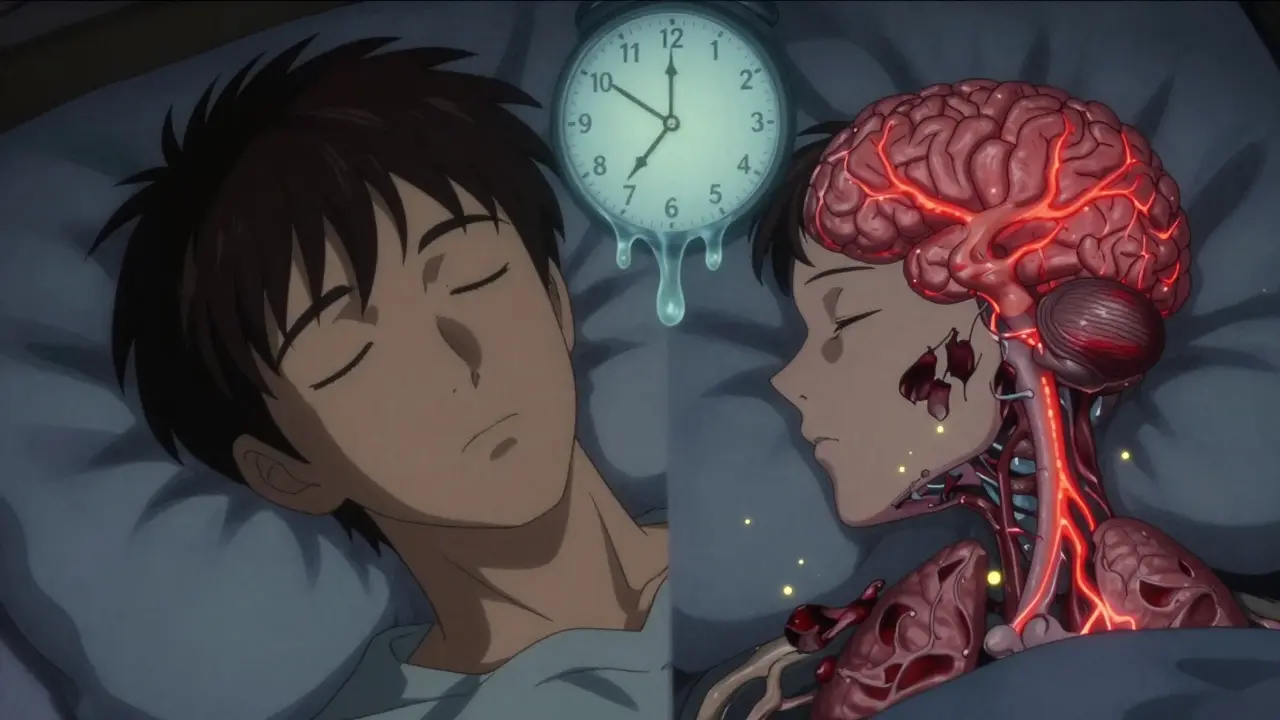
Combining Opioids With Other Drugs Is a Recipe for Disaster
Opioids are dangerous alone. But when mixed with alcohol, benzodiazepines, sleep aids, or even some antidepressants, the risk of death jumps 300-500%. Why? Because all these drugs depress the central nervous system. They pile on top of each other, shutting down breathing faster and harder. The CDC reports that nearly 70% of opioid overdose deaths involve another sedative. If you’re on opioids and take Xanax, Ambien, or even a glass of wine to help you sleep, you’re playing Russian roulette with your life. There’s no safe dose combination. The interaction isn’t linear-it’s exponential.What Can Be Done? Screening, Reversal, and New Hope
The good news? This isn’t inevitable. There are steps you can take. Screening is critical. If you’re on long-term opioids (especially over 100 morphine milligram equivalents daily), get a sleep study. It’s not optional. The American Society of Anesthesiologists recommends it. A home sleep apnea test can detect central apneas with 85% accuracy. No overnight hospital stay needed. Naloxone saves lives. If you’re at risk, keep naloxone on hand. It reverses opioid effects in minutes. But here’s the catch: it doesn’t fix the root problem. It’s an emergency tool, not a long-term solution. And it has to be dosed right-too little won’t work. Too much can trigger violent withdrawal. New drugs are coming. Researchers are developing opioid alternatives that target pain without touching breathing centers. One class, called MOR-biased agonists, shows 70-80% pain relief with only 20-30% respiratory depression in early trials. The NIH has poured $1.5 billion into this research. Within five years, genetic tests may identify people with OPRM1 gene variants that make them ultra-sensitive to opioid breathing suppression. Those people could be steered toward non-opioid pain treatments before they’re ever prescribed.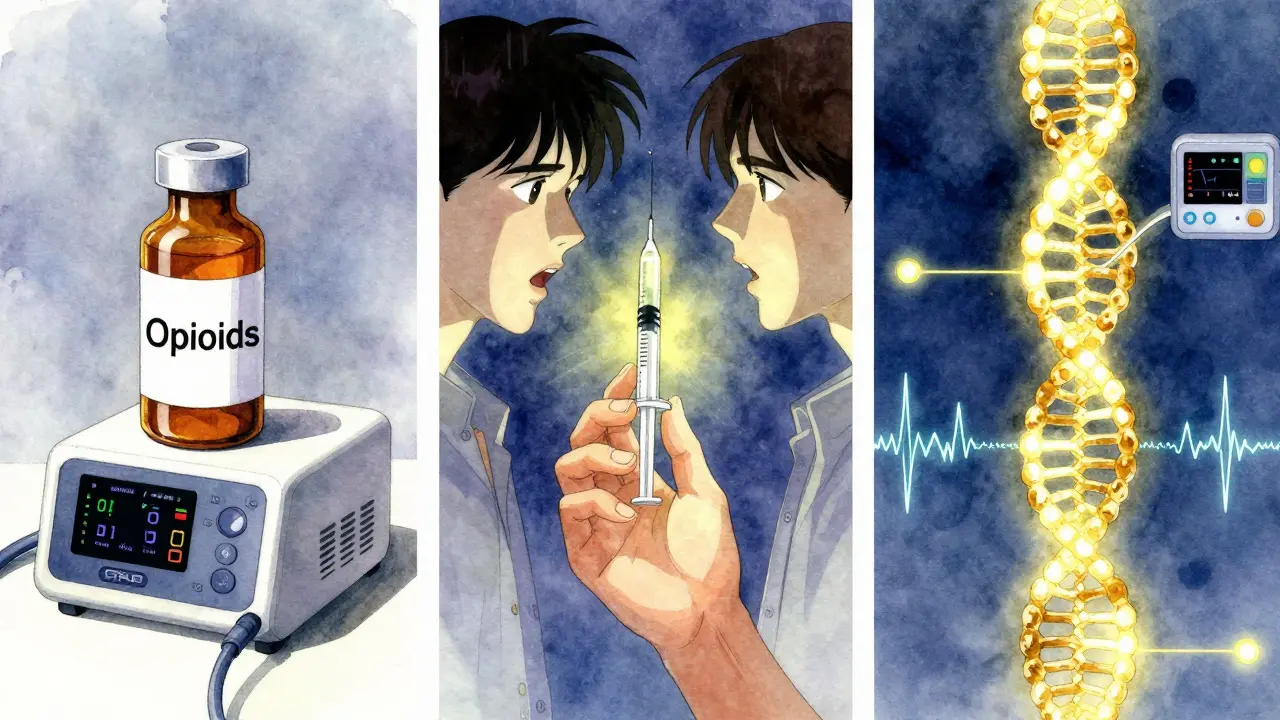
What You Should Do Right Now
If you’re on opioids and experience any of these symptoms:- Waking up gasping or choking
- Constant daytime fatigue despite sleeping 8+ hours
- Morning headaches or brain fog
- Being told you stop breathing while sleeping
The Bigger Picture
We’ve spent decades treating pain with opioids because they work. But we ignored the cost. Now we’re paying with lives. The 80,816 opioid-related deaths in the U.S. in 2021 weren’t accidents. They were predictable outcomes of a system that prioritized pain relief over respiratory safety. The future isn’t about banning opioids. It’s about using them smarter. Screening for sleep apnea. Avoiding drug combinations. Choosing safer alternatives. And recognizing that breathing isn’t just a function-it’s a lifeline.Can opioids cause sleep apnea even if I’ve never snored before?
Yes. Opioids cause central sleep apnea, which doesn’t involve snoring or airway blockage. Instead, your brain stops sending signals to breathe. You might not make any noise-you just stop breathing for periods of time. This is often missed because it’s silent and doesn’t show up on standard sleep studies unless specifically tested for central apneas.
How do I know if my opioid dose is too high for my breathing?
There’s no universal safe dose. But if you’re taking more than 100 morphine milligram equivalents per day, your risk of severe respiratory depression rises sharply. Other red flags: needing to increase your dose for the same pain relief, feeling drowsy during the day, or having trouble staying awake while driving or watching TV. Talk to your doctor about tapering or switching to a non-opioid option.
Is naloxone safe to keep at home if I’m not an addict?
Absolutely. Naloxone only works on opioids. It won’t harm you if you haven’t taken them. It’s not addictive. It doesn’t cause withdrawal unless opioids are present. Many pharmacies now sell it over the counter without a prescription. Keep it where your medication is stored. It could save your life-or someone else’s.
Can I use a CPAP machine if I’m on opioids?
Yes, and it’s often recommended. CPAP helps with obstructive apnea, but it won’t fix central apnea caused by opioids. Some patients need adaptive servo-ventilation (ASV), which responds to breathing patterns in real time. But even CPAP can help reduce nighttime oxygen drops. Always discuss this with your sleep specialist-don’t assume one device fixes everything.
Are there painkillers that don’t affect breathing?
Yes. Non-opioid options like gabapentin, pregabalin, certain NSAIDs, and topical lidocaine patches don’t suppress breathing. Physical therapy, nerve blocks, acupuncture, and cognitive behavioral therapy for pain are also effective for many conditions. The key is finding what works for your specific pain-without risking your breathing.


Kegan Powell
January 27, 2026 AT 03:38Man i just learned my dad’s morning headaches were from his oxycodone not his ‘aging’
He’s been on it for 5 years and never connected the dots
Now he’s getting a sleep study next week
Thanks for this post honestly saved a life
Candice Hartley
January 28, 2026 AT 04:07This is so important. I had no idea opioids could cause silent apnea. My mom just got diagnosed and it’s terrifying. Thank you for explaining it so clearly. 💔
Paul Taylor
January 28, 2026 AT 17:44Look i get it opioids are dangerous but we gotta stop acting like every person on them is a ticking time bomb
Most people take them as prescribed and dont have issues
Yes there are risks but the fearmongering here is over the top
People need pain relief and we’re demonizing a tool that helps millions
Not everyone is gonna die from breathing pauses
Some of us just want to walk without crying every step
And yes i know the stats but context matters
Its not just about the drug its about the system that pushes it
And the lack of alternatives
So lets fix that not just scare people into stopping meds they rely on
astrid cook
January 30, 2026 AT 09:00Of course this is happening. The pharmaceutical companies knew this. They’ve been hiding it for decades. Doctors are complicit. You think they don’t know? They get bonuses for prescribing. This isn’t an accident. It’s profit-driven genocide. And now they’re pushing ‘new drugs’ like it’s a solution. Same playbook. Wake up people.
Murphy Game
January 30, 2026 AT 20:04They’re not just suppressing breathing. They’re suppressing consciousness. And the FDA? They’re asleep at the wheel. I’ve seen patients coded in the ER after just a single dose. They call it ‘accidental overdose’-nope. It’s systemic negligence. They don’t want to admit the truth: opioids are a slow poison wrapped in a prescription pad.
John O'Brien
February 1, 2026 AT 10:50Bro i was on 120mg a day for back pain and never knew i was stopping breathing at night
My wife started recording me and i was gone for 25 seconds at a time
Got switched to gabapentin and my sleep is actually restful now
Why didn’t anyone tell me this before? I thought i was just tired from work
Harry Henderson
February 3, 2026 AT 07:54STOP WAITING. If you’re on opioids and feel sluggish in the morning, get tested TODAY. Not tomorrow. Not next week. TODAY. Your life isn’t a suggestion. This isn’t hype. This is real. And if you’re a caregiver-learn naloxone. Keep it by the meds. It’s not a ‘maybe’-it’s a ‘must’.
Andrew Clausen
February 5, 2026 AT 05:29Incorrect terminology used throughout. 'Opioid-induced respiratory depression' is not synonymous with 'sleep apnea.' The former is central respiratory suppression; the latter is a clinical syndrome defined by apnea-hypopnea index. Mixing the two confuses lay readers and misrepresents the pathophysiology. Also, the claim that '40% of U.S. adults take opioids annually' is statistically false. CDC data shows 12-15% in 2022. Please cite sources properly.
Marian Gilan
February 5, 2026 AT 07:26they’re testing new opioids that dont kill your breathing? sure they are… next they’ll tell us the moon landing was real and aliens are just government drones
they’ve been lying for 30 years about pain meds
why should we believe them now?
they’re just trying to sell the next drug while keeping us hooked
you think they care if you live or die? they care about your insurance card
suhail ahmed
February 6, 2026 AT 21:40Man this hit different. I’m from Mumbai, my cousin was on tramadol for cancer pain and we thought his snoring was just stress. Turns out he had central apnea. We found out too late. Now I’m telling everyone I know-don’t ignore the silence. The worst kind of breathlessness isn’t gasping-it’s the quiet stop. And yeah, gabapentin saved his life. No opioids. No nightmares. Just peace.
Desaundrea Morton-Pusey
February 8, 2026 AT 06:25So now we’re blaming doctors and Big Pharma again? Maybe if people didn’t want to be lazy and take pills all day, they’d try yoga or something. This country’s addicted to quick fixes. You want pain relief? Move your body. Stop whining.
April Williams
February 10, 2026 AT 05:27I’m a nurse. I’ve seen this too many times. People come in with oxygen levels at 78% and say they ‘just feel tired.’ Their families say ‘they’ve always been like this.’ No. They’ve been slowly dying in their sleep. I hand out naloxone kits like candy now. If you’re on opioids, you owe it to your loved ones to have one. Don’t wait until it’s too late. I’ve held too many cold hands. Don’t be next.