
You’ve probably been there: your doctor switches you to a cheaper version of a medication, and suddenly, it just doesn't feel like it's working. Or maybe you start a new generic pill and immediately notice a weird side effect that you never had with the brand-name version. It's easy to blame the chemistry, but the truth is often found in your head-not because you're imagining the symptoms, but because your brain is physically altering how you experience the drug.
This is the placebo effect is a psychological and neurobiological phenomenon where a person experiences a real change in their health status after receiving a treatment that has no active pharmacological ingredient . When it comes to generic drugs, this effect works both ways. If you believe the brand name is superior, you might feel better. If you distrust the generic, you might actually feel worse. This isn't just "all in your head"; it's a measurable biological response that can change the course of your recovery.
The Branding Paradox: Why Names Matter
Why does a label change how a pill works? It comes down to expectation. When we see a recognized brand, our brain triggers a cascade of reward and relief chemicals before the drug even hits our bloodstream. A striking study from 2016 published in Health Psychology by Dr. Julia Faasse highlighted this. Researchers gave students with headaches two different placebos (pills with no active medicine). One was labeled as Nurofen (a well-known brand), and the other was labeled as "Generic Ibuprofen."
The result? The people who thought they were taking the brand-name drug reported pain relief almost identical to people taking actual 400mg ibuprofen. Meanwhile, those with the generic label felt significantly less relief. Essentially, the brand name boosted the perceived effectiveness by 30-40%. The brain associates the logo and the name with quality and reliability, which then tells the body to lower its pain signals.
The Biology of Belief
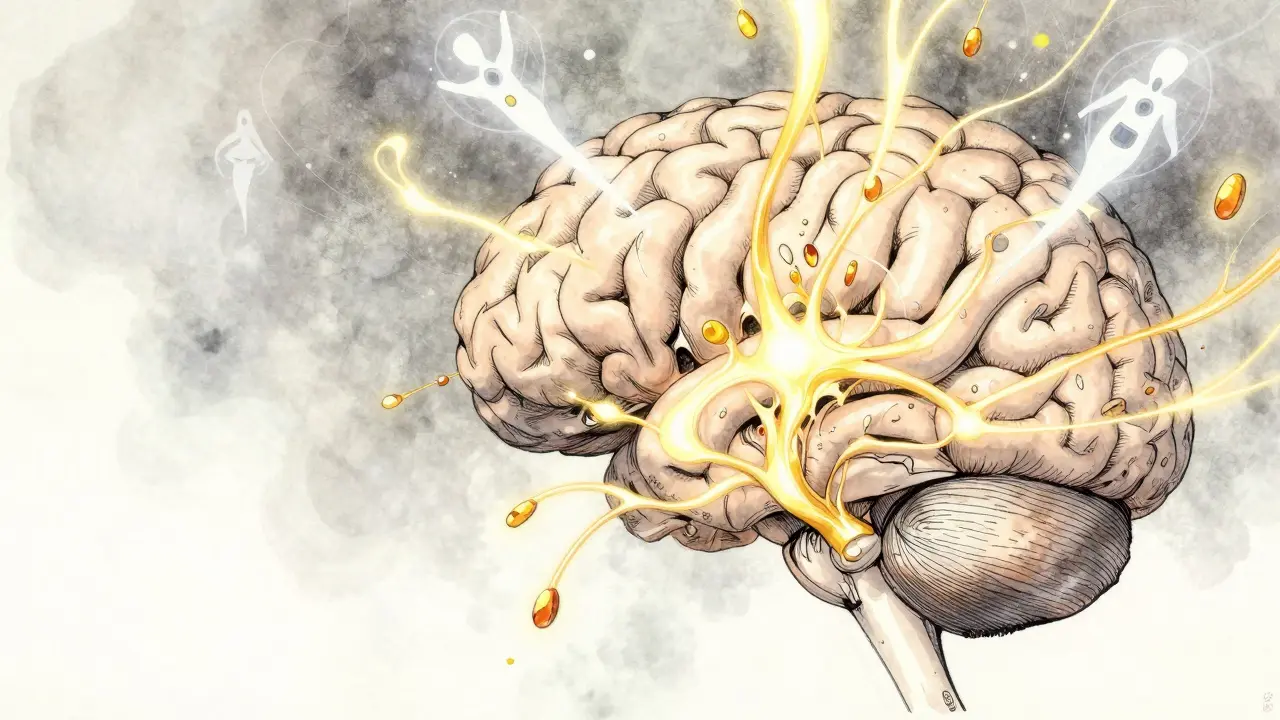
To understand this, we have to look at the brain. Using fMRI scans, researchers at the University of Hamburg found that when people take a brand-name placebo, there is significantly higher activation in the prefrontal cortex, specifically the dorsolateral and dorsomedial regions. This area of the brain is the command center for expectations. When this region lights up, it can trigger the release of endogenous opioids and dopamine, which naturally dampen pain and improve mood.
The physical response is so strong that it can even override the actual chemistry of a drug. In a study published in Science, Professor Karin Tinnermann found that participants who believed they were using an expensive cream experienced more intense pain responses in their spinal cord than those using a cheaper version. This proves that perception isn't just a "feeling"-it changes how your nervous system processes signals.
| Perception Factor | Typical Biological/Behavioral Response | Real-World Example |
|---|---|---|
| Brand Trust | Higher prefrontal cortex activity; increased dopamine | Higher pain relief with brand-name labels vs. generic labels |
| High Price | Increased perceived potency (or intensity of side effects) | Expensive creams can lead to higher reported pain ratings |
| Distrust/Skepticism | Activation of the nocebo response; increased symptom monitoring | Patients reporting "muscle pain" from inert statin placebos |
| Education/Trust | Reduced anxiety; improved adherence | Better outcomes after pharmacist explains FDA equivalence |
The Dark Side: The Nocebo Effect
While the placebo effect is the "good" version, the nocebo effect is its mirror image. This happens when negative expectations lead to negative outcomes. If you've read a forum post saying generics are "weak" or "full of fillers," your brain begins to look for evidence to support that claim. You start monitoring your body more closely, and suddenly, a normal tingle in your arm is interpreted as a drug side effect.
This is incredibly common in large-scale trials. In statin studies, between 4% and 26% of people stopped taking their medication because of side effects-even when they were in the group receiving a completely inert sugar pill. Dr. Ulrike Bingel explains that the anxiety surrounding a medication causes patients to amplify benign sensations. If you expect a generic to fail, you might subconsciously stop the behaviors that help you get better, or you might perceive a minor symptom as a sign that the drug is "toxic."
Where Perception Hits Hardest
Not all medications are affected equally. The gap between brand and generic perception is widest in treatments for subjective symptoms-things like pain, anxiety, and depression. For example, in antidepressants, roughly 30-40% of the response is actually attributed to the placebo effect. If a patient feels a generic antidepressant is "cheap" or "inferior," they may lose a huge chunk of that psychological boost, making the drug feel less effective even if the blood concentration of the medicine is identical.
On the other hand, cardiovascular drugs like blood pressure medication see a much smaller perception gap. Why? Because you can't "feel" your blood pressure drop in the same way you feel a headache vanish. When the outcome is a number on a monitor rather than a feeling in your head, the placebo effect has less room to operate.

How to Get the Most Out of Your Generics
Since we know that expectations drive results, the goal is to shift those expectations from "cheap alternative" to "proven equivalent." You don't need to spend more money to get a better result; you just need to change the narrative in your mind.
First, understand the regulatory reality. In the US, the FDA requires generics to deliver the same amount of active ingredient within a tight margin (usually 8-13%) of the brand-name drug. This is well within the therapeutic range, meaning your body processes the active molecule the same way regardless of the logo on the box. In fact, 90% of prescriptions filled in the US are generics, and for the vast majority of people, they work perfectly.
Second, talk to your pharmacist. Research shows that spending just a few extra minutes discussing the equivalence of a generic can increase patient adherence by up to 22%. If you're feeling skeptical, ask your pharmacist to explain the bioequivalence testing the drug underwent. Once your brain accepts that the generic is just as powerful as the brand, the nocebo effect fades, and the medication can do its job without your subconscious fighting against it.
The Future of "Expectation-Optimized" Medicine
We are entering an era where the "delivery" of a drug is as important as the molecule itself. Some companies are experimenting with "premium generics"-drugs that are chemically identical to standard generics but feature better packaging and branding to trigger that positive placebo response. While some experts, like Dr. Charlotte Blease, argue that fancy packaging doesn't always help, others are seeing success with "expectation priming." This involves using short educational videos to explain how the mind and body interact, which has been shown to increase treatment efficacy by nearly 28%.
The ultimate goal is to bridge the gap between cost and confidence. By treating the psychological side of medicine as a real biological variable, we can save billions in healthcare costs and, more importantly, help patients get better faster by simply changing how they think about their pills.
Do generic drugs actually work less effectively than brand names?
Pharmacologically, no. Generics must contain the same active ingredients and meet strict bioequivalence standards set by regulators like the FDA. However, because of the placebo and nocebo effects, some people perceive them as less effective if they have negative expectations about generic quality.
Can the placebo effect actually cause real physical changes?
Yes. fMRI scans show that the prefrontal cortex triggers the release of real chemicals, such as dopamine and endorphins, which can physically reduce pain and lower stress levels. It is a biological response to a psychological expectation.
What is the difference between the placebo and nocebo effect?
The placebo effect is a positive response based on positive expectations (e.g., "This brand-name drug will cure me"). The nocebo effect is a negative response based on negative expectations (e.g., "This generic drug will give me side effects"). Both can significantly alter how you feel during treatment.
Which types of medications are most affected by these perceptions?
Medications for subjective symptoms-like antidepressants, painkillers, and anti-anxiety meds-show the strongest placebo/nocebo responses. Medications for objective measures, like blood pressure or cholesterol drugs, are generally less affected by a patient's perception of the brand.
How can I stop a generic drug from feeling like it's not working?
The best way is through education. Understanding that the active ingredient is identical and discussing the drug's efficacy with a healthcare provider can help shift your mindset, reducing the nocebo effect and allowing the medication to work more effectively.