FDA Flush List Checker
The FDA lists specific medications that should be flushed down the toilet if you cannot access a take-back program or mail-back envelope. Check if your medication is on the list.
FDA Flush List (13 medications)
- Fentanyl
- Oxycodone
- Hydrocodone
- Hydromorphone
- Tapentadol
- Methadone
- Buprenorphine
- Meperidine
- Phenylephrine
- Propoxyphene
- Alfentanil
- Remifentanil
- Sufentanil
Every year, millions of unused or expired medications sit in medicine cabinets across America. Some are old prescriptions you never took. Others are leftovers from a surgery or illness that’s long gone. But what do you do with them? Throwing them in the trash? Flushing them down the toilet? Both are common - and both are risky.
The FDA has clear, science-backed rules for this exact problem. And the safest way to get rid of expired or unwanted medications isn’t what most people think. It’s not flushing. It’s not tossing. It’s take-back.
Why Proper Disposal Matters
Every day, someone in the U.S. dies from a drug overdose. In 2022 alone, over 70,000 people lost their lives. Of those, nearly 13,500 involved prescription opioids - many of which came from medicine cabinets in homes. Unused pills are easy targets for teens, roommates, or even pets. A 2024 study found that households with unsecured medications had 83% more opioid access for young people. That’s not just a statistic. It’s a real risk in real homes.
There’s also the environment. Flushing drugs sends chemicals into waterways. While the amount is tiny, it adds up. Over time, it affects fish, frogs, and even drinking water sources. The EPA doesn’t want you to flush unless you have no other choice. And even then, only for specific drugs.
The Three Safe Ways to Dispose of Medications
The FDA has laid out a clear hierarchy: three methods, ranked by safety and effectiveness. You should always start with the first one.
1. Use a Drug Take-Back Program
This is the gold standard. The FDA says 99.8% of medications are properly disposed of through take-back programs. That’s because these programs collect drugs directly from your home, hospital, or pharmacy - and destroy them safely.
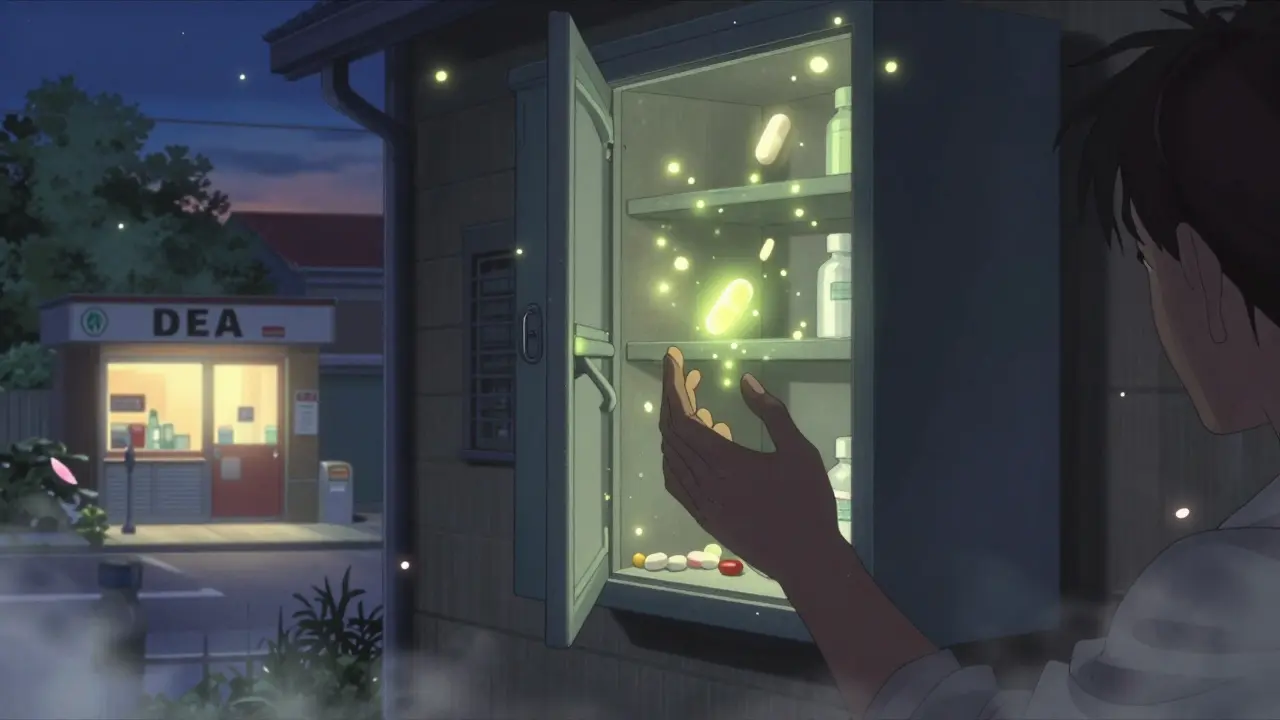
Where can you find them? Look for DEA-authorized collectors. As of January 2025, there are over 14,352 permanent drop-off locations across the U.S. - mostly in pharmacies. Walmart, CVS, and many independent pharmacies have secure kiosks near the pharmacy counter. No appointment needed. No questions asked. Just drop in your meds.
Want to find the nearest one? Visit the DEA’s website or ask your pharmacist. Many local police stations also host collection bins. And if you’re in a rural area, you’re not out of luck - 68% of U.S. counties have at least one permanent site.
There’s also the National Prescription Drug Take-Back Day. It happens twice a year - April 26 and October 25, 2025 - when collection sites open for one day. In October 2024, Americans turned in over 1 million pounds of unused meds. That’s more than 450 tons of potential overdose risk removed from homes.
2. Use a Mail-Back Envelope
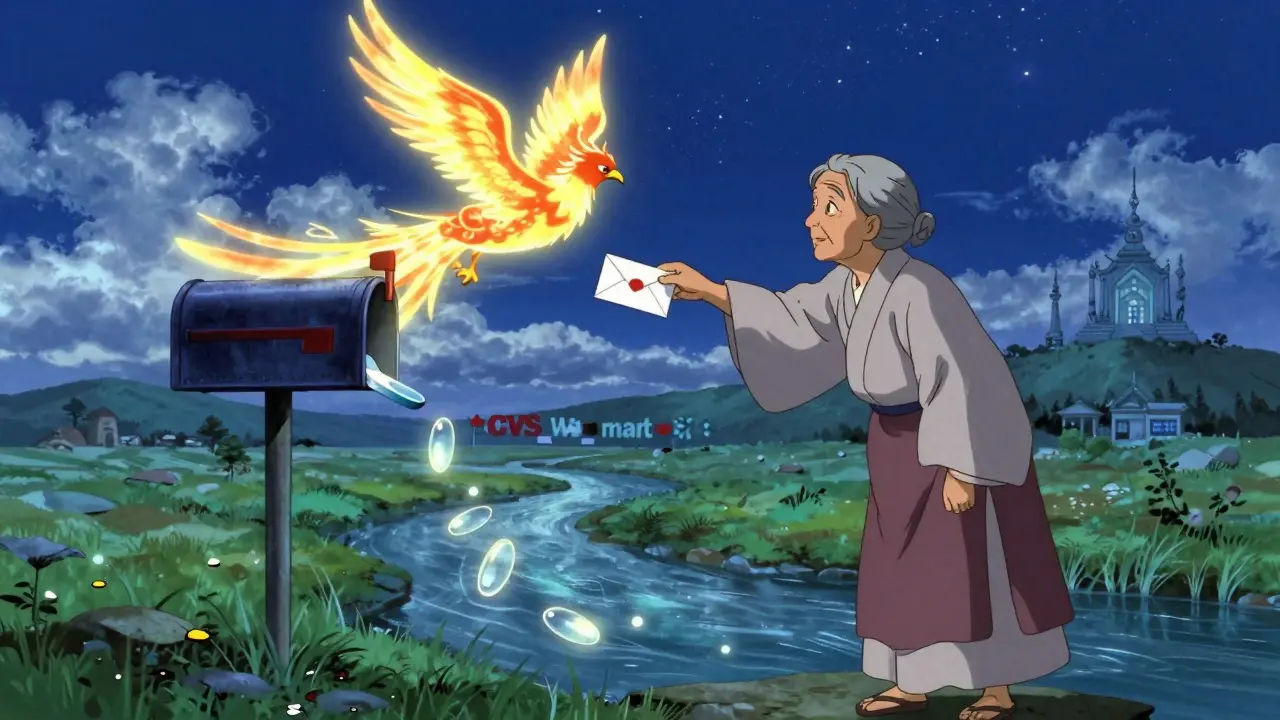
Not everyone lives near a drop-off site. That’s why the FDA approves prepaid mail-back envelopes. These are sealed, tamper-proof, and approved by the USPS for pharmaceutical disposal. You put your meds inside, seal it, and drop it in the mailbox. No postage needed.
Companies like DisposeRx and Sharps Compliance provide these envelopes. Some pharmacies give them out for free. Others charge $2.15 to $4.75. Express Scripts, a major pharmacy benefit manager, found 94% of users were satisfied with their mail-back program. It’s especially popular among seniors and veterans - 89% of military members using VA-provided envelopes followed disposal rules correctly.
Pro tip: If you’re getting prescriptions through mail-order pharmacies, ask if they include a free return envelope. Many do.
3. Home Disposal (Only If No Other Option)
If you can’t get to a take-back site or mail-back envelope, you can dispose of meds at home - but only if you follow the exact steps. And here’s the catch: this only applies to medications that are not on the FDA Flush List.
Here’s how to do it right:
- Remove personal info. Scratch out your name, prescription number, and pharmacy details with a permanent marker. Or use an alcohol swab to wipe the label clean. Don’t just peel it off - the ink can still be read.
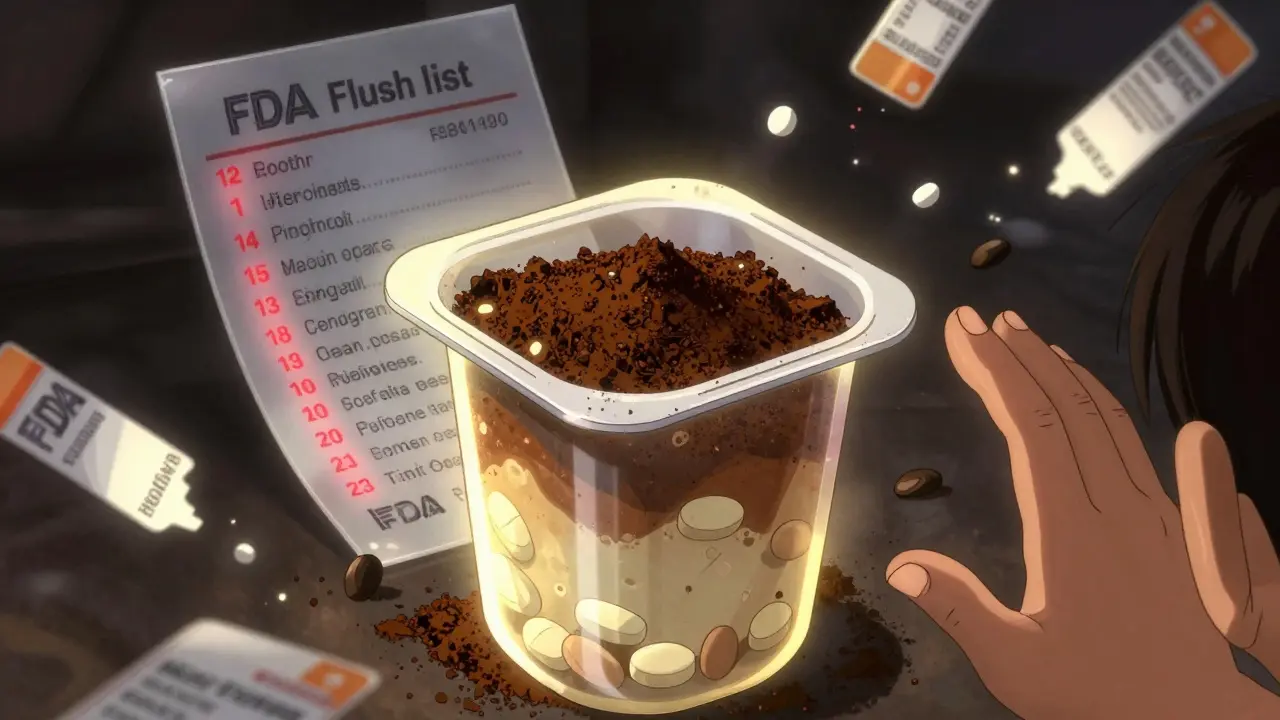
- Mix with an unpalatable substance. Use coffee grounds, cat litter, or dirt. The ratio? Exactly 1:1. One part meds, one part absorbent. This makes the pills unappealing and unusable. Don’t just dump pills into a trash bag - that’s how pets and kids get into them.
- Seal it. Put the mixture in a plastic container or zip-top bag. The FDA says it needs to be at least 0.5mm thick. A sturdy container like an old yogurt tub works.
- Put it in the trash. Not the recycling. Not the compost. The regular household trash.
- Recycle the empty bottle. Once the label is gone, you can recycle the plastic bottle. Check your local rules - some areas allow it, others don’t.
One common mistake? People throw liquid medications directly into the trash. That’s dangerous. Liquids can leak. Always mix them with absorbent material first. A 2024 FDA study found 44% of home disposal failures happened because people skipped this step.
The FDA Flush List: When Flushing Is Allowed
There are 13 specific medications that are dangerous enough that the FDA says: if you can’t get to a take-back site, flush them. These are mostly powerful opioids and sedatives that can kill in seconds if misused.
The current list includes:
- Fentanyl
- Oxycodone
- Hydrocodone
- Hydromorphone
- Tapentadol
- Methadone
- Buprenorphine
- Meperidine
- Phenylephrine
- Propoxyphene
- Alfentanil
- Remifentanil
- Sufentanil
Important: The list changed in October 2024. Oxymorphone was removed. Buprenorphine was added. So if your old guide says otherwise, toss it. Always check the latest list on FDA.gov.
Flushing should only happen if you can’t reach a take-back site within 15 miles or 30 minutes. If you live in a city, there’s almost always a drop-off nearby. If you’re rural, mail-back might be your best bet.
And here’s the rule for healthcare facilities: they’re banned from flushing anything. Ever. Violations can cost up to $76,719 per incident. This isn’t a suggestion - it’s the law.
What Not to Do
Don’t flush anything not on the list. Even if it’s old or smells weird. Don’t pour pills down the sink. Don’t throw them in the yard. Don’t give them to friends. Don’t crush them and mix them with food.
A 2024 Consumer Reports survey found that 34% of people flushed medications that weren’t on the flush list. That’s a huge problem. You’re not helping - you’re polluting.
What’s Changing in 2025
The system is getting better. The DEA plans to add 5,648 new permanent take-back sites by the end of 2025, bringing the total to over 20,000. Walmart and CVS are expanding their kiosks. The EPA just announced a $37.5 million grant program to help rural communities set up collection points.
The FDA’s goal? 90% of Americans using take-back programs by 2030. Right now, only about 36% do. That gap is huge. But it’s fixable.
Real Talk: What People Are Saying
A nurse who’s worked in pharmacy for 12 years said: “Sixty-three percent of patients don’t even know take-back kiosks exist.” That’s the real problem - awareness.
People love mail-back envelopes. They’re easy. They’re free in some cases. But they’re not everywhere. And they cost money if you have to buy them.
One user on a pharmacy forum wrote: “The #1 mistake I see? People throw liquid meds straight in the trash. They have to be mixed with something absorbent.”
So if you’ve ever thought, “I’ll just toss it,” now you know: there’s a better way. And it’s not hard.
What to Do Today
Here’s your action plan:
- Check your medicine cabinet. Pull out anything expired, unused, or no longer needed.
- Look up the FDA’s current Flush List. If any of your meds are on it, and you can’t get to a take-back site, flush them. Otherwise, don’t.
- Find the nearest take-back location. Use the DEA’s website or call your local pharmacy.
- If you’re in a remote area, ask your pharmacist about mail-back envelopes.
- When disposing at home, follow the 5-step rule exactly.
One small step - dropping off a few pills - can save a life. Not just yours. Someone else’s too.


Michelle Jackson
March 19, 2026 AT 22:38Suchi G.
March 21, 2026 AT 04:41becca roberts
March 22, 2026 AT 04:26SNEHA GUPTA
March 23, 2026 AT 19:28Andrew Mamone
March 25, 2026 AT 01:11MALYN RICABLANCA
March 25, 2026 AT 10:28gemeika hernandez
March 25, 2026 AT 21:27Nicole Blain
March 26, 2026 AT 18:12Kathy Underhill
March 27, 2026 AT 01:51Srividhya Srinivasan
March 27, 2026 AT 16:59Prathamesh Ghodke
March 29, 2026 AT 09:23Stephen Habegger
March 30, 2026 AT 15:07Justin Archuletta
March 31, 2026 AT 19:26Sanjana Rajan
April 2, 2026 AT 10:58