
When you hear "low-GI diet," you might think it’s the secret key to losing weight without counting calories. But here’s the truth: low-GI diet isn’t a magic bullet for weight loss. It’s a tool - one that works best when you understand how it actually affects your body, not just what it promises on a product label.
What Is the Glycemic Index, Really?
The glycemic index (GI) measures how fast a food turns into sugar in your blood. Pure glucose is the standard at 100. Foods like white bread and corn flakes sit near the top, spiking your blood sugar fast. Low-GI foods - think lentils, apples, oats, and most non-starchy veggies - creep up slowly. The scale is simple: 55 or below is low, 56-69 is medium, and 70+ is high. This isn’t just about sugar. It’s about insulin. When your blood sugar spikes, your body pumps out insulin to shuttle that sugar out of your bloodstream. Too many spikes, and your cells start ignoring insulin. That’s insulin resistance - the gateway to weight gain, prediabetes, and metabolic trouble. Low-GI foods help you avoid those spikes. They digest slowly because of fiber, fat, or acid content. A bowl of steel-cut oats (GI=55) keeps you full longer than a bowl of cornflakes (GI=81). That’s not magic. It’s biology.Does Low-GI Help You Lose Weight?
Here’s where it gets messy. Some studies say yes. Others say no. In 2007, researchers at Stanford compared low-GI diets to low-carb diets. Both groups lost about the same weight - 4 to 5 kilograms over a year. But the low-GI group had better cholesterol numbers. Their bad LDL cholesterol dropped more. Then came the 2022 analysis from the American Institute for Cancer Research. They looked at 12 controlled trials where everyone ate the same number of calories. Guess what? The low-GI group didn’t lose more weight than the high-GI group. Not one extra pound. The same pattern showed up in the 2021 Cochrane Review. When calories were equal, GI didn’t make a difference in fat loss. So why do some people swear by it? Because low-GI foods tend to be whole, unprocessed, and filling. You’re not eating candy bars and white pasta. You’re eating beans, vegetables, nuts, and whole grains. You’re eating less junk. That’s what’s helping you lose weight - not the GI number itself.Why It Works Better for Blood Sugar Than Fat Loss
The real strength of a low-GI diet isn’t weight loss. It’s blood sugar control. A 2019 review of 54 studies found that people with type 2 diabetes lowered their HbA1c (a measure of long-term blood sugar) by 0.5% on a low-GI diet. That’s the same drop you’d get from some diabetes medications. High-GI groups only dropped 0.2%. That matters. Stable blood sugar means fewer cravings. Fewer energy crashes. Less hunger between meals. That makes it easier to stick to any eating plan - including one aimed at weight loss. Dr. David Ludwig from Harvard says low-GI diets might boost metabolism by 50-100 calories a day by lowering insulin. That’s like walking an extra 15 minutes daily. Not huge, but helpful over time. Karen Collins from the American Institute for Cancer Research disagrees. She says: "When calories are locked in, GI doesn’t move the needle on weight." And the science backs her up. So if you’re trying to lose weight, focus on calories first. Then use low-GI foods to make that calorie deficit easier to maintain.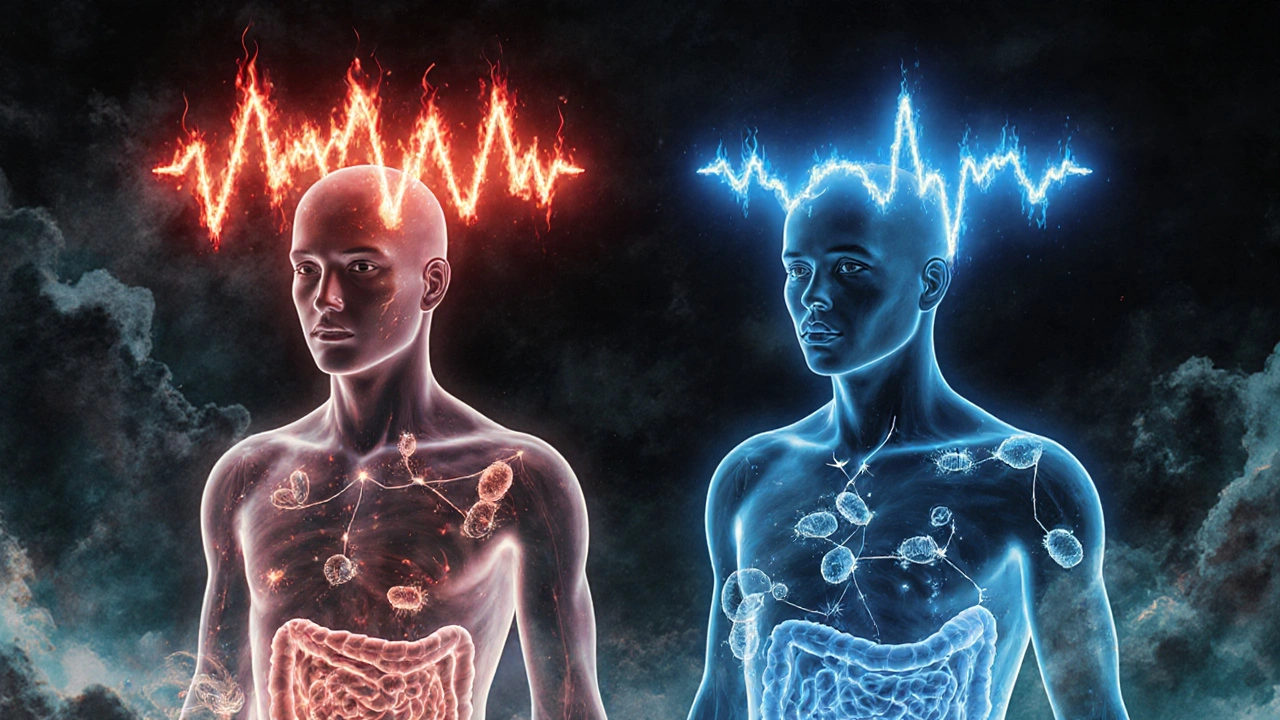
What to Eat - and What to Avoid
Not all low-GI foods are healthy. Chocolate cake has a GI of 38. Ice cream is 37. That doesn’t make them good choices. Here’s what actually works:- Low-GI carbs: Lentils (GI=32), chickpeas (GI=28), barley (GI=25), oats (GI=55), quinoa (GI=53)
- Fruits: Apples (GI=36), pears (GI=38), berries, cherries, plums
- Veggies: Broccoli (GI=15), spinach, cauliflower, zucchini
- Legumes: Black beans, kidney beans, soybeans
- Nuts and seeds: Almonds, walnuts, chia, flax
- White bread (GI=75)
- White rice (GI=73)
- Potatoes (GI=85)
- Corn flakes (GI=81)
- Instant oatmeal (GI=83)
The Problem with GI: It’s Not Personal
Here’s the biggest blind spot: your GI isn’t the same as mine. A 2015 study from the Weizmann Institute found that two people eating the same food - say, a banana - could have blood sugar responses that differ by 15 to 20 points. One person spikes. The other doesn’t. Why? Gut bacteria, metabolism, sleep, stress, even the time of day. That’s why rigid GI lists can mislead. What works for your friend might not work for you. A 2023 study in Nature Medicine used AI to predict individual glucose responses. People who followed personalized low-GI plans improved their blood sugar control by 25% compared to those following generic advice. So if you’re trying this diet, track your own response. Use a glucose monitor if you can. Notice how you feel after meals. Do you crash? Crave sugar? Feel sluggish? That’s your body’s real GI feedback.
How to Start a Low-GI Diet - Without Going Crazy
You don’t need to memorize 3,500 GI values. The International Tables of Glycemic Index Values exists, but no one uses it daily. Start simple:- Swap white bread for whole grain or sourdough.
- Choose oats over cornflakes.
- Add beans or lentils to salads and soups.
- Snack on nuts or fruit instead of crackers or cookies.
- Keep potatoes to a minimum - sweet potatoes are better (GI=70 vs. white potato’s 85).




Matthew Higgins
November 30, 2025 AT 17:32Okay but real talk - I tried the low-GI thing for three months and lost zero pounds. But I stopped craving 3 p.m. Skittles. That’s the win. My energy doesn’t crash like I just ran a marathon after eating a bagel. 🤷♂️
Turns out, it’s not about the number on the chart - it’s about not feeling like a zombie by noon.
Subhash Singh
December 2, 2025 AT 06:13It is indeed a matter of considerable scientific interest that the glycemic index, while useful as a comparative metric, fails to demonstrate statistically significant superiority in weight reduction when caloric intake is controlled. The underlying physiological mechanisms, particularly those concerning insulin dynamics, remain robustly supported; however, the clinical efficacy for weight loss appears contingent upon confounding dietary variables.
Geoff Heredia
December 3, 2025 AT 17:22They don’t want you to know this - but the GI was invented by Big Oatmeal and Big Sugar to keep you buying their ‘healthy’ crap. Corn flakes? GI 81. But they’re ‘fortified with vitamins’! Chocolate cake? GI 38. But you can’t buy it in a Whole Foods aisle. It’s all a scam. The real answer? Eat meat. Only meat. And butter. And eggs. And don’t trust anyone who says ‘fiber’.
Tina Dinh
December 4, 2025 AT 09:00OMG YES 😭 I switched to lentils and now I don’t want to cry at 4pm anymore! 🥹🥹🥹 Also, I found out my banana spikes me but my green apple doesn’t - so now I only eat green ones. Life changed. 💪🍎
Andrew Keh
December 6, 2025 AT 01:31I appreciate the balanced approach here. The science is clear: calories matter most. But choosing low-GI foods makes it easier to stick with a healthy routine. It’s not about perfection. It’s about consistency. Simple swaps add up over time.
Peter Lubem Ause
December 7, 2025 AT 02:35Let me tell you something - I used to eat white rice with every meal. Three times a day. I was tired all the time, bloated, and my blood sugar would spike like a rocket. Then I swapped it for brown rice and barley. Not because of some chart. Because I started paying attention. I felt like I could breathe again. My wife said I stopped snoring. I didn’t even know I was snoring. That’s the power of food. Not magic. Not numbers. Just listening to your body. You don’t need a PhD. You just need to stop eating garbage and see what happens. It’s not hard. It’s just different. And different is scary until it’s normal.
Joy Aniekwe
December 7, 2025 AT 06:03Wow. So the ‘low-GI diet’ is just a fancy way of saying ‘stop eating junk’? Who knew? I guess the $18 billion market is just selling us the same advice we got in 1998, but with a shiny sticker and a fancy acronym. 🙄
Latika Gupta
December 7, 2025 AT 22:38Wait - so if I eat a banana and my glucose spikes, but my friend’s doesn’t… does that mean my gut bacteria are judging me? 😭 I feel so exposed. Can I get a test? I need to know if my microbiome is toxic. I’m scared.
Sullivan Lauer
December 8, 2025 AT 17:50Look, I’ve been doing this for 12 years. I didn’t lose weight until I stopped obsessing over GI and started tracking my hunger. Real hunger. Not the ‘I’m bored’ kind. The ‘my stomach is growling and I’m shaky’ kind. Low-GI foods? They’re my best friends. But they’re not the reason I lost 60 pounds. The reason? I stopped eating when I wasn’t hungry. That’s it. The rest is just decoration. Eat your lentils. But don’t let the numbers trick you into thinking you’re doing something spiritual. You’re just eating food. And food is not a religion.
Sohini Majumder
December 9, 2025 AT 04:58ok but like… why do people even care about GI?? 😭 I just eat what my cousin eats and she’s 22 and looks like a supermodel?? I had quinoa once and cried because it tasted like dirt?? I just want to eat pizza and not feel bad?? why is this so hard?? 🥲🥲🥲