Have you ever found a bottle of pills in your cabinet with a date that passed years ago? You might wonder if taking them is safe or if they’ve turned into poison. The short answer is complicated. For most drugs, the real danger isn’t that they become toxic; it’s that they stop working when you need them most. However, there are specific exceptions where expired medications can actually break down into harmful substances.
The idea that all expired medicine becomes dangerous is largely a myth, but ignoring expiration dates carries real risks. Understanding which drugs degrade safely and which ones pose genuine health threats can mean the difference between a minor inconvenience and a medical emergency. Let’s look at what happens to your medicine after the clock runs out.
The Myth of Universal Toxicity
You’ve likely heard that expired drugs turn into poison. This belief stems from strict regulations rather than widespread scientific evidence. Since 1979, U.S. law has required pharmaceutical manufacturers to assign expiration dates based on stability testing. These tests determine how long a drug remains potent under specific storage conditions. But this doesn’t mean the drug instantly becomes hazardous the day after the date passes.
In fact, data suggests otherwise. The FDA Shelf Life Extension Program (SLEP), a collaboration between the Department of Defense and the FDA, tested over 100 medications stored properly for up to 15 years past their labeled expiration dates. The result? Ninety percent of these drugs retained full potency. While potency loss does occur eventually, following first-order kinetics where strength decreases exponentially, toxicity is rare.
So why do we still throw away old meds? Regulatory bodies like the Food and Drug Administration (FDA) and the Centers for Disease Control and Prevention (CDC) recommend against using any expired medication. Their stance is cautious, prioritizing patient safety over cost savings. They cite thousands of emergency room visits related to unsupervised medication exposures, though most involve accidental ingestion by children rather than adults intentionally taking expired pills. The consensus among many experts is that while most expired meds aren’t toxic, relying on them is risky because you can’t guarantee their effectiveness.
The Rare Cases: When Drugs Actually Turn Toxic
Although toxicity is uncommon, it is not impossible. There are documented cases where chemical degradation created harmful byproducts. The most famous example involves Tetracycline.
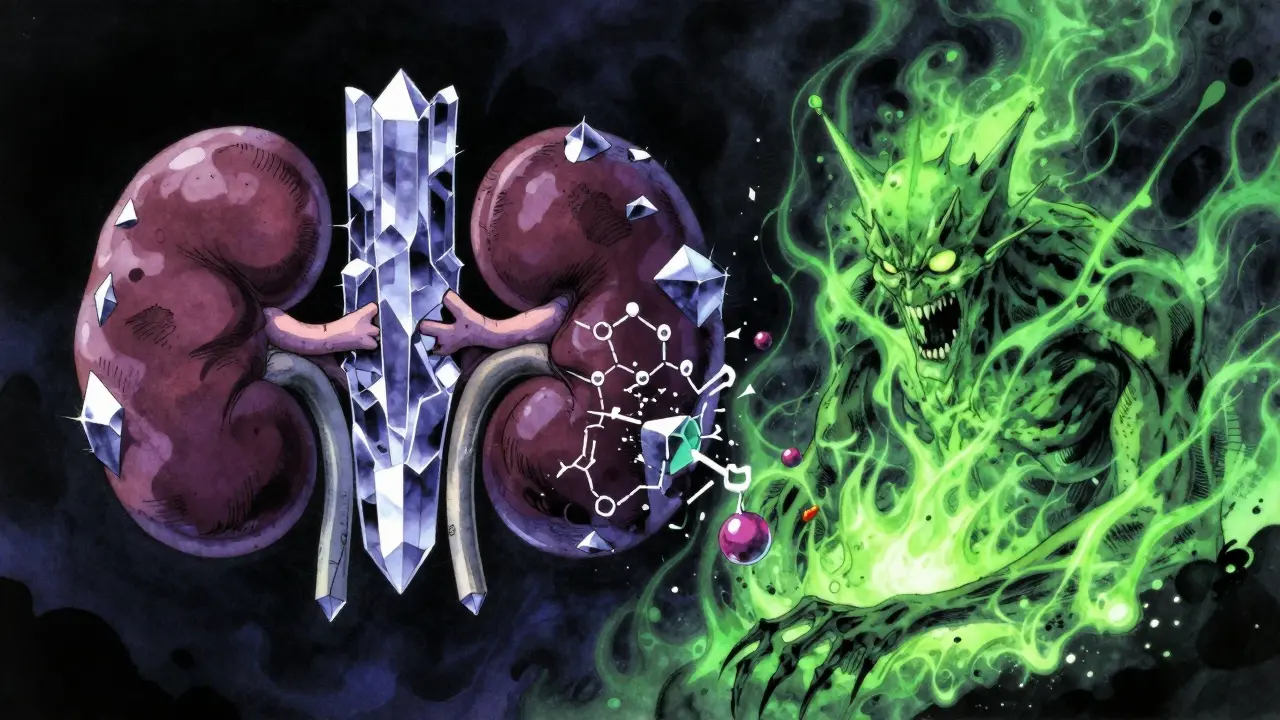
In 1963, three patients developed Fanconi syndrome, a kidney disorder, after taking expired tetracycline. Research published in the Journal of the American Medical Association (JAMA) confirmed that degraded tetracycline forms nephrotoxic compounds called epitetracycline and anhydro-4-epitetracycline. These byproducts damage the proximal renal tubules in the kidneys. Kimberly Hatton of the American Pharmacists Association noted that this incident occurred with older packaging methods, but the risk remains significant enough that no one should take expired tetracycline today.
Another serious case involved Clindamycin. In 2001, a patient suffered acute kidney injury after taking degraded clindamycin. According to the American College of Medical Toxicology, these are the only two well-documented cases of toxicity from expired medications in the last 60 years. While the odds are low, the consequences are severe. If you have leftover tetracycline or clindamycin, dispose of them immediately once they expire.
The Real Danger: Treatment Failure
For the vast majority of medications, the primary risk isn’t poisoning-it’s failure. An expired drug may simply not work. This distinction matters less for a headache pill but becomes life-threatening for critical treatments.
| Medication Type | Degradation Risk | Potential Consequence |
|---|---|---|
| Nitroglycerin | Loses 20% potency annually post-expiration | Failure to relieve chest pain during angina |
| Insulin | Forms dimers/fibrils; 30% loss in 1 year | Poor blood sugar control, diabetic emergencies |
| Epinephrine Auto-Injectors | 85% potency loss after 1 year past expiration | Fatal anaphylactic shock due to inadequate response |
| Liquid Antibiotics | Hydrolysis creates allergenic compounds | Treatment failure or allergic reactions |
| Eye Drops | Preservative failure after 28 days opened | Bacterial eye infections |
Consider Nitroglycerin, used for heart-related chest pain. Research from the Cleveland Clinic shows it decomposes into unstable nitrogen oxides, reducing its vasodilatory effectiveness by 50% within three months of expiration. If someone relies on expired nitroglycerin during a cardiac event, they could suffer a heart attack because the drug fails to open their blood vessels.
Similarly, Epinephrine auto-injectors (like EpiPens) lose potency rapidly. A 2017 study in the Annals of Internal Medicine found an 85% potency loss after just one year past expiration. In an anaphylactic reaction, every second counts. A weakened dose might not reverse the airway closure, leading to fatal outcomes. Dr. Robert S. Hoffman of the New York City Poison Control System put it bluntly: "The real tragedy isn’t poisoned patients from expired drugs-it’s the untreated heart attack because expired nitroglycerin didn’t work when needed most."
Storage Conditions Matter More Than Dates
Your home environment plays a huge role in how quickly a drug degrades. The expiration date assumes ideal storage conditions, which rarely exist in typical households. The FDA defines a "cool, dry place" as 15-25°C (59-77°F) with 35-45% humidity. Yet, according to Environmental Protection Agency measurements, only 22% of U.S. bathrooms meet these criteria. Bathrooms are often hot and humid, averaging 32°C (90°F) with 80% humidity, which accelerates chemical breakdown.
Proper storage can extend a drug’s life significantly. For instance, refrigerated insulin maintains 95% potency for 12 months post-manufacture, whereas room-temperature storage drops that to 70%. Nitroglycerin tablets stored in original amber glass containers retain 85% potency six months past expiration, but plastic containers lead to complete degradation much faster.
If you must store medications temporarily, keep them in a dark, cool drawer away from sinks and showers. Avoid the bathroom cabinet unless it’s climate-controlled. Always check the label for specific instructions, such as "refrigerate" or "protect from light."
Solid vs. Liquid Formulations
The form of the medication affects its stability. Solid-dose medications, like tablets and capsules, generally hold up better than liquids. Data from the Mayo Clinic Proceedings indicates that solid doses stored in original containers maintain 70-90% potency 10-15 years post-expiration. Aspirin, however, is an exception. It degrades into acetic acid and salicylic acid, increasing the risk of gastric irritation by 50% after two years past expiration.
Liquid formulations are far more fragile. Liquid antibiotics like amoxicillin-clavulanate undergo hydrolysis, breaking down into potentially allergenic compounds. Once opened, liquid antibiotics face a 400% increase in bacterial growth risk after 14 days. Eye drops also lose preservative efficacy after 28 days of being open, making them breeding grounds for bacteria. Never use multi-dose eye drops or liquid antibiotics past their expiration or beyond the recommended discard date after opening.
How to Dispose of Expired Medications Safely
Since the risks of using expired drugs outweigh the benefits for most people, proper disposal is essential. Flushing medications down the toilet is discouraged due to environmental contamination, except for a small list of highly dangerous drugs specified by the FDA. Instead, use take-back programs.
The Drug Enforcement Administration (DEA) hosts National Prescription Drug Take-Back Days, collecting hundreds of thousands of pounds of unused medications annually. Many pharmacies, including Walgreens and CVS, offer drop-off boxes for immediate disposal. If no take-back option is available, mix the pills with an unappealing substance like coffee grounds or cat litter, seal them in a bag, and throw them in the trash. Remove personal information from prescription labels before discarding the container.
Remember, 60% of accidental pediatric poisonings involve medications stored in bedrooms or bathrooms. Keeping an organized, secure medicine cabinet and regularly purging expired items protects both your health and your family’s safety.
Is it safe to take expired vitamins?
Generally, yes. Vitamins and supplements do not require FDA approval for safety and efficacy in the same way prescription drugs do. While they may lose potency over time, they rarely become toxic. However, fat-soluble vitamins like Vitamin A and D can degrade and potentially cause issues if taken in very high, concentrated doses from old stock, so it's best to replace them periodically.
Can I take an antibiotic that expired last month?
It is not recommended. Antibiotics, especially liquid ones, degrade quickly and can develop bacterial growth or allergenic compounds. Taking a partially effective antibiotic can lead to treatment failure and contribute to antibiotic resistance. Always consult your doctor for a fresh prescription.
What happens if I accidentally take an expired pill?
In most cases, nothing bad will happen. You might experience reduced effectiveness, meaning your symptoms don't improve. Monitor yourself for any unusual reactions, but severe toxicity is extremely rare unless you took expired tetracycline or clindamycin. If you feel unwell, contact a poison control center.
Do expiration dates apply to generic drugs?
Yes. Generic drugs must meet the same FDA standards for quality, safety, and efficacy as brand-name drugs. This includes stability testing and expiration dating. Treat generic medications with the same caution regarding expiration dates as their branded counterparts.
Why do manufacturers set expiration dates if drugs last longer?
Manufacturers are legally required to guarantee potency and safety only until the expiration date. Extending dates requires additional costly stability testing. Additionally, shorter shelf lives protect companies from liability if a drug degrades due to improper storage by the consumer. The current system prioritizes conservative safety estimates over extended usability.




Kenny Pines
May 6, 2026 AT 09:07So basically if you want to save a few bucks on your EpiPen, just wait until it expires and hope for the best? 🙄 Because nothing says 'safety' like an 85% potency loss when your throat is closing up. I’m sure that’s going to go great. 😂
Frances Kendall
May 6, 2026 AT 22:16Actually, Kenny, while the sarcasm is noted, the point about epinephrine is critically important. The degradation isn't linear; it's exponential in some cases. If someone is relying on an expired auto-injector during anaphylaxis, they aren't just risking reduced efficacy, they are risking death. The chemistry here is unforgiving. We shouldn't joke about life-saving mechanisms failing due to chemical instability.
Guy Birtwhistle
May 8, 2026 AT 12:34Look, I get the humor, but let's keep it respectful. The article makes a solid point about tetracycline specifically turning into something that damages kidneys. That’s not a myth, that’s documented medical history from the 60s. People need to know the difference between 'probably fine' and 'will hurt you'.
Liz and Nick
May 9, 2026 AT 15:23i mean honestly why do we even have expiration dates if they lie to us anyway it feels like a scam tbh i throw everything out because im scared but then i read this and feel stupid for wasting money on medicine that was probably still good ugh so frustrating
Brian Fibelkorn
May 9, 2026 AT 22:05The regulatory framework mandates expiration dates to mitigate liability, not necessarily to reflect absolute chemical toxicity thresholds. The FDA Shelf Life Extension Program data is often cited by contrarians to suggest widespread safety, yet the variance in storage conditions-specifically humidity and temperature fluctuations in domestic environments-renders such generalizations clinically irresponsible. One cannot assume idealized stability kinetics apply to a bathroom cabinet in Florida.
David Rangkhal
May 11, 2026 AT 20:08Hey no worries @Liz and Nick its totally normal to feel confused about this stuff 🌟 The key takeaway is really about critical meds like insulin or nitroglycerin where failure means real danger vs aspirin which might just lose strength. Its all about context and risk management rather than blanket rules. Hope that helps clear things up! ✨
Chelsea Grdina
May 13, 2026 AT 05:31I found this section on storage conditions particularly illuminating, especially regarding the disparity between the FDA's definition of a cool dry place and the actual environmental conditions found in most residential bathrooms, which often exhibit high humidity levels that accelerate hydrolysis in liquid formulations, thereby compromising the preservative efficacy and potentially introducing bacterial contaminants that could lead to secondary infections if used in sensitive areas such as the eyes or respiratory tract.
Brian LeClercq
May 14, 2026 AT 10:31It is frankly absurd that American consumers are treated like children who cannot discern a slightly less potent ibuprofen from poison. The pharmaceutical industry’s insistence on rigid expiration dates is less about patient safety and more about forcing continuous consumption cycles. We should trust our own judgment and common sense rather than bowing to corporate liability shields disguised as public health guidelines.
Natali Brown
May 15, 2026 AT 08:37I hear where you're coming from with the frustration over waste, but I think we have to consider the sheer vulnerability of patients who rely on these medications for immediate survival, like those with severe allergies or heart conditions, where a margin of error simply does not exist, and thus the conservative approach taken by manufacturers, while perhaps economically driven, ultimately serves as a crucial buffer against catastrophic human error in high-stress situations where split-second decisions are made.
Kelsey Thomas
May 16, 2026 AT 01:19Just tossing this out there: the take-back programs mentioned are actually super easy to use now. Most pharmacies have drop boxes. No need to mix with coffee grounds unless you really want to be extra cautious. It’s safer for the environment too. ♻️
Sarah Kwiatkowski
May 17, 2026 AT 22:13This is a fantastic resource! I always wondered why my eye drops seemed to sting more after a few weeks. Knowing that preservatives fail after 28 days explains so much. Thank you for breaking down the science behind the labels!